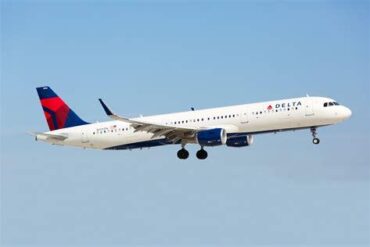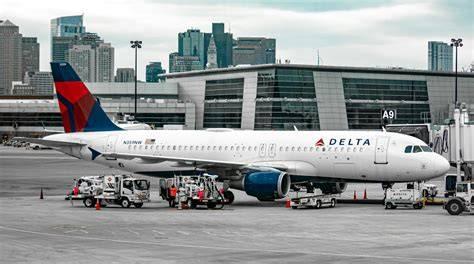
Delta Air Lines is taking a highly targeted approach to the Christmas and New Year travel rush, adding four temporary nonstop routes to Orlando International Airport for only 16 days. From December 19, 2026, through January 3, 2027, Delta Connection will link Orlando with Indianapolis, Kansas City, Nashville, and Pittsburgh, creating a short but strategically timed network of flights aimed squarely at peak leisure demand.
The move is notable because none of the four cities is a traditional Delta hub. Instead of routing passengers through Hartsfield-Jackson Atlanta International Airport, Delta will operate these flights point-to-point, giving travelers in four sizable markets direct access to one of America’s most important vacation destinations. The schedule reflects a broader shift in how airlines can use seasonal demand to justify routes that might not make sense throughout the entire year.
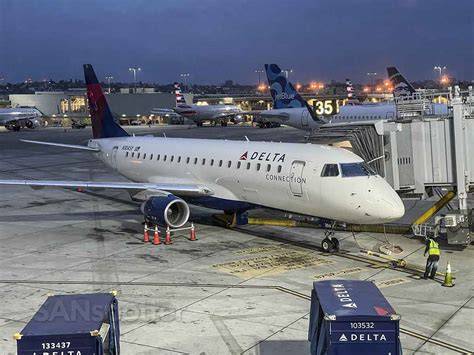
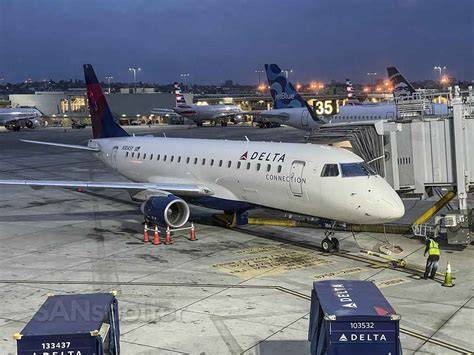
Each of the four Orlando routes is scheduled to operate five times per week during the holiday period. Republic Airways will operate the flights for Delta Connection using 76-seat Embraer E175 aircraft, with Delta’s configuration offering 12 First Class seats, 20 Delta Comfort seats, and 44 Main Cabin seats. That relatively modest capacity allows Delta to test demand without committing the larger aircraft or year-round frequencies associated with a conventional route.
Delta’s Four Seasonal Orlando Routes Target Peak Holiday Demand
The four routes connect Orlando with Indianapolis International Airport, Kansas City International Airport, Nashville International Airport, and Pittsburgh International Airport. All are scheduled to operate from December 19 through January 3, with five weekly frequencies and departures toward Orlando concentrated in the morning or late morning.
That timing is particularly useful for families and leisure travelers. A morning arrival in Orlando gives passengers most of the day to reach a hotel, visit a theme park, begin a cruise vacation, or meet relatives for the holidays. For travelers heading home after Christmas or New Year’s, the availability of a nonstop flight also removes the inconvenience of connecting through a major hub.
The aircraft choice is equally revealing. The Embraer E175 is one of the most useful tools in Delta’s regional network because its size provides enough capacity for important markets without requiring the airline to fill a much larger mainline aircraft. During periods of concentrated leisure demand, Delta can redirect these aircraft from their usual hub-feeding role toward direct city pairs where passengers have a clear reason to travel.
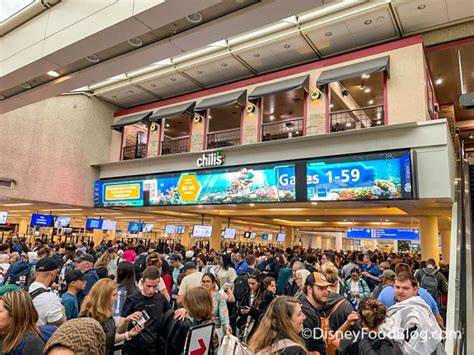
This is especially important in Orlando. The airport handles enormous passenger volumes during the Christmas and New Year period, with more than 3 million passengers expected across the holiday travel window. January 3 alone is forecast to see more than 200,000 passengers. Rather than operating these flights throughout a much longer winter season, Delta is placing capacity precisely where the demand curve is strongest.
Delta Faces Strong Competition on All Four Orlando Routes
Delta is not entering empty markets. Southwest Airlines and Frontier Airlines already operate nonstop service on all four city pairs, giving travelers established alternatives. Frontier is also adding another layer of competition with its planned Kansas City-Orlando service, scheduled to begin before Delta’s temporary holiday operation.
That makes Delta’s strategy different from the traditional approach of launching a route and attempting to build a year-round customer base. Delta does not necessarily need these flights to compete with low-cost carriers on every day of the year. Instead, it can concentrate its capacity on the period when demand, fares, and customer willingness to travel are likely to be strongest.
For Delta loyalists, the proposition is straightforward. A passenger from Indianapolis, Kansas City, Nashville, or Pittsburgh who wants to visit Orlando during the holidays can potentially stay within the Delta network without accepting a connection. The nonstop option may be particularly attractive to families traveling with children, passengers carrying significant luggage, and travelers trying to minimize the uncertainty associated with connecting flights during one of the busiest periods of the year.
Four Orlando Routes Return After Delta’s Larger 2025-26 Experiment
The 2026-27 schedule is not Delta’s first attempt to use temporary point-to-point flights to capture Orlando’s holiday demand. During the 2025-26 winter season, the airline experimented with seven Saturday routes between Orlando and cities outside its traditional hub structure.
The original group included Indianapolis, Kansas City, Nashville, and Pittsburgh, along with Columbus, Grand Rapids, and Louisville. Delta subsequently expanded the experiment during the Christmas period, operating all seven routes daily from December 19 through January 5 before returning them to a weekly Saturday schedule.
The contrast with this year’s plan is significant. Delta has reduced the number of returning markets from seven to four and is currently planning five weekly flights rather than seven during the holiday peak. There is also no announced continuation beyond the January 3 endpoint. The result is a much more targeted deployment of aircraft and seats.
That does not necessarily mean Delta considers the other three markets unsuccessful forever. The airline’s treatment of these routes demonstrates that a service can be evaluated according to seasonal demand rather than simply being classified as a permanent success or failure.
All seven of the previous Orlando services eventually ended in April 2026. A subsequent analysis identified them among a broader group of Florida routes that Delta had removed. Columbus had recorded the weakest load factor among the seven, filling about 67.3% of its available seats. Yet Indianapolis, Kansas City, Nashville, and Pittsburgh are returning only months later.
The message is important: a route cancellation does not always mean an airline has abandoned the market. In an increasingly flexible network environment, airlines can switch routes on when demand is concentrated and remove them when the economics deteriorate.
Why Delta Is Becoming More Comfortable With Point-to-Point Flying
Orlando is part of a wider pattern in Delta’s network strategy. The airline has increasingly demonstrated that a route does not have to operate year-round to be commercially valuable. If a destination attracts substantial demand during a specific season or around a major event, a temporary nonstop flight can provide an alternative to traditional hub-and-spoke connectivity.
During the 2025-26 winter season, Delta also operated Saturday flights to Cancún International Airport from Nashville, Indianapolis, and Kansas City. The overlap with the Orlando markets is difficult to ignore. These cities are large enough to generate meaningful leisure demand but do not serve as Delta hubs, making direct flights particularly useful when customers might otherwise have to connect through Atlanta.
Delta has applied a similar philosophy elsewhere. Seasonal service from Austin to Palm Springs targeted winter leisure demand, while later summer additions from Austin to Bozeman, Kalispell, and Destin-Fort Walton Beach connected travelers directly with popular outdoor and beach destinations.
These examples suggest that Delta is learning how to use its fleet more dynamically. A regional aircraft does not have to spend every day feeding passengers into a hub. During a holiday period, it can instead serve a destination where thousands of customers suddenly want to travel at the same time.
Special Events Are Expanding the Definition of a Viable Route
The airline has taken the concept even further with special-event flying. Delta has added flights around major college football games, including unusual city pairs that would not ordinarily justify regular nonstop service. More than 40 additional flights have been positioned around specific games, showing how airlines can use temporary schedules to respond to highly predictable spikes in demand.
The economics make sense when the timing is precise. A route that would struggle to generate sufficient revenue for 12 months may perform very differently if operated for one weekend, one holiday period, or several peak Saturdays.
The same logic applies to Orlando. Theme parks, family gatherings, school vacations, cruises, and warm-weather tourism create a predictable concentration of demand around Christmas and New Year’s. Delta can therefore place a limited number of E175s into the market without taking on the risk of maintaining those routes during weaker periods.
Could Delta Expand Seasonal Nonstop Flights From More Cities?
The success of these Orlando flights could encourage Delta to test additional markets during future peak periods. Other large Midwestern cities could theoretically support seasonal Orlando service during Christmas, spring break, or other major vacation periods. Similar opportunities could exist for winter-sun destinations such as Cancún, particularly from metropolitan areas where Delta has a strong customer base but no major hub.
Still, this does not mean Delta is abandoning its traditional hub-and-spoke network. Atlanta, Detroit, Minneapolis, Salt Lake City, Seattle, and other major hubs remain central to the airline’s strategy. Point-to-point flying works as an overlay, not as a replacement.
The four Orlando routes demonstrate a more nuanced approach. Delta can preserve the efficiency and connectivity of its hub network while selectively bypassing it when customer demand is concentrated enough to justify a nonstop flight.
For travelers, that can mean fewer connections and more convenient schedules. For Delta, it creates a way to capture leisure traffic without making every seasonal opportunity into a permanent commitment.
The most important detail may therefore be the 16-day operating window. Delta is not betting that Indianapolis-Orlando, Kansas City-Orlando, Nashville-Orlando, and Pittsburgh-Orlando need to work every week of the year. It is betting that they can work extremely well when millions of travelers are moving through Florida at the same time.
That is a remarkably disciplined way to approach seasonal aviation. Rather than asking whether a route deserves to exist permanently, Delta is increasingly asking a more practical question: when, exactly, do customers most want to fly it? For Orlando this Christmas, the answer appears to be clear.