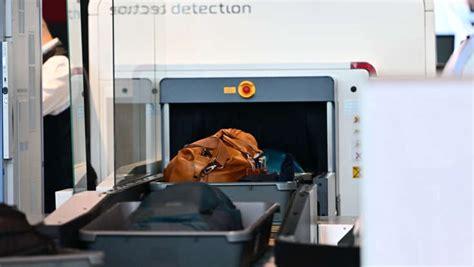
The Transportation Security Administration (TSA) is entering its next chapter with a sweeping modernization strategy designed to reshape how security works at US airports. Known as Horizon 25, the roughly $781 million strategy focuses on upgrading airport checkpoints, expanding security technology, improving passenger processing, and strengthening the agency’s ability to respond to emerging threats. Rather than treating airport security as a fixed system, the initiative recognizes that passenger volumes, technology, and security risks have all changed dramatically since the agency was created.
The timing is significant. The strategy arrives as the United States marks 25 years since the September 11 attacks, the event that fundamentally changed aviation security. Nearly 3,000 people were killed in the attacks, and the response led to the creation of a federal agency responsible for passenger screening across the country. On November 19, 2001, President George W. Bush signed the Aviation and Transportation Security Act, establishing the TSA and beginning a new era of federally managed airport security.
Today, the TSA operates on a vastly larger scale than the organization created in the aftermath of 9/11. The agency screens more than 900 million travelers each year and handles approximately 2 billion pieces of carry-on baggage across US airports. That volume creates a difficult balancing act: security procedures must identify increasingly sophisticated threats while allowing enormous numbers of passengers to move through checkpoints without creating unmanageable delays.
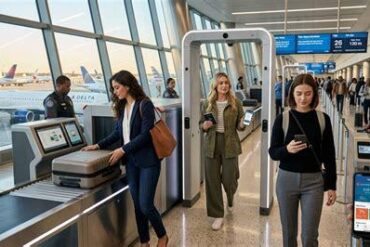
The Horizon 25 strategy is intended to address that challenge by combining technology, new checkpoint designs, alternative workforce models, and broader transportation security capabilities. Its emphasis on modernization also reflects a basic reality of contemporary air travel: the checkpoint is no longer simply a place where an officer looks at a passenger and an X-ray image. It has become a highly interconnected technological environment involving automated identity verification, three-dimensional baggage imaging, biometric systems, artificial intelligence, and increasingly sophisticated threat detection.
How TSA Took Control of US Airport Security After 9/11
Before the September 11 attacks, airport security in the United States operated under a substantially different model. Private security companies provided passenger screening at airports, with individual airports and airlines responsible for arranging screening services. The resulting system could vary considerably from one location to another because different contractors operated under different circumstances and standards.
The September 11 attacks exposed serious weaknesses in that fragmented approach. The federal government subsequently moved toward a national security system in which passenger screening would be conducted under federal oversight. The Aviation and Transportation Security Act created the TSA, initially placing the agency under the Department of Transportation before its responsibilities were transferred to the newly created Department of Homeland Security (DHS) in 2003.
One of the most important changes involved checked baggage. The new system established federal requirements for screening checked bags before aircraft departure, supported by aviation security personnel and specialized screening equipment. Passenger screening also became standardized across the country, creating a common framework for airports that previously depended heavily on private contractors.
Over the following two decades, the TSA expanded well beyond the responsibilities originally associated with passenger screening. Its work now includes airport access control, identity verification, baggage screening, threat detection, transportation security intelligence, and other security functions. The agency has therefore evolved from a response to a specific historical event into a permanent part of the US transportation infrastructure.
Horizon 25 Sets Three Major Priorities for TSA
Horizon 25 provides a framework for how TSA intends to approach the next phase of that evolution. The strategy centers on modernizing airport checkpoints, improving the passenger experience, and strengthening security across multiple transportation modes.
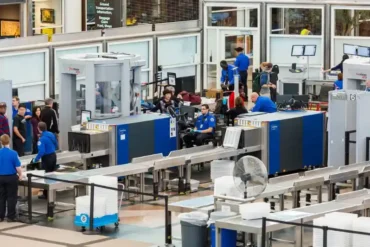
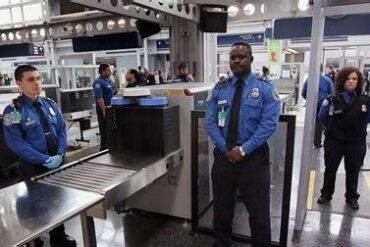
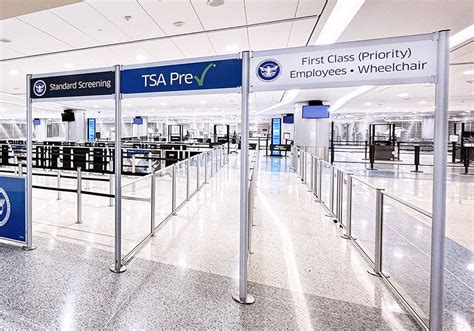
The first priority is particularly important because airport checkpoints remain one of the most visible parts of the TSA operation. Millions of travelers encounter the agency through security lanes every day, making checkpoint efficiency both an operational issue and a major component of the passenger experience.
Modernization is not simply about purchasing newer machines. TSA is attempting to create a checkpoint environment in which technology, employees, passenger flows, and security procedures operate more efficiently together. A faster scanner does not necessarily produce a faster checkpoint if passengers still have to remove items unnecessarily, officers must perform repetitive manual checks, or lanes are poorly configured.
The strategy therefore takes a broader view of modernization. Technology can reduce certain repetitive tasks, improve the quality of information available to security officers, and potentially allow passengers to move through screening with fewer interruptions. At the same time, TSA must maintain safeguards against technical failures, false alarms, changing threats, and situations where human judgment remains necessary.
TSA Administrator David P. Cummins has described the objective as creating an agency that is “agile, resilient and ready” for future challenges. That language reflects the scale of the task. TSA is not simply trying to make today’s checkpoint slightly faster; it is attempting to establish a security infrastructure that can adapt as both aviation and threats evolve.
CT Scanners Are Changing How TSA Screens Baggage
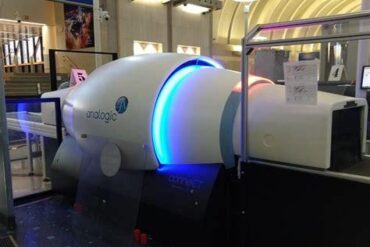
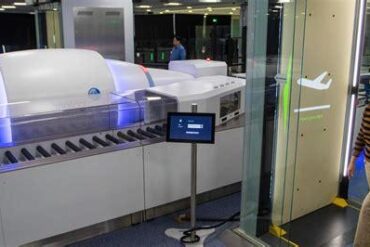
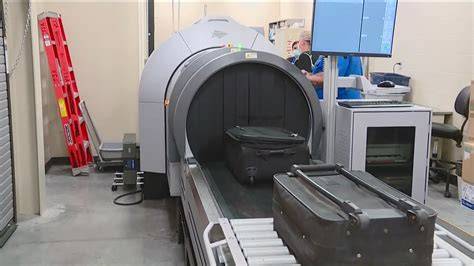
One of the most important technologies in the Horizon 25 modernization effort is Computed Tomography (CT) screening. Unlike traditional two-dimensional X-ray images, CT scanners create detailed three-dimensional representations of baggage. Security officers can examine these images from different angles, making it easier to assess objects inside a bag and identify potential threats.
TSA has already deployed approximately 1,162 CT scanners at 296 US airports through its Checkpoint Property Screening System program. That represents a major technological transition because CT equipment changes the way officers interact with baggage images rather than merely providing a newer version of the traditional X-ray machine.
The technology is particularly relevant to the long-term development of checkpoint operations because sophisticated imaging can work alongside automated detection systems. Instead of relying entirely on an officer to recognize an unusual object from a single perspective, modern screening systems can provide substantially richer information.
The financial commitment is also significant. Industry reporting indicates that the CPSS program has approximately $215 million in baseline funding for fiscal year 2026, while TSA expects broader modernization requirements to reach between $500 million and $700 million over five years.
Advanced Imaging Technology Expands Passenger Screening
Technology modernization extends beyond baggage. TSA has also deployed Advanced Imaging Technology (AIT) systems, which use millimeter-wave scanning to detect metallic and non-metallic objects on passengers.
The agency has approximately 1,200 AIT units at nearly 400 airports, making the technology a familiar part of modern US airport security. These systems allow officers to identify potential concealed items without relying solely on traditional physical screening methods.
The significance of AIT is that it represents a broader shift toward technology-assisted passenger screening. Modern security increasingly depends on sensors and automated systems to identify anomalies before an officer decides whether additional screening is necessary.
TSA is also expanding the technology used to establish whether passengers are who they claim to be. Credential Authentication Technology, or CAT, allows Transportation Security Officers to examine identity documents and verify information associated with a passenger’s flight and security status.
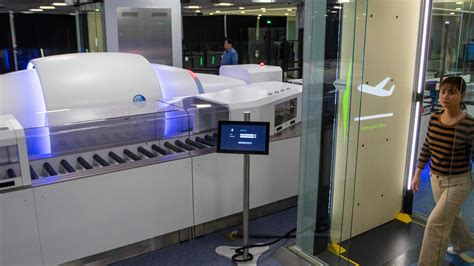
The second generation, known as CAT-2, adds facial comparison capabilities. TSA has deployed CAT-2 units at approximately 350 airports, while facial comparison technology is already being used at selected locations.
Rather than treating facial recognition as an isolated feature, TSA is incorporating identity technology into the larger checkpoint process. The objective is to connect a passenger’s identity, travel information, and security status more efficiently while reducing unnecessary manual steps.
TSA Plans Facial Comparison E-Gates Across PreCheck Lanes
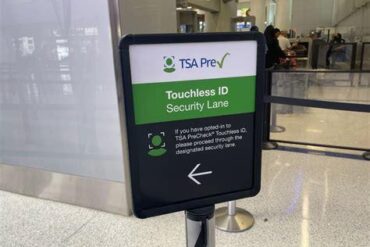
The next phase could make biometric technology considerably more visible to travelers. TSA is preparing to introduce e-gates equipped with facial comparison technology, alongside a new lane configuration, across its approximately 400 TSA PreCheck lanes.
The concept could change the physical experience of moving through a security checkpoint. Instead of presenting identification in exactly the same way as today’s process, passengers could increasingly interact with automated gates that verify identity through technology.
For TSA, the attraction is obvious: automated identity verification could reduce repetitive document checks and allow officers to concentrate on security functions that require greater attention. For passengers, the potential benefit is a smoother process with fewer manual interactions.
However, these systems also make the reliability of technology increasingly important. Identity verification systems must work accurately across large passenger populations and different operating conditions. Checkpoints also need procedures for situations in which automated systems cannot verify a passenger successfully.
The move toward biometric processing therefore does not eliminate the human element. Instead, it changes where human attention is applied within the security process.
Horizon 25 Looks Beyond TSA’s Federal Screening Workforce
Another significant component of Horizon 25 is the planned expansion of public-private partnerships at airport security checkpoints. TSA is looking to evolve its existing Screening Partnership Program (SPP) rather than proceed primarily through the newer Gold+ model.
Gold+ was introduced as an approach that would give airports greater flexibility to use private companies for screening staff and checkpoint equipment. Supporters of greater flexibility have pointed to the potential for airports to introduce technology and operational changes without relying entirely on the federal procurement process.
The approach has also generated questions concerning oversight, workforce protections, and the relationship between private screening companies and the federal government. Tampa International Airport, one of the airports that considered the model, decided in August to continue using federal TSA screeners after reviewing the proposal.
The existing SPP provides a different model. Private screening companies operate at participating airports while remaining subject to TSA security requirements and oversight. Twenty commercial airports currently use private screening companies through the program, including San Francisco International Airport and Kansas City International Airport.
Horizon 25 calls for an expanded and evolved SPP. The reasoning is partly connected to workforce resilience. During federal government shutdowns in October 2025 and March 2026, TSA staffing shortages contributed to longer security waits at some airports. Airports operating under the SPP model were less directly exposed to shortages involving federal TSA employees.
Counter-Drone Technology Becomes Part of Airport Security
Airport security is also expanding beyond the terminal. Unauthorized drones have become an increasingly important operational concern because even a relatively small unmanned aircraft can interfere with aircraft movements when flown near an airport.
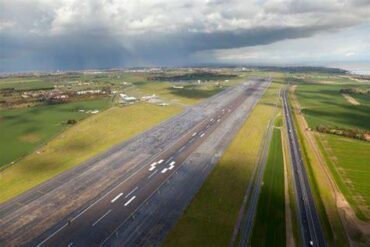
A recent example occurred at Ronald Reagan Washington National Airport, where flights were temporarily stopped after pilots reported seeing a drone over an active runway. The incident illustrates why airport security agencies are increasingly concerned about objects operating outside the terminal but still capable of affecting aviation operations.
The FAA receives more than 100 reports of drone activity near airports each month, according to the reference material. Detecting these aircraft is therefore becoming another component of aviation security.
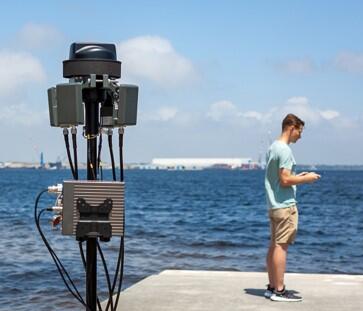
Horizon 25 includes counter-unmanned aircraft systems (C-UAS) as part of TSA’s broader security plans. The agency is already testing commercially available C-UAS technology through its C-UAS Test Bed Program, operated by the Requirements and Capabilities Analysis Office.
The testing currently includes facilities at Miami International Airport and Los Angeles International Airport. TSA can use these real-world airport environments to evaluate how systems perform under operational conditions, including detection range, false alarms, and overall effectiveness.
What Horizon 25 Means for the Future of US Airport Checkpoints
The most important feature of Horizon 25 may be that it treats airport security as a connected system rather than a collection of separate checkpoint procedures. CT scanners address baggage, AIT systems screen passengers, CAT-2 supports identity verification, facial comparison can automate parts of the identification process, and C-UAS technology addresses threats beyond the terminal.
Those systems will increasingly have to operate together. As passenger volumes continue to rise, TSA cannot simply add more officers and longer security lines to accommodate demand. The agency needs technology and processes capable of handling greater volumes without weakening security.
The strategy also shows how different airport security models could coexist. Federal TSA screening remains the dominant approach, while the SPP provides an alternative workforce structure at selected airports. Horizon 25’s emphasis on an expanded partnership program suggests that TSA sees operational flexibility as another part of resilience.
The result will not arrive overnight. Some elements of Horizon 25 are already deployed, while others involve procurement, testing, infrastructure changes, and operational adjustments that will take years. The $781 million strategy is therefore better understood as a roadmap for transforming airport security rather than a single technology program.
Twenty-five years after TSA was created, the security environment facing US airports is almost unrecognizable compared with the system that existed before September 11. The agency now processes hundreds of millions of travelers using increasingly sophisticated equipment while also confronting threats that extend beyond passengers and baggage.
Through 2028 and beyond, the checkpoint is likely to become more automated, more biometric, and more dependent on advanced imaging. At the same time, security will increasingly extend beyond the checkpoint itself, incorporating airport access systems, private screening partnerships, identity technologies, and counter-drone capabilities.
Horizon 25 ultimately reflects TSA’s attempt to prepare for that broader environment. Its success will depend not on any single scanner or biometric gate, but on how effectively technology, personnel, infrastructure, and security procedures work together while millions of passengers continue moving through America’s airports every day.