A single piece of paper at Orlando International Airport (MCO) has opened an unusually large window into the future of airport security in the United States. In February 2026, a traveler or airport visitor encountered a TSA-branded briefing flyer describing GoldPlus, a new public-private screening initiative that could make nearly $12.9 billion in federal funding available to private companies. The document was passed to a reporter at Federal News Network, turning what might otherwise have remained an internal industry presentation into the starting point for a national controversy.
The significance of the flyer was not simply that it revealed another airport-security contracting proposal. GoldPlus potentially represents a fundamental expansion of the federal government’s existing experiment with private airport screening. Unlike the current Screening Partnership Program, or SPP, the proposed model would allow private operators to manage both screening personnel and screening technology. That distinction matters because TSA currently retains ownership and control of the equipment used at airports participating in the existing program.
The discovery also raised questions about how the program had been developed. TSA had already been discussing GoldPlus with vendors and airport executives for months before the public learned about it. References to the initiative appeared in agency procurement documents as early as August 2025, while airport-industry officials received a formal presentation in March 2026. Yet the union representing approximately 47,000 Transportation Security Officers, as well as congressional oversight committees, had not been formally briefed during that period.
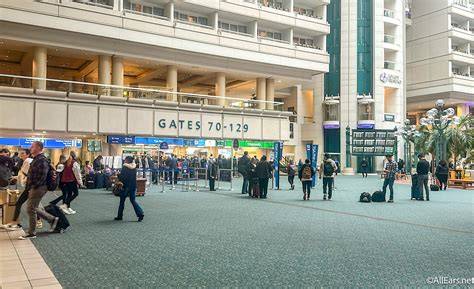
The Orlando Airport Flyer That Revealed TSA GoldPlus
The flyer discovered at Orlando International Airport described GoldPlus as “a new public-private partnership aimed at modernizing aviation security at select airports across the country.” Its wording offered an unusually direct glimpse into the program’s intended structure, explaining that long-term SPP contracts would redirect funding into investable partnerships in which industry operators could manage the technology and screening workforce.
That language is important because it suggests GoldPlus was not conceived merely as a routine expansion of the existing private-screening system. The program was being presented as an investment opportunity for private operators, with technology modernization and workforce management bundled into the same arrangement. In practical terms, a participating airport could move from having federal employees operating TSA-owned equipment to relying on a private company for both sides of the screening operation.
The fact that the flyer was found at an airport also illustrates the unusual path by which the program became public. There was no major congressional announcement or broad TSA public briefing when the initiative was first being developed. Instead, a document apparently intended for airport or industry audiences reached a journalist through an individual who happened to encounter it.
Federal News Network published its first report on GoldPlus in April 2026. What followed was a widening dispute involving airport operators, TSA, AFGE, federal transparency requirements and the future role of private companies in aviation security.
TSA Had Been Developing GoldPlus for Months
The Orlando flyer did not represent the beginning of GoldPlus. Evidence cited in the controversy indicates that TSA had been working on the concept since at least August 2025.
That month, the agency issued a request for information to vendors that referred to new GoldPlus public-private screening acquisitions. A second request for information followed in September and addressed third-party testing equipment. Those documents demonstrated that the program was already being developed with the private sector well before the February 2026 discovery.
The timeline became even more significant when TSA officials briefed the Airports Council International conference in Chicago on March 26, 2026. By that point, GoldPlus had apparently moved well beyond an internal concept. The agency was discussing it with airport-industry representatives and potential commercial participants.
Yet the American Federation of Government Employees (AFGE), which represents TSA screening officers, says it was not formally informed about the initiative during this development period. The same issue has been raised regarding congressional committees responsible for overseeing TSA.
AFGE general counsel Rushab Sanghvi characterized the development as an effort being advanced with limited public information. The union argues that TSA was effectively marketing a major privatization initiative to potential industry participants while the federal employees whose jobs could be affected remained largely outside the process.
How GoldPlus Differs From the Existing TSA Screening Partnership Program
The United States has had private airport screening before. The Screening Partnership Program, established in 2004, currently operates at 20 airports. Private contractors employ and manage screeners at those facilities, while TSA maintains regulatory authority and supplies the screening technology.
Passengers at an SPP airport are not supposed to encounter a fundamentally different security process. TSA establishes the rules, procedures and security requirements, and a federal security director remains responsible for oversight. The private contractor essentially supplies the workforce under the federal framework.
GoldPlus changes the equation.
Under the proposed model, private operators would take responsibility for both the screening workforce and the screening technology. That means companies could become responsible not only for hiring and managing screeners but also for operating equipment that TSA currently owns and maintains.
The difference is therefore more than a change in who wears the uniform or receives the paycheck. GoldPlus could give private operators a much larger role in the technical and operational infrastructure of passenger screening.
The scale is also substantially different. The current SPP covers only about 4.5% of the approximately 440 commercial airports subject to TSA screening requirements. A separate fiscal 2027 budget proposal would expand the existing SPP to roughly 250 of the smallest commercial airports. GoldPlus, however, is aimed at larger airports beyond that proposed expansion.
The federal government is making nearly $13 billion available for the GoldPlus concept, potentially creating a major new market for security companies, technology providers and airport operators.
Why TSA Says GoldPlus Could Modernize Airport Security
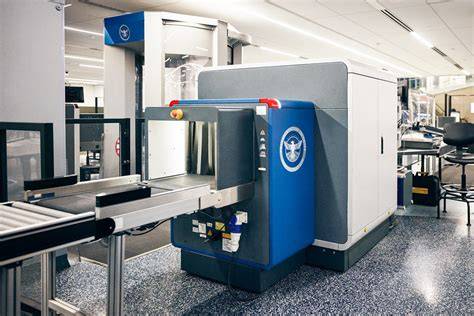
TSA has presented GoldPlus primarily as an opportunity to accelerate technological innovation. The agency has pointed toward technologies such as AI-powered threat detection, remote screening systems and automation as potential components of the new model.
That emphasis reflects a broader transformation underway at airport security checkpoints. Traditional screening depends heavily on large numbers of personnel performing repetitive tasks, while newer technologies can potentially automate portions of the process, improve detection and reduce the amount of manual work required.
A 2025 TSA request for information specifically sought industry feedback on technologies that could improve passenger satisfaction while reducing staffing requirements. GoldPlus therefore appears connected to a larger effort to redesign the screening process around technology rather than simply adding more personnel.
For TSA, private-sector involvement could offer another advantage: access to companies whose core business is developing, integrating and maintaining specialized security systems. Instead of the federal government managing every component directly, private operators could have incentives to invest in technology and operational efficiencies.
But that promise also creates difficult questions. If private companies control both the employees and the equipment, who ultimately bears responsibility when a system fails? How would performance be measured? Who pays for upgrades? And how much control would TSA retain over technology decisions made by a private operator?
Those questions become especially important when billions of dollars in public funding are involved.
Tampa, Charleston and Des Moines Become the First Test Cases
TSA notified AFGE in late July 2026 that it intended to begin GoldPlus at Tampa International Airport (TPA), Charleston International Airport (CHS), and Des Moines International Airport (DSM) in 2027.
Tampa is the most advanced of the three. The airport has confirmed that it has opted into GoldPlus, making it the first airport to publicly commit to the new model. With approximately 23 million passengers in 2025, Tampa would also become the largest U.S. airport operating under privatized screening if the plan proceeds.
That would give GoldPlus a highly visible test case. San Francisco International Airport has long been the largest airport participating in the existing SPP, but Tampa’s substantially larger passenger volume would move the private-screening model into a different operational environment.
Charleston is another interesting case because its airport shares an airfield with Joint Base Charleston. The airport handled roughly six million passengers in 2023. Des Moines is smaller but strategically important as Iowa’s primary commercial airport, serving passengers through airlines including American, Delta, United, Southwest, Frontier and Allegiant.
For travelers, TSA says the security experience should remain fundamentally unchanged. TSA will continue setting screening requirements and maintaining regulatory oversight.
The more complicated issue involves the workers.
Approximately 1,500 to 2,000 TSA screening officers currently work at the three airports. TSA has not publicly detailed how those employees will transition if private operators assume responsibility. Some could potentially be hired by the contractors, while others might seek federal positions at different airports. The possibility of displacement remains a central concern for AFGE.
AFGE Takes TSA to Court Over GoldPlus Records
The dispute moved into federal court on August 5, 2026, when AFGE filed a lawsuit against TSA under the Freedom of Information Act.
The case is not a direct legal challenge seeking to immediately stop GoldPlus. Instead, the union is demanding access to records explaining how the program was developed, planned and marketed.
AFGE submitted its FOIA request in May 2026, seeking documents that included internal communications, briefing materials, correspondence with vendors and airport executives, and financial or budget analysis supporting GoldPlus. The union argues that TSA did not respond within the 20-business-day period required under FOIA.
When the agency eventually responded, it indicated that AFGE would be charged a $25 processing fee. The union then filed suit seeking to compel the release of the requested information.
The lawsuit matters because the documents could reveal how far the program had progressed before it became public. They could also show what assumptions TSA used when estimating costs, savings, staffing requirements and technology benefits.
Perhaps most importantly, the records could clarify whether GoldPlus was developed primarily as a modernization strategy or as a deliberate effort to shift a significant portion of federal airport-security operations into the private sector.
What Existing Privatized Airports Can Tell Us
The 20 airports already operating under the SPP provide the closest real-world evidence for evaluating privatized screening. However, their experience cannot be treated as a perfect preview of GoldPlus because the existing program leaves screening equipment under TSA control.
Government studies have produced mixed findings about whether private or federal screening is more efficient. Government Accountability Office reports from 2012 and 2015 found competing cost estimates and performance results that varied by airport, without establishing a consistent advantage for either model.
TSA has also stated that passenger wait times are similar at federalized and privatized airports.
One 2011 House Transportation and Infrastructure Committee study found that SPP airports processed 65% more passengers per screener than TSA-staffed airports. However, questions have been raised about the study’s methodology and sample size, making it difficult to use the figure as definitive proof that privatization consistently produces better results.
The partial government shutdown in early 2026 provided another practical test. Federal TSA officers faced unpaid work and staffing shortages, contributing to delays at some federally staffed airports. Private screeners at SPP facilities continued receiving paychecks because they were not federal employees, and airports such as San Francisco largely avoided the same disruption.
That episode provides a compelling argument for private employment from an operational-continuity perspective. It does not, however, settle the broader question of whether private management of both people and technology is superior.
The September 11 Legacy Behind the Privatization Debate
The debate over GoldPlus carries unusual historical weight because TSA itself was created after the September 11, 2001, terrorist attacks exposed weaknesses in the privately operated airport-screening system that existed at the time.
The federal government subsequently took direct responsibility for passenger screening, creating a national workforce and centralized security framework. For supporters of the current system, that history makes a large-scale return to private screening inherently controversial.
For advocates of modernization, however, the aviation environment of 2026 is dramatically different from the one that existed in 2001. Artificial intelligence, automated detection, remote screening and increasingly sophisticated security technology could make the traditional staffing model less efficient than it once was.
GoldPlus therefore sits at the intersection of two competing philosophies. One emphasizes federal accountability and centralized security control. The other emphasizes technological innovation, private-sector investment and operational flexibility.
The question is not simply whether private companies can operate airport checkpoints. They already do. The larger question is whether private companies should receive responsibility for the technology, workforce and substantial federal funding associated with those checkpoints at major U.S. airports.
Why the Orlando Flyer Matters
The most remarkable part of the GoldPlus story may be how it became public. A program potentially involving $12.9 billion in federal funds and reshaping airport security at major facilities was not initially revealed through a major government announcement. It emerged because someone found a flyer at Orlando International Airport and passed it to a journalist.
That accidental disclosure transformed an obscure industry initiative into a national policy debate.
Tampa’s planned participation means the issue is no longer theoretical. If GoldPlus launches successfully in 2027, its results could influence whether additional major airports adopt the model. If problems emerge involving workforce transitions, security performance, accountability or technology costs, those problems could become arguments against expansion.
The FOIA lawsuit may ultimately prove just as important as the first airport deployments. The records AFGE is seeking could reveal the assumptions behind the program and explain why the initiative developed largely outside public view.
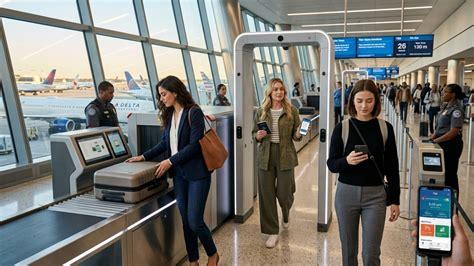
For passengers, the checkpoint itself may look familiar. Bags will still enter screening machines, travelers will still remove items when instructed, and security officers will still stand behind the checkpoint.
Behind that familiar scene, however, the ownership and management structure could be changing dramatically. GoldPlus could become one of the largest transformations of U.S. airport security since TSA was created. And its story began with something remarkably ordinary: a flyer sitting in an airport.