Air France is ending its Denver–Paris route after roughly five years of operation, bringing an unexpected conclusion to a transatlantic service that began during the difficult aviation environment of 2021. The final Air France departure from Denver International Airport (DEN) is currently scheduled for October 10, 2026, after which the French carrier will no longer operate the nonstop connection to Paris Charles de Gaulle Airport (CDG).
The decision comes shortly after United Airlines announced that it will launch its own Denver–Paris flights in May 2027. United’s planned service will operate daily and year-round, creating a significantly larger and more consistent nonstop offering between Colorado and the French capital. For Air France, the arrival of a strong competing service appears to have changed the calculation surrounding a route that had already been adjusted several times.
The Air France route has had an unusual evolution. When it launched in July 2021, flights were initially seasonal, reflecting both the wider uncertainty surrounding international travel and the carrier’s cautious approach to the Denver market. The service remained seasonal through 2024 before Air France expanded it into a year-round operation in March of that year. During the summer, the airline generally offered four weekly flights between Denver and Paris.
Air France Denver Flights Become Seasonal Again
Air France continued operating between Denver and Paris through October 2025, when the carrier once again shifted the service back to a seasonal schedule. When flights returned in May 2026, the airline offered three weekly departures, rather than the four weekly flights typically seen during earlier summer schedules.
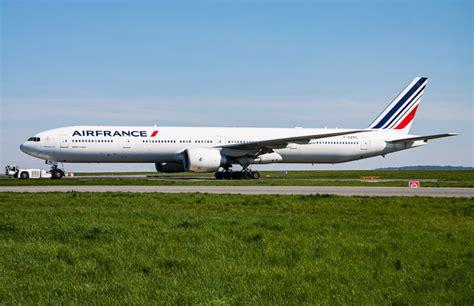
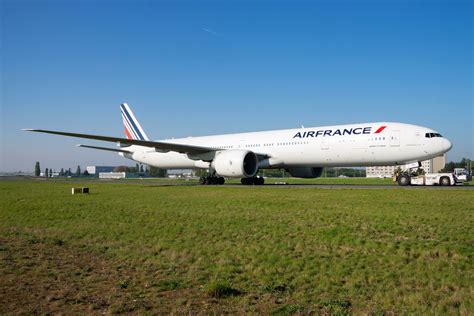
The aircraft also changed. Air France replaced the 279-seat Boeing 787-9 with the larger 328-seat Boeing 777-200ER. At first glance, deploying a larger aircraft on a route with fewer weekly frequencies might appear contradictory. However, the change allowed Air France to provide more seats on each individual flight while reducing the number of departures.
The cabin configuration also offered an important clue about the route’s economics. The 777-200ER used for Denver contained considerably more economy seating than the 787-9 previously assigned to the route. That suggests Air France was adjusting its product toward a market where demand for premium seats may not have been strong enough to justify the previous configuration.
For the first week of October 2026, the schedule shows AF58 leaving Paris at 1:25 p.m. and arriving in Denver at 3:40 p.m., a scheduled flying time of 10 hours and 15 minutes. The return, AF59, departs Denver at 5:40 p.m. and reaches Paris at 11:10 a.m. the following day after approximately nine hours and 30 minutes in the air.
Why Air France Is Leaving Denver
The route’s performance provides some context, although no single statistic explains an airline’s network decision. According to US Department of Transportation data covering the 12 months through June 2026, Air France carried 38,542 passengers between Paris and Denver.
That made Denver the airline’s second-smallest US market during the period, ahead of only the recently launched Paris–Las Vegas route. Air France’s Las Vegas service began in April 2026, so its lower passenger total was largely a consequence of its shorter operating history.
Air France’s Denver flights recorded an 83.2% load factor during the period, compared with an 85.7% average across the carrier’s US operations. Load factor alone does not determine whether a route is profitable, because yields, cargo revenue, connecting traffic, operating costs, aircraft utilization and premium-cabin performance all influence the final result.
Nevertheless, the sequence of changes is revealing. Air France moved from seasonal flying to year-round service, then returned to seasonal operations, reduced weekly frequency and changed aircraft. Those adjustments indicate that the airline was actively trying to match capacity with demand before ultimately deciding not to resume the route in 2027.
United Airlines Changes the Denver–Paris Market
The decisive development was United’s announcement of a new Denver–Paris service beginning May 27, 2027. United plans to operate the route daily and year-round with the Boeing 787-9, providing a more frequent schedule and a longer operating season than Air France’s final schedule.
The difference is particularly significant for passengers traveling specifically between Denver and Paris. Booking data for the 12 months through June 2026 indicates that nearly 98,000 passengers traveled between the two metropolitan areas. Most of those travelers connected somewhere along the way rather than using Air France’s nonstop service.
United’s arrival therefore creates a substantially different competitive proposition. A daily year-round nonstop flight gives travelers more schedule flexibility while reducing the need to connect through another airport. It also gives United an opportunity to target local Denver–Paris demand directly rather than relying as heavily on connecting passengers.
Air France’s Paris hub provided another dimension to the route. Passengers could use CDG to connect onward to destinations across Europe and beyond, meaning the Denver service was not dependent solely on travelers whose final destination was Paris. United can similarly use its extensive US network to attract passengers traveling between Denver and other parts of the Western United States.
What Happens to Air France Flights From Denver?
Air France’s planned 2027 Denver flights have now disappeared from the carrier’s schedule. Unless the airline reverses the decision, October 10, 2026, will mark the final Air France departure from Denver on the route.
The cancellation also places Air France’s Denver withdrawal within a broader pattern at the airport. Edelweiss has already ended its Denver operation, while Aer Lingus is also leaving the market. Air France will consequently become the third European carrier to recently discontinue service from Denver.
For passengers, the end of Air France’s service does not mean the Denver–Paris market will lose nonstop connectivity. Instead, the route is changing hands, with United Airlines preparing to operate daily flights from May 2027.
The transition illustrates how quickly international airline networks can change. Air France spent five years testing different schedules and aircraft on the Denver market, but the arrival of a competing daily service appears to have made continued operation less attractive. The result is not simply the disappearance of a route, but a reshaping of the Denver–Paris nonstop market, with United preparing to take over the role Air France has held since 2021.