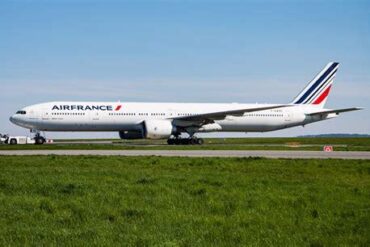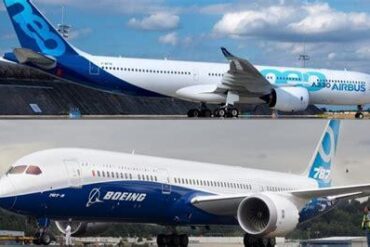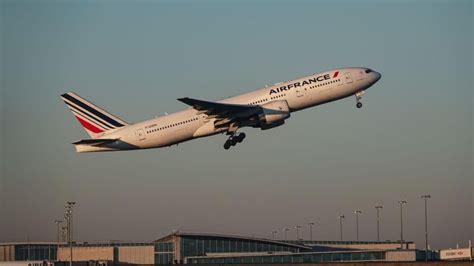
Air France has announced a strategic adjustment to its winter transatlantic service, temporarily replacing the Airbus A350-900 with the Boeing 787-9 Dreamliner on its Paris Charles de Gaulle (CDG) to Denver International Airport (DEN) route. This decision reflects the airline’s broader efforts to optimize capacity based on evolving travel demand, particularly between Europe and the United States during the low-demand winter season.
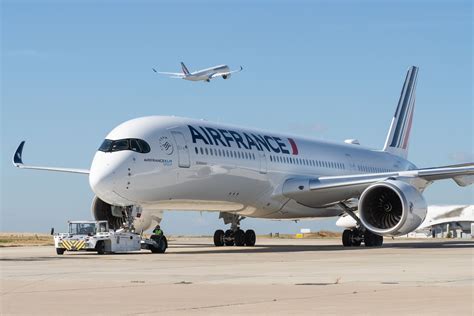
The final Airbus A350 flight on this route is scheduled for October 12, 2025, after which the more compact Boeing 787-9 will take over operations through the winter period. The A350-900, renowned for its spacious cabins and modern design, is expected to return to the route on April 24, 2026, just in time for the peak summer travel season.
Air France Aligns Capacity with Seasonal Demand
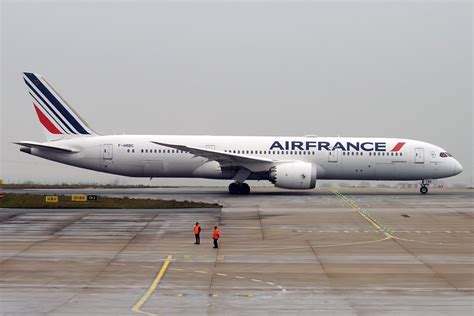
The replacement of the A350-900, which accommodates 324 passengers, with the Boeing 787-9 Dreamliner, offering 279 seats, is a calculated response to projected declines in winter travel demand. The airline’s decision underscores an industry-wide trend where carriers scale operations to match market conditions, especially in transatlantic travel segments.
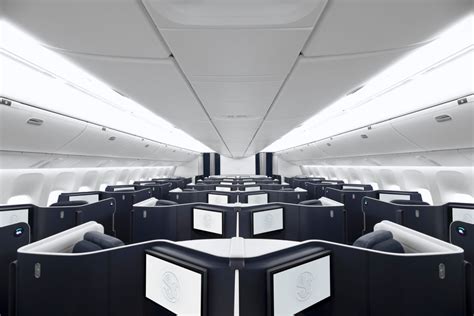
The A350’s three-class configuration includes 34 business class, 24 premium economy, and 266 economy seats, providing ample capacity during high-demand periods. Conversely, the 787-9 Dreamliner, configured with fewer seats and optimized for efficiency, presents a pragmatic solution for periods of reduced passenger volume.
This strategic move is rooted in recent shifts in travel behavior, with fewer Europeans choosing to travel to the U.S. during the winter months. Economic uncertainty, stricter U.S. border policies, and evolving geopolitical landscapes have collectively contributed to this trend.
Broader Market Dynamics Impacting Transatlantic Routes
Air France’s adjustment to its Paris-Denver service follows similar actions by other leading carriers, including Lufthansa and Turkish Airlines, who have scaled back operations to certain U.S. cities, citing waning demand. Airlines have been closely monitoring fluctuating booking patterns, with particular attention to secondary U.S. destinations such as Denver, which rely heavily on leisure and seasonal travel.
Economic pressures within Europe, coupled with reduced consumer confidence, have significantly impacted travel plans. In parallel, U.S. policy changes, including enhanced border controls and evolving visa requirements, have created additional friction for potential European travelers.
The result is a noticeable drop in transatlantic airfares, signaling excess capacity on certain routes and prompting airlines to resize their fleets accordingly. For Air France, the decision to temporarily deploy the smaller Boeing 787-9 Dreamliner ensures that service continuity is preserved while better aligning seat availability with actual market demand.
Air France’s Fleet Optimization Strategy
Air France’s fleet reflects a diverse mix designed to support both high-capacity, long-haul routes and more adaptable, mid-capacity services. The airline currently operates 37 Airbus A350-900 aircraft, prized for their fuel efficiency and passenger comfort, alongside 10 Boeing 787-9 Dreamliners, which offer enhanced flexibility for lower-demand periods.
The 787-9 Dreamliner, known for its advanced aerodynamics, quieter cabins, and fuel-efficient engines, remains a cornerstone of Air France’s adaptability strategy. Its deployment on the Paris-Denver route allows the airline to maintain daily direct service, ensuring travelers retain access to one of the few non-stop connections between France and Colorado, even during traditionally slower travel months.
Crucially, Air France has committed to resuming A350-900 operations on the route by late April 2026, reinforcing the importance of Denver within its broader transatlantic network.
Industry-Wide Trends: Airlines Respond to Shifting Transatlantic Demand
The Paris-Denver adjustment is emblematic of wider trends in transatlantic aviation. Airlines across Europe and North America have adopted similar strategies in response to unpredictable passenger demand. For example, American Airlines plans to suspend select transatlantic routes from New York (JFK) to Paris (CDG) over the winter, citing reduced bookings.
Similarly, Lufthansa has publicly acknowledged weaker demand projections for the upcoming winter, prompting reductions in flight frequencies and growth forecasts. These changes reflect an overarching caution within the airline sector, as carriers grapple with volatile demand patterns influenced by macroeconomic headwinds and evolving traveler sentiment.
Despite these reductions, airlines remain committed to their transatlantic footprints. Maintaining core routes with adjusted capacity enables carriers to strike a balance between preserving connectivity and optimizing operational efficiency.
Evolving Travel Trends and Market Realities
The decline in European travel to the U.S. is driven by a combination of factors:
- Economic conditions, including inflation and higher living costs, dampening discretionary spending.
- Political uncertainty, particularly surrounding U.S. immigration and border policies.
- Lingering travel hesitancy related to post-pandemic recovery and international mobility.
- Fluctuating exchange rates, which can affect affordability for European travelers.
For Air France, these dynamics necessitate a fleet and route strategy rooted in flexibility. The transition to the Boeing 787-9 represents not only a response to lower demand but also a proactive measure to ensure route viability and profitability.
The Future of Air France’s Paris-Denver Route
Air France’s commitment to the Paris-Denver route, despite temporary capacity reductions, underscores its strategic value within the airline’s transatlantic portfolio. Denver serves as a critical gateway to the Rocky Mountain region, offering both leisure and business travel opportunities. Its proximity to key ski destinations and national parks makes it a year-round attraction for European travelers, particularly during peak seasons.
The airline’s willingness to adjust aircraft types, rather than suspend the route entirely, reflects confidence in the long-term potential of this service. Maintaining daily flights with the 787-9 Dreamliner ensures consistent connectivity while positioning the airline to swiftly ramp up capacity with the A350-900 when demand rebounds.
Adapting to a Changing Aviation Landscape
Air France’s winter adjustment is a microcosm of the airline industry’s broader need for agility. With transatlantic travel patterns continuing to evolve, airlines must fine-tune operations to match market realities. The current climate requires a nuanced approach to fleet management, capacity planning, and route optimization.
The temporary replacement of the Airbus A350-900 with the Boeing 787-9 Dreamliner demonstrates Air France’s commitment to responsible, data-driven decision-making. By scaling operations to meet seasonal demand, the airline ensures its services remain both financially sustainable and customer-focused.
In the face of fluctuating travel preferences, regulatory uncertainties, and economic volatility, adaptability remains the cornerstone of success for global carriers. As the transatlantic market continues to stabilize and recover, Air France’s proactive strategy positions it to capitalize on future growth opportunities while preserving essential connectivity across the Atlantic.
Ultimately, the Paris-Denver route adjustment illustrates the delicate balance airlines must maintain between operational efficiency, market demand, and passenger experience — a dynamic that will define the next chapter of transatlantic aviation.