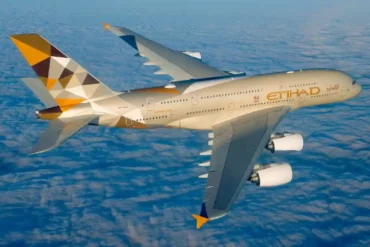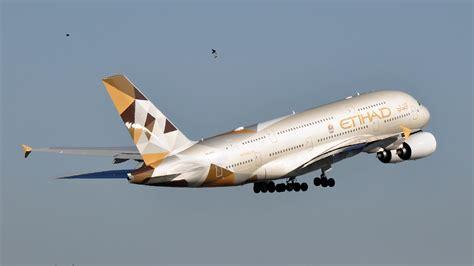
Etihad Airways is making a significant adjustment to its long-haul network strategy this summer, removing the Airbus A380 from flights between Abu Dhabi and Singapore and replacing the superjumbo with the smaller Boeing 787-9 Dreamliner. The move represents one of the most notable capacity reductions on a major Asia-Middle East corridor this year and highlights how airlines are continuing to reshape global operations amid changing demand patterns and geopolitical uncertainty.
The Abu Dhabi-based carrier had originally planned to operate the Airbus A380 on its daily Singapore Changi Airport route throughout the northern summer season. However, updated schedule filings show that the airline will now deploy Boeing 787-9 aircraft instead between July 1 and October 24.
While the flight timings remain unchanged, the aircraft downgrade dramatically alters the passenger capacity available on one of Southeast Asia’s busiest premium travel markets.
Etihad flight EY498 will continue departing Abu Dhabi at 9:40 PM and arriving in Singapore at 9:40 AM the next morning. The return flight, EY499, will still leave Singapore at 9:00 PM before touching down back in Abu Dhabi shortly after midnight.
The schedule stability masks what is effectively a major reduction in available seats.
The Airbus A380 configuration used by Etihad accommodates between 484 and 494 passengers, depending on the specific cabin layout. By comparison, the Boeing 787-9 operating the route carries only 226 passengers.
That translates into a reduction of more than half the route’s total seating capacity.
Etihad’s Singapore Capacity Takes A Sharp Hit
The numbers behind the aircraft change illustrate just how substantial the reduction really is. Etihad’s Airbus A380 offers one of the carrier’s most premium-heavy cabin products, including nine First Class seats, 70 Business Class seats, and more than 400 Economy seats.
The replacement Boeing 787-9 configuration is considerably smaller, featuring eight First Class suites, 28 Business Class seats, and 190 Economy seats.
The result is a dramatic capacity cut across every cabin category:
- First Class reduced by 11%
- Business Class reduced by 60%
- Economy Class reduced by more than 53%
- Total aircraft capacity reduced by over 250 seats daily
For a route connecting two major global aviation hubs, the reduction is striking. Singapore has long been an important market for premium traffic flows between Southeast Asia, Europe, and the Middle East, making the downgrade particularly noteworthy for business travelers and long-haul connecting passengers.
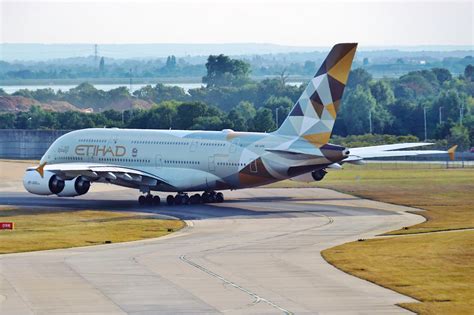
The move also underscores the operational realities surrounding Airbus A380 fleets. Unlike smaller widebody aircraft, the A380 is difficult to redeploy efficiently due to limited fleet sizes, high operating costs, and infrastructure requirements. Airlines typically assign the aircraft only to routes where demand and yields justify its enormous capacity.
In Etihad’s case, Paris appears to have emerged as the stronger market for summer 2026.
Paris Gains Double Daily Airbus A380 Service
As Singapore loses the superjumbo, Paris Charles de Gaulle Airport is becoming one of Etihad’s largest Airbus A380 destinations.
The airline plans to operate two daily A380 services between Abu Dhabi and Paris this summer, replacing aircraft currently scheduled as Airbus A350-1000s and Boeing 787-9s. A third Paris frequency will also continue operating four times weekly using a Boeing 787-9.
The revised Paris operation represents a major increase in premium and overall seat capacity into the French capital.
Under the updated schedule:
- EY31/EY32 shifts from the Airbus A350-1000 to the Airbus A380
- EY33/EY34 upgrades from the Boeing 787-9 to the Airbus A380
- EY35/EY36 transitions from an Airbus A320neo to a Boeing 787-9
This restructuring effectively transforms Paris into one of Etihad’s flagship European A380 markets alongside London Heathrow.
The decision likely reflects stronger summer demand between Europe and the Gulf, particularly for premium leisure and corporate traffic. Paris continues to see resilient inbound tourism numbers and strong long-haul connectivity demand, making it an ideal destination for high-capacity aircraft deployment.
The Airbus A380 Network Continues To Evolve
Etihad’s Airbus A380 fleet remains relatively small compared to Emirates, meaning each deployment carries strategic importance.
This summer, the airline’s A380 network will include:
- Multiple daily flights to London Heathrow
- Daily service to Paris Charles de Gaulle
- Daily flights to Tokyo Narita
- Daily service to Toronto Pearson
Every reassignment within that network signals a broader recalibration of market priorities.
The Airbus A380 itself has undergone an unexpected revival in recent years. Once considered an aircraft nearing early retirement, the superjumbo has returned to prominence on select trunk routes as international demand rebounded faster than anticipated after the pandemic recovery period.
Still, operating the aircraft remains expensive and operationally complex.

Reactivating stored A380s can require months of engineering work, extensive maintenance checks, and substantial financial investment. Airlines therefore tend to concentrate the aircraft only where revenue potential is strongest.
That reality is increasingly shaping how global carriers allocate their remaining A380 fleets.
Singapore’s A380 Landscape Is Rapidly Changing
Singapore has become one of the clearest examples of how shifting global conditions are impacting Airbus A380 operations.
Before the current wave of schedule revisions, all three major Gulf carriers — Emirates, Qatar Airways, and Etihad — had intended to operate A380 services into Singapore during the summer season.
That picture has changed considerably.
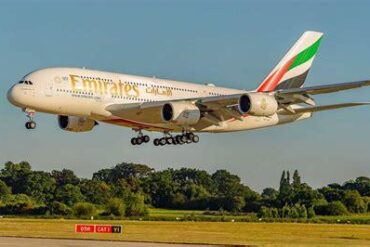
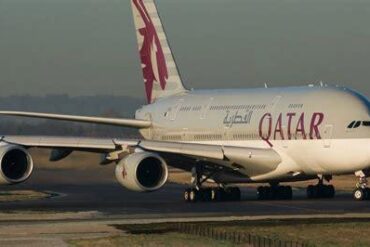
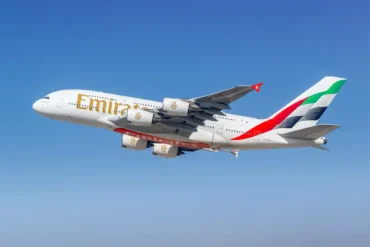
Etihad is removing the aircraft entirely from the market. Qatar Airways is not expected to resume A380 flights to Singapore until September. Emirates continues operating the aircraft into Changi, although some frequencies have now shifted to Boeing 777-300ERs instead.
Singapore Airlines has also adjusted its own deployment plans, pulling intended A380 service to Dubai while redirecting aircraft toward Melbourne, Australia.
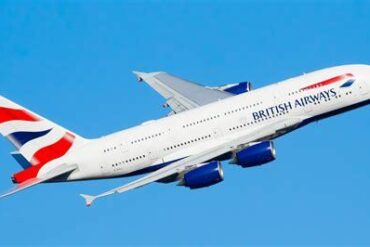
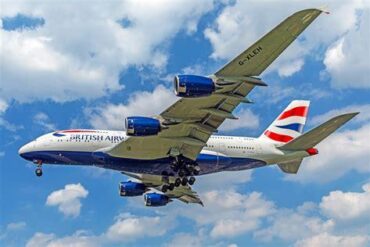
At the same time, British Airways is preparing to continue Airbus A380 operations to Singapore, maintaining the airport’s role as a major global superjumbo destination despite the recent reshuffling.
Geopolitical Pressure Is Influencing Airline Fleet Decisions
Many of the recent operational changes affecting Singapore are tied to wider instability across the Middle East region.
The Gulf carriers historically relied heavily on connecting traffic flows between Asia and Europe through their hub airports. Disruptions affecting airspace usage, operating economics, and regional demand patterns can therefore ripple quickly across long-haul schedules.
Aircraft swaps often become the fastest tool airlines can use to react to changing conditions.
Unlike launching or cancelling routes entirely, changing aircraft types allows carriers to adjust capacity while preserving network connectivity and maintaining airport slot allocations.
For passengers, however, those changes can significantly alter the onboard experience. Travelers expecting Etihad’s flagship Airbus A380 product — including its spacious premium cabins and onboard lounge — will now instead encounter the more compact Boeing 787-9 experience on Singapore flights for the foreseeable future.
The shift reflects a broader reality facing global aviation in 2026: airlines are no longer deploying capacity simply where demand exists, but where profitability, operational flexibility, and geopolitical conditions align most effectively.