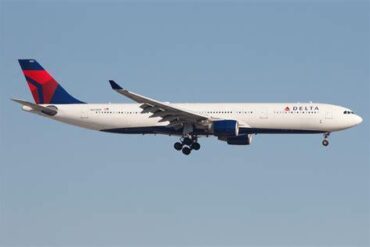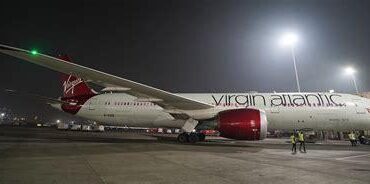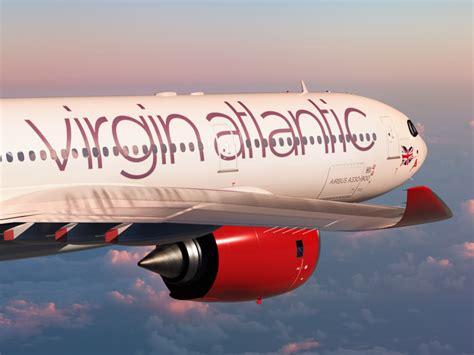
Virgin Atlantic is accelerating the retirement of its Airbus A330-300 fleet, bringing forward the departure of five aircraft as Scandinavian carrier SAS prepares to take the jets next summer. The move marks a faster-than-expected conclusion to Virgin Atlantic’s A330-300 phase-out and highlights how secondhand widebodies can provide a bridge between immediate capacity requirements and long-term fleet modernization.
The British airline had already announced plans to gradually remove the A330-300 beginning in September 2024. Its broader fleet strategy calls for a substantially newer operation, with 45 next-generation aircraft expected by 2028. The latest development does not fundamentally alter that strategy. Instead, it accelerates an existing transition because another airline is prepared to operate the aircraft rather than leaving Virgin Atlantic to dispose of them through less attractive end-of-life channels.
For SAS, meanwhile, the five aircraft offer a relatively quick way to expand long-haul capacity while waiting for a much larger investment in new-generation Airbus aircraft. The Scandinavian carrier has ordered 18 Airbus A330neos, but those aircraft cannot arrive immediately. Taking Virgin Atlantic’s A330-300s therefore gives SAS additional widebody capacity during the interim period and allows the airline to expand its long-haul operation without waiting several years for its new-build fleet to arrive.
Virgin Atlantic Brings Forward Its A330-300 Retirement
Virgin Atlantic’s A330-300 retirement was always part of a deliberate fleet renewal program. The aircraft type has served the airline’s long-haul network for years, but it has now become its oldest active widebody sub-fleet. As of September 2026, six A330-300s remain in service, with an average age of approximately 14.9 years. That compares with an average age of only 2.9 years for the carrier’s eight A330-900s.
The age gap illustrates why the A330-300 has become increasingly difficult to justify within Virgin Atlantic’s future fleet. Although the aircraft remains operationally capable, keeping older airframes in service becomes less attractive when an airline is simultaneously investing heavily in newer aircraft with better fuel efficiency and more modern cabin products. The financial question is not simply whether an older aircraft can continue flying, but whether it remains the best use of capital and operating resources.
Virgin Atlantic’s original timetable anticipated a gradual withdrawal rather than an abrupt fleet exit. The opportunity to transfer five aircraft to SAS changes that equation. Instead of continuing to operate them until the end of their planned service lives or eventually sending them for dismantling, Virgin Atlantic can now accelerate their departure while securing a second operator for the airframes.
That makes the transaction more than a simple fleet reduction. It is a strategic disposal of aging capacity at a moment when Virgin Atlantic has a clearer replacement path.
SAS Needs Widebodies Before Its A330neo Fleet Arrives
The five Virgin Atlantic aircraft arrive at an important moment for SAS. The Scandinavian airline currently operates a comparatively small long-haul fleet consisting of six Airbus A350-900s, eight Airbus A330-300s and three Airbus A321LRs. Long-haul flying therefore represents a relatively limited portion of its overall fleet.
SAS Chief Commercial Officer Paul Verhagen said in June that long-haul flying “absolutely needs to grow,” underlining the airline’s intention to expand beyond its current long-distance footprint. Only around 15 of its approximately 140 aircraft are dedicated to long-haul markets, leaving considerable room for growth if SAS can secure the necessary aircraft and commercial opportunities.
The former Virgin Atlantic A330-300s provide a particularly convenient solution because SAS already operates the same aircraft type. The airline does not need to introduce an unfamiliar widebody into its fleet simply to cover a temporary capacity requirement. Existing operational knowledge, maintenance capability and crew familiarity can all reduce the complexity associated with adding the aircraft.
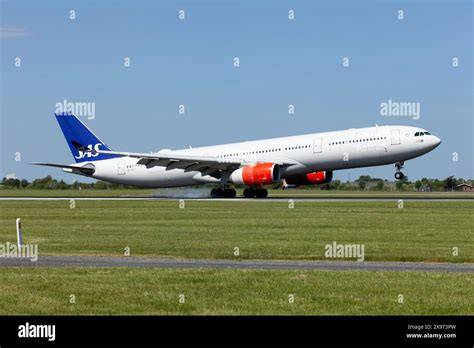
The timing is equally important. SAS has committed to new-generation A330neos, but those aircraft represent the long-term answer rather than an immediate capacity solution. Used A330-300s can enter the fleet considerably sooner, allowing SAS to increase available seats while it waits for new aircraft deliveries.
That creates a logical bridge between the airline’s current fleet and its future fleet. Rather than allowing demand to outpace available long-haul capacity while waiting for Airbus deliveries, SAS can use proven secondhand aircraft to expand first and modernize later.
Virgin Atlantic’s A330neo Order Makes the Exit Inevitable
The A330-300 retirement also needs to be viewed alongside Virgin Atlantic’s substantial commitment to the Airbus A330-900. The airline became the first UK customer for the A330neo through its original 2019 commitment and subsequently ordered another seven A330-900s in July 2024.
That follow-on order brought Virgin Atlantic’s total A330neo commitment to 19 aircraft. The newer aircraft are intended to replace older-generation capacity while improving efficiency across the fleet. Airbus has positioned the A330neo as significantly more fuel and carbon efficient than the aircraft it replaces, making the model particularly attractive for an airline operating a large number of long-haul sectors.
As more A330-900s become available, the economic argument for retaining older A330-300s becomes weaker. Virgin Atlantic does not need to preserve the older aircraft simply to maintain its Airbus widebody footprint. The replacement capacity is already embedded in its fleet plan.
Improved A330neo availability has also given Virgin Atlantic greater flexibility elsewhere in its fleet. Some flying previously assigned to Boeing 787-9 Dreamliners can be covered by newer A330neos, creating an opportunity to release certain 787s for other uses or transactions. This helps explain why fleet decisions at Virgin Atlantic are increasingly interconnected rather than being isolated aircraft retirements.
Fewer Seats, More Premium Capacity on Virgin Atlantic’s A330neo
One of the most significant aspects of Virgin Atlantic’s renewal strategy is that the airline is not simply replacing every departing A330-300 seat with an equivalent number of seats on an A330-900.
The incoming A330neos are configured for approximately 232 passengers, compared with around 262 seats on earlier aircraft. On the surface, that represents a reduction in capacity per aircraft. However, the cabin layout reflects a deliberate shift toward premium passengers and higher yields.
Upper Class expands from 32 seats to 48, while Premium increases from 46 to 56 seats. Economy, by contrast, falls substantially, from 184 seats to 128. The newer configuration also introduces six Retreat Suites in the forward cabin, adding another distinctive premium product to Virgin Atlantic’s long-haul offering.
This is a fundamentally different approach to fleet replacement. Virgin Atlantic is not attempting to maximize the number of passengers carried by every aircraft. Instead, it is allocating more cabin space to customers who generate higher revenue per seat.
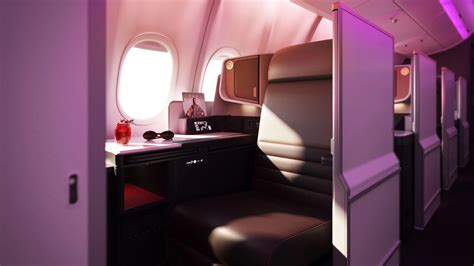
That strategy makes sense if premium transatlantic demand remains strong. A smaller aircraft configuration can still produce attractive financial results if the airline captures more high-value business and leisure traffic in premium cabins. It also reduces the pressure to retain older aircraft simply because they provide more seats.
SAS Gains Capacity While Virgin Atlantic Cuts Complexity
The transaction creates benefits for both airlines, but the strategic logic is different on each side.
For Virgin Atlantic, the five A330-300s are becoming increasingly difficult to integrate into a fleet built around newer aircraft. Retaining them could require continued maintenance spending, cabin investment and operational resources while producing inferior fuel efficiency compared with the A330-900. A second operator willing to take the aircraft intact provides an exit route without requiring Virgin Atlantic to modernize a cabin that is ultimately destined to disappear.
For SAS, the same aircraft represent useful capacity at precisely the right time. The airline wants to grow its long-haul network, yet its 18-aircraft A330neo order cannot instantly solve that requirement. Used A330-300s therefore function as a bridge, allowing SAS to expand while preparing for the arrival of its future-generation widebodies.
The unusual part is that the aircraft are not necessarily being acquired as a permanent answer to SAS’s fleet strategy. Instead, they can help the airline manage the transition toward a larger and more modern widebody operation.
Five A330-300s Signal a Wider Fleet Transformation
The accelerated retirement of Virgin Atlantic’s A330-300s also fits a broader pattern across the airline’s fleet. The carrier is increasingly concentrating its long-haul operation around new-generation Airbus and Boeing aircraft, while older airframes are being removed whenever replacement capacity becomes available.
The A330-300s are currently the oldest Virgin Atlantic sub-fleet, making them the natural target for accelerated retirement. Their departure will leave the A330-900 as the airline’s principal Airbus A330 variant and further simplify the fleet over time.
The five aircraft moving to SAS are therefore significant not because they represent an entirely new Virgin Atlantic strategy, but because they show how quickly that strategy can now be executed. What was once a gradual retirement program has become a faster transition because the market has provided a practical destination for the aircraft.
For SAS, the deal offers immediate access to proven widebody capacity. For Virgin Atlantic, it provides a cleaner path toward a younger fleet, higher premium density and improved efficiency. And for both airlines, the transaction demonstrates the value of secondhand widebodies as transitional assets rather than simply aircraft approaching retirement.
As Virgin Atlantic continues receiving A330neos and SAS waits for its own new-generation aircraft, these five A330-300s will effectively occupy the middle ground between two fleet eras. Their transfer shows that an aircraft can be strategically obsolete for one airline while still being commercially valuable to another—a useful reminder that fleet age alone does not determine an aircraft’s remaining value.