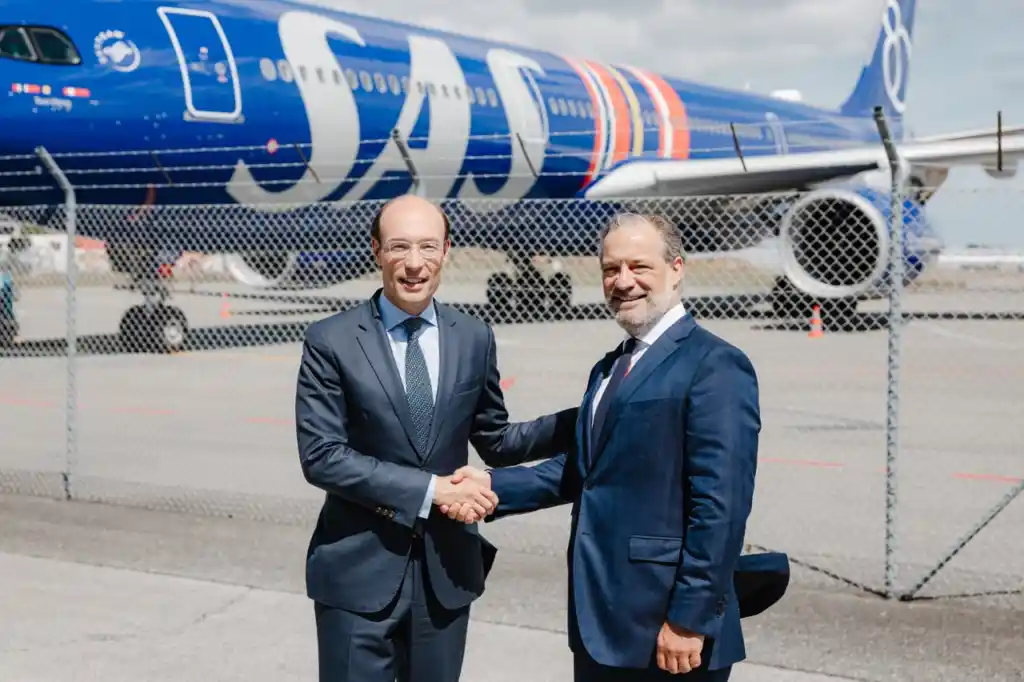
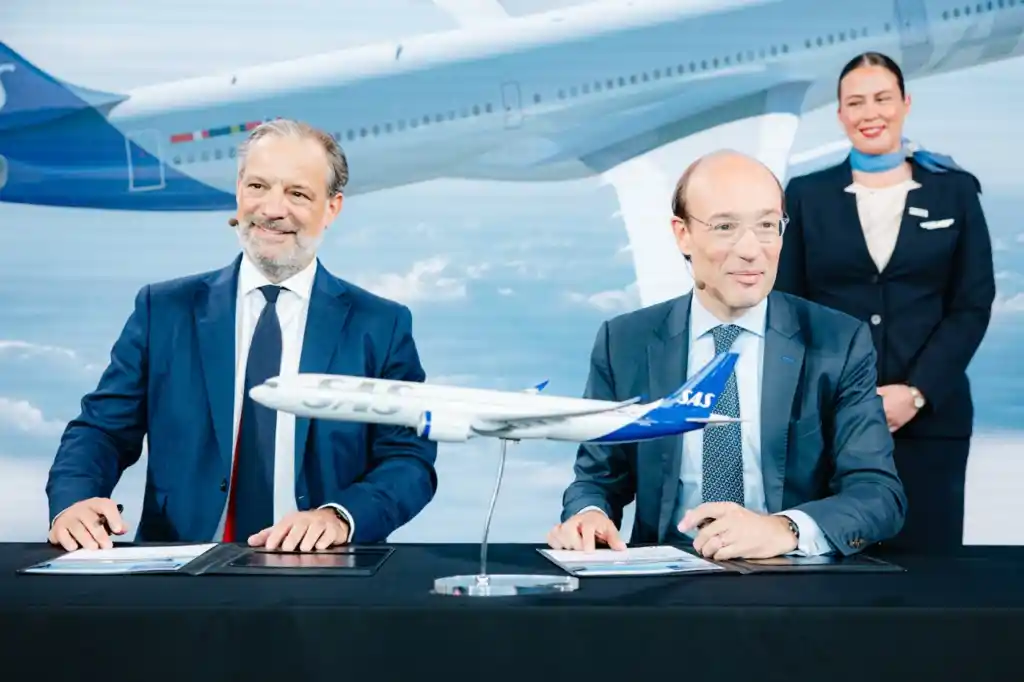
Scandinavian Airlines (SAS) has unveiled the largest fleet investment in its history, confirming an agreement for up to 40 Airbus A330 family aircraft in a strategic move designed to strengthen its long-haul operations and reinforce Scandinavia’s global connectivity. The landmark transaction combines 18 firm orders for the next-generation Airbus A330-900, options for 10 additional A330neos, and 12 leased Airbus A330-300 aircraft that will provide immediate capacity while the new fleet is prepared for delivery.
The announcement represents a defining moment for SAS as the airline continues its transformation through fleet modernization and international network expansion. While the deal carries a list-price value exceeding $10 billion, commercial aircraft purchases are typically negotiated at significant discounts, making the actual acquisition cost substantially lower. Nevertheless, the scale of the investment highlights the airline’s confidence in future demand for intercontinental travel.
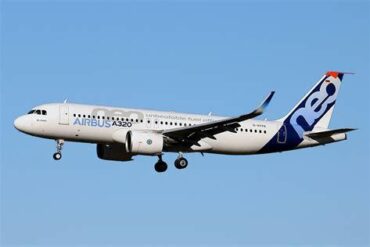
Following previous investments in Airbus A320neo narrowbody aircraft and Embraer E195-E2 regional jets, the latest acquisition demonstrates that SAS is now turning its attention toward expanding its long-haul presence with aircraft capable of serving high-demand international routes more efficiently.
SAS Combines Immediate Capacity With Long-Term Fleet Renewal
Rather than relying solely on newly built aircraft, SAS has adopted a balanced fleet strategy that addresses both present and future operational requirements.
The airline will lease 12 Airbus A330-300 aircraft to support near-term expansion while awaiting deliveries of the new-generation A330-900neo, which are expected to arrive during the 2030s. This approach allows SAS to increase available seats on long-haul routes without waiting years for factory production slots.
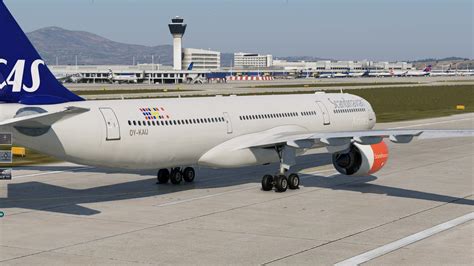
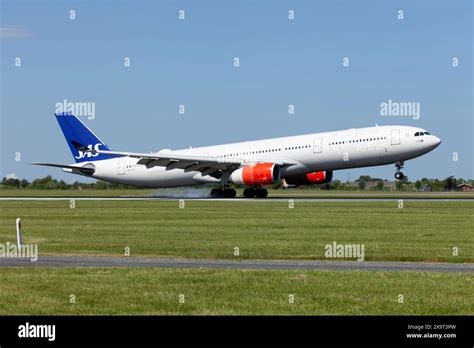
The leased aircraft integrate naturally into SAS’s existing operations because the carrier already operates eight Airbus A330-300 aircraft. Existing maintenance programs, pilot qualifications, engineering expertise, and spare parts inventories significantly reduce the complexity normally associated with fleet expansion.
At the same time, the new A330-900 fleet will gradually introduce improved efficiency and longer-range capability, allowing SAS to modernize without disrupting current operations.
Airbus A330neo Delivers Greater Efficiency and Performance
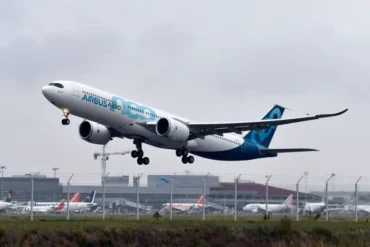
The Airbus A330-900 represents a significant technological improvement over the earlier A330-300 while maintaining remarkable commonality between the two aircraft.
Airbus designed the A330neo to retain approximately 95% shared airframe parts with previous A330 variants. This compatibility dramatically lowers training requirements and simplifies maintenance, making the aircraft particularly attractive for airlines already operating earlier members of the A330 family.
SAS intends to configure its A330-900 aircraft with approximately 290 seats, placing their capacity close to the airline’s Airbus A350 fleet. The aircraft also offers an impressive operational range of approximately 7,350 nautical miles (13,600 kilometers), enabling nonstop service between Scandinavia and major destinations throughout North America, Asia, and the Middle East.
The combination of enhanced fuel efficiency, improved passenger comfort, and greater operating economics positions the A330neo as a valuable asset for long-haul network development.
Familiar Aircraft Simplify Operational Growth
Fleet commonality remains one of the strongest advantages of the agreement.
Because SAS crews, technicians, and maintenance facilities already possess extensive experience with the Airbus A330 platform, integrating additional A330-300 aircraft requires minimal operational adjustment. Pilots can transition more easily between variants, while engineering teams benefit from established maintenance procedures and existing inventories of replacement components.
The A330-300 continues to offer excellent operational capability despite being an earlier generation aircraft. With seating typically ranging between 250 and 290 passengers across three cabin classes and a range of approximately 6,350 nautical miles (11,750 kilometers), it remains well suited for transatlantic services and numerous long-haul markets served by SAS.
This operational continuity enables the airline to expand capacity rapidly while preparing for the gradual introduction of newer aircraft.
Strengthening Scandinavia’s Position in Global Aviation
SAS views the investment as more than simply purchasing aircraft. Company leadership believes stronger international air connections will play a critical role in supporting economic development across Denmark, Norway, and Sweden.
Chief Executive Officer Anko van der Werff emphasized that stronger connectivity helps attract international investment, skilled professionals, and business opportunities to the Scandinavian region. Expanding long-haul services allows both leisure and corporate travelers greater access to worldwide markets while reinforcing Copenhagen’s role as a major international aviation hub.
The additional aircraft provide the flexibility needed to introduce new destinations, increase flight frequencies, and improve schedule reliability across existing long-haul routes.
Economic Benefits Extend Beyond Aviation
SAS also presented new economic projections illustrating how fleet expansion could benefit the broader Scandinavian economy.
According to the airline, successful implementation of its long-term growth strategy could support approximately 25,000 additional jobs while contributing around DKK 25 billion (approximately $3.8 billion) to regional gross domestic product by 2030.
These projected benefits extend well beyond airline operations. Increased passenger traffic stimulates tourism, hospitality, logistics, retail, airport services, and international commerce, creating positive economic effects throughout the region.
The expansion is expected to be centered primarily around Copenhagen, although neighboring Scandinavian markets are also anticipated to benefit from stronger international connectivity.
Sustainability Remains Part of SAS’s Long-Term Vision
Alongside its fleet announcement, SAS confirmed that it has signed a Memorandum of Understanding with SkyKraft to explore the future development of electro-sustainable aviation fuel (e-SAF).
While newer aircraft already consume significantly less fuel than previous generations, sustainable aviation fuels represent another important pathway toward reducing carbon emissions across long-haul operations. By combining more efficient aircraft with future sustainable fuel technologies, SAS aims to balance network growth with environmental responsibility.
The A330neo’s improved fuel burn and lower emissions align closely with the airline’s broader sustainability objectives while maintaining the operational flexibility required for intercontinental flying.
A Transformational Investment for SAS
The order for up to 40 Airbus A330 family aircraft marks one of the most significant milestones in SAS’s modern history. By combining leased Airbus A330-300 aircraft for immediate expansion with firm orders for the advanced Airbus A330-900neo, the airline has crafted a strategy that addresses both current market demand and future growth opportunities.
Beyond expanding fleet capacity, the investment reinforces SAS’s ambition to strengthen Scandinavia’s position within global aviation, improve international connectivity, stimulate economic development, and continue modernizing its operations with more efficient aircraft. As deliveries progress throughout the coming decade, this landmark agreement is set to reshape the airline’s long-haul network and establish a stronger foundation for sustained international growth.