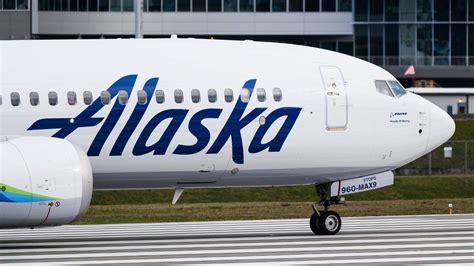
The possibility of a nonstop link between Alaska Airlines’ Seattle hub and Sydney has quietly shifted from speculation to serious industry conversation. A subtle but striking reference embedded in the airline’s new long-haul safety video—produced for its incoming Boeing 787-9 fleet—has triggered widespread analysis, suggesting that a 7,700-mile transpacific route could soon redefine the carrier’s global footprint.
The inclusion of Sydney is not an isolated creative flourish. Every other destination featured in the video aligns with routes either already launched or firmly planned from Seattle, including London Heathrow, Rome, Seoul Incheon, and Tokyo Narita. Against that backdrop, Sydney’s presence feels deliberate—almost like a quiet announcement hiding in plain sight.
The strategic implications are enormous. A nonstop Seattle–Sydney service would span approximately 6,725 nautical miles, instantly becoming Alaska’s longest route and pushing the airline into a new competitive tier of ultra-long-haul operations.
A Bold Expansion Beyond Traditional Boundaries
For decades, Alaska Airlines built its identity as a dominant West Coast carrier with a strong domestic network. That narrative is now evolving rapidly. The introduction of the Boeing 787-9 marks a structural shift, enabling the airline to pursue intercontinental routes once far beyond its operational scope.
The move into Europe with Rome and London was the first visible step. Asia followed with Seoul and Tokyo. A leap into Australia would represent not just expansion, but transformation—positioning Seattle as a true long-haul gateway rather than a regional hub.
What makes the Sydney possibility especially compelling is timing. Alaska has publicly outlined ambitions to serve up to 12 long-haul destinations from Seattle by 2030. With only a handful currently in operation, new routes must emerge quickly to meet that target. Sydney, with its strong demand profile and global appeal, fits the blueprint with striking precision.
The Economics Behind a 7,700-Mile Gamble
Ultra-long-haul routes are not just about distance—they are about demand quality. Data from the past year shows that approximately 83,000 passengers traveled between Seattle and Australia despite the absence of nonstop service. Of these, nearly half were bound for Sydney, confirming its dominance as the primary gateway.
This level of demand creates a compelling baseline, but profitability hinges on yield rather than volume alone. Sydney stands out here as well. Average one-way fares hover around $1,560, significantly higher than comparable long-haul markets such as Southeast Asia. On a per-mile basis, the route delivers stronger revenue potential, making it far more attractive than destinations like Ho Chi Minh City or Bangkok.

Seattle’s Strategic Position in Transpacific Travel
Geographically, Seattle occupies an intriguing middle ground. While not as close to Australia as California hubs, it remains competitive for connecting traffic across much of the United States. For passengers originating in cities like Chicago or New York, routing via Seattle adds minimal distance compared to Los Angeles or San Francisco.
This positioning allows Alaska Airlines to tap into both local demand and a broader national network. The airline’s extensive domestic connectivity becomes a powerful feeder system, channeling passengers efficiently into long-haul departures.
However, the strategy appears carefully calibrated. Rather than relying heavily on lower-yield connecting passengers, Alaska is expected to prioritize premium point-to-point traffic. A limited frequency—potentially three weekly flights—would reinforce this approach, maintaining high load factors without diluting revenue quality.
Competitive Dynamics and Alliance Leverage
The role of Qantas cannot be overlooked. As a fellow member of the oneworld alliance, Qantas offers Alaska immediate access to onward connections across Australia. This partnership reduces the need for Alaska to operate multiple Australian routes directly, instead funneling passengers through Sydney into a broader regional network.
At the same time, competition remains formidable. Singapore Airlines already operates one of the longest flights in the world between Singapore and Seattle, demonstrating that the market can sustain ultra-long-haul services. Alaska’s potential entry would not just add capacity—it would reshape competitive dynamics across the Pacific Northwest.
Reading Between the Lines of Corporate Signals
Beyond the safety video, another clue lies in Alaska Airlines’ investor communications. A 2024 presentation included Sydney among several prospective destinations, alongside cities like Delhi and Bangkok. While not all listed locations will materialize, the overlap between those mentions and current route announcements adds weight to Sydney’s candidacy.
The logic becomes clearer when examining fare structures and passenger mix. Markets such as India or Southeast Asia may generate higher traffic volumes, but they lack the premium yield necessary to justify ultra-long-haul operations. Sydney, by contrast, combines strong demand with robust pricing power—a rare and valuable combination.

Timing, Seasonality, and Launch Scenarios
If Alaska Airlines proceeds, timing will be critical. Launching in the Northern Hemisphere winter—coinciding with Australia’s peak summer travel season—would maximize initial demand. A late October debut aligns neatly with this window, offering strong early performance metrics.
Seasonality also supports a conservative ramp-up strategy. Beginning with limited frequencies allows the airline to test the market, refine pricing strategies, and adjust capacity without overexposure. Over time, successful performance could justify increased frequency or even additional Australian destinations.
A Defining Moment for Alaska Airlines
The potential Seattle–Sydney route is more than a new flight—it is a statement of intent. It signals that Alaska Airlines is no longer content to operate within traditional boundaries. Instead, it is stepping confidently into the arena of global aviation, leveraging modern aircraft, strategic partnerships, and data-driven route planning.
If confirmed, the route would stand as the airline’s most ambitious undertaking to date—a 7,700-mile bridge between two continents that redefines what Alaska Airlines represents. The quiet hint in a safety video may soon evolve into one of the most significant network expansions in the carrier’s history.