Seattle’s long-haul connectivity is taking a bold leap forward as Philippine Airlines (PAL) announces a major increase in service between Seattle-Tacoma International Airport (SEA) and Ninoy Aquino International Airport (MNL) in Manila, adding two new weekly flights to an already growing transpacific market. As the only direct link between the Philippines and the Pacific Northwest, this expansion marks a significant investment in cross-Pacific travel, underpinned by rising demand and PAL’s growing strategic relationship with Alaska Airlines.
Philippine Airlines Adds Frequencies to Meet Surging Demand
Effective November 25, PAL will raise its Seattle-bound operations from three to five weekly roundtrips, operating flights every Tuesday, Wednesday, Thursday, Friday, and Sunday. This substantial service expansion comes barely a year after the inaugural launch of the Manila-Seattle route in October 2024, a route that quickly established itself as a vital connection for both leisure and business travelers across the Pacific.
The airline’s move responds to what it describes as a “sharp rise in demand” from the US West Coast, with PAL’s President Richard Nuttall highlighting Seattle’s strategic gateway potential:
“Our decision to increase frequencies to Seattle highlights the importance of the U.S. market to the Philippine Airlines global network, and in particular the great value of Seattle as a gateway… to cities across the United States that we can now serve through our ongoing partnership with Alaska Airlines.”
Seattle’s growing reputation as a launchpad for transpacific operations is enhanced by this move. The additional flights, while serving passengers, will also provide an extra 40 tons of cargo capacity weekly, enhancing trade links and commercial throughput between the Philippines and North America.
Alaska Airlines Partnership Strengthens Network Synergies
Crucially, this development also reflects the growing synergy between Philippine Airlines and Alaska Airlines, whose Seattle hub handles nearly 50% of all commercial air traffic at SEA. Their partnership, solidified shortly after PAL’s launch of its Seattle route, now offers travelers enhanced interline connectivity to dozens of US cities that would otherwise require multiple stops.
This alliance builds on PAL’s past relationship with Hawaiian Airlines, which merged into Alaska Airlines in late 2024. With this expanded reach, Seattle becomes more than just a Pacific destination — it evolves into a continental US gateway, supporting secondary cities in California, Oregon, Texas, and the Midwest with smoother connections.
Inside Philippine Airlines’ Expanding North American Network
PAL’s Seattle expansion is the latest move in a larger strategy to reinforce its North American network — a market it has served since 1946, making it the first Asian airline to fly to the United States. From its historical inaugural flight to San Francisco on a Douglas DC-4, PAL has developed an expansive transpacific web connecting the Philippines with major urban centers in the US and Canada.
Today, its North American destinations include:
- Los Angeles (LAX)
- San Francisco (SFO)
- New York (JFK)
- Honolulu (HNL)
- Guam (GUM)
- Toronto (YYZ)
- Vancouver (YVR)
- Seattle (SEA)
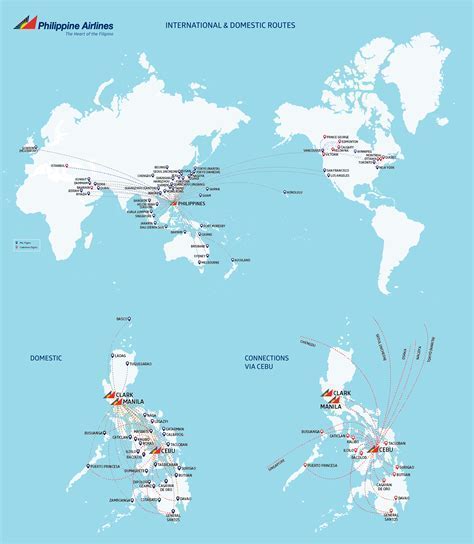
The inclusion of Seattle — the sixth US and eighth overall North American destination — is part of PAL’s long-term strategy to diversify access points to North America, catering especially to the Filipino diaspora and business travelers.
Boeing 777-300ER: The Backbone of the Seattle Route
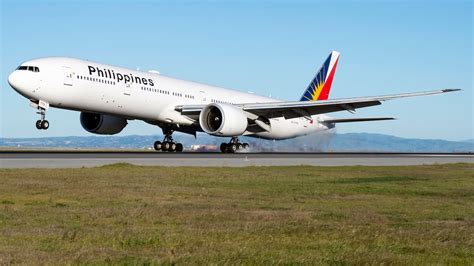
Philippine Airlines deploys its Boeing 777-300ER aircraft on the Manila-Seattle route — a reliable widebody jet capable of operating the route’s nearly 13-hour duration with efficiency and comfort. Each 777-300ER is configured to carry 370 passengers, featuring:
- 42 lie-flat business class seats in a 2-3-2 layout
- 328 economy seats in a 3-4-3 configuration
- 33-inch seat pitch in economy, offering competitive legroom

PAL currently operates a fleet of 10 Boeing 777-300ERs, with an average age of 11.5 years, including two aircraft leased in 2024 from Garuda Indonesia. The carrier’s ability to deploy this fleet on longer transpacific segments has been key to maintaining consistent service reliability and passenger satisfaction.
The updated flight schedule from late November is as follows:
- PR124: Manila to Seattle – Departs 22:40, Arrives 19:35 (same day)
- PR125: Seattle to Manila – Departs 22:30, Arrives 04:05 (+2 days)
PAL’s Next Chapter: Airbus A350-1000 and the Future of Long-Haul
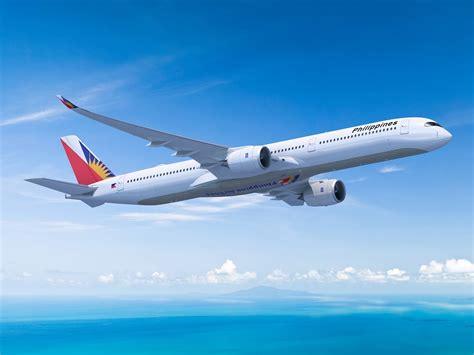
While the 777-300ER remains the current long-haul workhorse, PAL is positioning itself for the future with the planned introduction of the Airbus A350-1000, a next-generation aircraft that will redefine its flagship service. The airline has up to nine A350-1000s on order, with the first delivery slated for late 2025.
These aircraft will feature:
- 42 private business class suites with sliding doors
- 24-seat premium economy section
- A new-generation cabin experience optimized for fuel efficiency and comfort
The A350-1000 will support PAL’s growing ambitions in both North America and Europe, providing ultra-long-range capabilities while reducing carbon emissions and operational costs.
Why Seattle Is Becoming a Pacific Hub to Watch
Seattle-Tacoma International Airport (SEA) has historically played a quiet yet consistent role in transpacific aviation. But with the rise of strategic partnerships and population growth in the Pacific Northwest, SEA is rapidly transforming into a crucial long-haul node — particularly for Asia-bound services.
Several factors support SEA’s emerging status:
- Geographic advantage as the closest US mainland point to East Asia
- Tech industry growth in Seattle drawing global talent
- A sizeable Filipino-American community in Washington state
- SEA’s modernization projects and terminal expansion plans
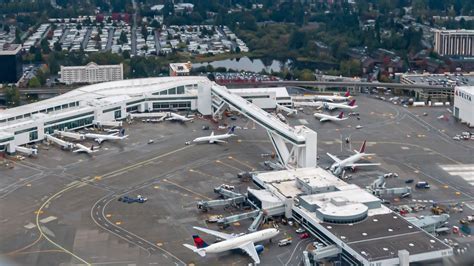
By anchoring its US growth strategy in Seattle, PAL taps into these demographic and commercial dynamics — and does so while offering nonstop, widebody comfort that bypasses congested hubs like LAX or SFO.
Cargo Potential and Economic Connectivity
Beyond passengers, PAL’s expanded frequencies also represent a logistics boost. With each roundtrip offering roughly 20 tons of bellyhold cargo, the total increase to 40 tons weekly will support shipments of electronics, seafood, garments, and pharmaceuticals — key exports and imports between the Philippines and Pacific Northwest.
Seattle’s proximity to tech giants like Amazon and Microsoft may also accelerate e-commerce-related cargo flows, while agricultural exports from Washington state (like cherries and apples) can reach Asian markets faster.
Conclusion: A Clear Signal of Growth
Philippine Airlines’ decision to expand its Seattle-Manila route is more than a tactical frequency update — it is a strategic declaration. In an era of recalibrated global aviation routes, this move reflects confidence in the transpacific travel market, the Filipino diaspora’s connectivity needs, and Seattle’s rise as a long-haul gateway.
As new aircraft like the A350-1000 enter service and partnerships deepen with players like Alaska Airlines, Seattle is poised to become not just a spoke, but a hub for Philippine Airlines’ future. Passengers on both sides of the Pacific — from families to freight forwarders — will benefit from more choices, better connections, and an airline that is clearly investing for the long haul.