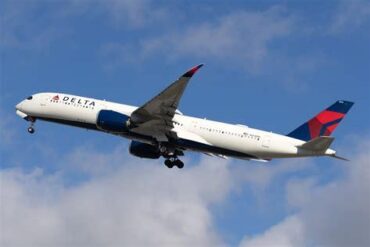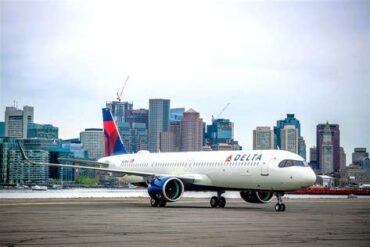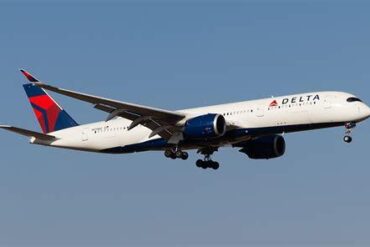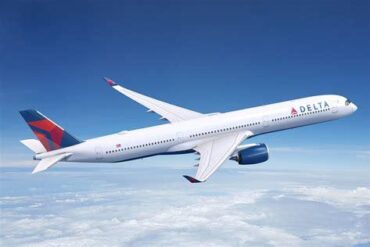
Delta Air Lines is preparing to enter one of the most intriguing long-haul markets in aviation. The airline has confirmed plans to launch daily nonstop flights between Los Angeles International Airport (LAX) and Manila Ninoy Aquino International Airport (MNL) beginning in the summer of 2027, using its flagship Airbus A350-900 aircraft.
The announcement signals a meaningful shift in Delta’s historically cautious approach to ultra-long-haul routes. For decades, the carrier focused heavily on domestic strength and selective international expansion rather than aggressive transpacific growth. Now, with new aircraft capabilities and evolving airline economics, the company appears ready to reshape its Pacific network.
Yet the decision has sparked confusion among industry observers. The route covers more than 7,000 miles across the Pacific Ocean, serves a market known for strong passenger demand but relatively low ticket yields, and emerges from a hub where competition among major U.S. airlines is fierce.
Delta’s Official Filing Confirms 2027 Manila Launch
The confirmation of the route came through a filing submitted to the U.S. Department of Transportation (DOT). Delta referenced the plan while responding to a request from Philippine Airlines seeking permission to expand service to Chicago O’Hare International Airport (ORD).
In the filing, Delta outlined its intention to begin daily Airbus A350-900 service between Los Angeles and Manila, emphasizing the public benefits of increased connectivity between the United States and the Philippines.
The airline argued that its entry into the market would provide:
- Expanded travel choices for passengers
- Greater competition on U.S.–Philippines routes
- Improved connectivity through Delta’s broader domestic network
- Enhanced tourism and trade opportunities between both countries
Delta also requested that regulatory decisions consider its forthcoming entry into the Manila market before approving additional competing routes.
While the airline has not yet finalized schedules or ticket sales, the filing provides the clearest confirmation yet that Los Angeles will serve as the launch point for Delta’s Manila operations.
Why Los Angeles Instead of Seattle?
One of the most puzzling aspects of the announcement involves Delta’s West Coast strategy. Over the past decade, the airline invested heavily in Seattle-Tacoma International Airport (SEA) as its primary gateway to Asia. Delta added multiple transpacific routes from Seattle and built a large operational presence there to compete directly with Alaska Airlines and United Airlines.
Seattle offered several strategic advantages. It is geographically closer to Asia than most U.S. hubs, allowing airlines to operate routes more efficiently. It also provides less direct competition compared to Los Angeles.
Despite this, Delta now appears to be shifting attention back to Los Angeles, historically its largest West Coast hub but also one of the most competitive aviation markets in the world.
At LAX, American Airlines, United Airlines, Delta Air Lines, and numerous international carriers all maintain large operations. No single airline dominates the airport, making it difficult to establish the type of mega-hub advantage seen at airports like United’s San Francisco International Airport (SFO).
Delta’s new Pacific plans reinforce this shift. In addition to Manila, the airline has already announced future Los Angeles–Hong Kong flights, signaling a broader strategy centered on Southern California.
A 7,000-Mile Route With Challenging Economics
Launching a nonstop route between Los Angeles and Manila is no small undertaking. The flight distance exceeds 7,300 miles, placing it among the longest regularly scheduled routes in Delta’s network.
While the Philippines represents one of the largest overseas travel markets for the United States, the financial dynamics can be complicated. Many travelers on this route are visiting friends and relatives (VFR passengers), a segment known for filling seats but often purchasing lower-priced tickets.
That creates a classic airline challenge: high demand but modest profit margins.
Operating such a long flight also involves significant costs, including fuel, crew scheduling, aircraft utilization, and maintenance. Even with a fuel-efficient aircraft like the Airbus A350-900, profitability requires careful balancing of ticket pricing, cargo revenue, and connecting traffic.
Competition From Established Carriers
Delta will not enter an empty market. Philippine Airlines has long served as the primary airline connecting the United States and the Philippines, operating routes from several U.S. cities including Los Angeles.
Meanwhile, United Airlines expanded its own Manila service in late 2023 by launching San Francisco–Manila flights. United’s advantage lies in the scale of its Asia network, which includes numerous destinations across Japan, Korea, China, and Southeast Asia.
San Francisco also functions as United’s primary Pacific hub, offering extensive connections that feed long-haul flights.
Delta, by contrast, has historically maintained a smaller Asian route network after scaling back operations years ago. Entering the Manila market therefore represents both an opportunity and a risk as the airline attempts to rebuild its presence across the Pacific.
The Role of Loyalty Programs and Premium Strategy
Modern airline economics differ significantly from those of previous decades. Today, profitability does not always depend solely on ticket revenue from a specific route.
Major carriers increasingly rely on loyalty programs, credit card partnerships, and premium cabin sales to generate revenue. Delta in particular has positioned itself as a premium U.S. airline, emphasizing higher-end cabins, upgraded lounges, and strong frequent-flyer partnerships.
This strategy could influence the Manila route’s viability. Even if economy fares remain relatively low, premium travelers and connecting passengers could contribute meaningful revenue.
Additionally, Los Angeles offers a vast network of domestic connections feeding into Delta’s international departures, potentially boosting passenger numbers for the new route.
What the Manila Route Signals for Delta’s Future
Delta’s planned Los Angeles–Manila service beginning in 2027 reflects a broader shift in the airline’s global ambitions. The route joins other recently announced long-haul expansions, including flights to Hong Kong and Riyadh, suggesting that Delta is becoming more comfortable operating ultra-long-distance routes.
Advances in aircraft technology have played a major role in this transformation. Modern wide-body jets like the Airbus A350 deliver longer range, improved fuel efficiency, and lower operating costs compared with previous generations of aircraft.
Still, the Manila route stands out as an unconventional choice for an airline only beginning to rebuild its Pacific network.
Whether the strategy proves successful will depend on how effectively Delta can combine premium demand, connecting traffic, and loyalty-driven revenue. If those elements align, the airline could carve out a meaningful share of one of the Pacific’s busiest long-haul markets.
If they do not, the route may become a fascinating case study in the complex economics of modern aviation.