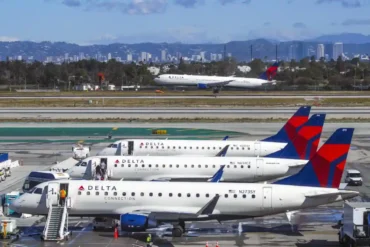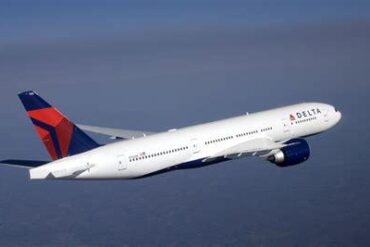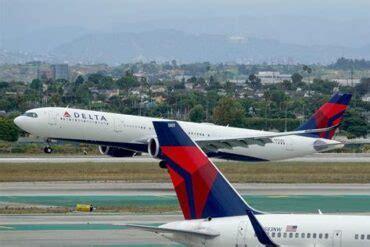
Delta Air Lines is making a confident, capital-heavy statement about where it believes future long-haul demand will concentrate, and Los Angeles sits squarely at the center of that thesis. For the peak Q3 2026 travel season, traditionally the most profitable quarter for global airlines, Delta plans a dramatic expansion of long-distance flying from LAX, pushing its long-haul departures up by 42% year over year. In an industry often obsessed with cautious capacity management, this move signals deliberate conviction rather than seasonal opportunism.
Long-haul, defined here as flights exceeding 2,650 nautical miles, remains the revenue engine where premium cabins, cargo, and loyalty-driven travelers converge. Across its entire U.S. system, Delta’s long-haul growth is modest at roughly 3%, but Los Angeles is the exception that rewrites the narrative. The hub’s expansion is not incremental tinkering; it is structural repositioning, reshaping Delta’s West Coast role in the global aviation chessboard.
While Delta will operate long-haul flights from 12 U.S. hubs in Q3 2026, Los Angeles emerges as the most aggressive growth story by a wide margin. The airline is planning 448 long-haul departures from LAX between July and September, up from 315 a year earlier. That translates into an average of 4.9 daily long-haul flights, with some days peaking at six departures, compared to just three to four daily flights in Q3 2025.
Los Angeles Climbs the Delta Hub Hierarchy
This surge elevates Los Angeles to Delta’s eighth-largest long-haul hub, overtaking Salt Lake City, which remains flat year over year. The ranking shift matters because hub hierarchy dictates aircraft allocation, crew basing, and future route optionality. Delta is no longer treating LAX as a peripheral international gateway; it is actively rebuilding it into a Pacific-facing cornerstone.
The growth looks even more striking when framed against Delta’s broader network discipline. The airline has spent the post-pandemic years trimming marginal routes and concentrating capacity where yields justify widebody utilization. Los Angeles passing that internal test suggests Delta sees durable premium demand, strong partner feed, and competitive positioning worth defending—despite intense rivalry from United, American, and foreign flag carriers.
Two Strategic Additions Power the 42% Jump
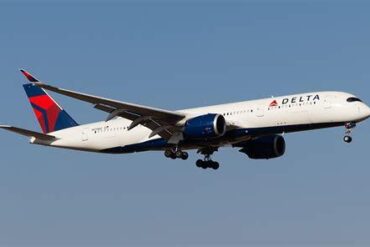
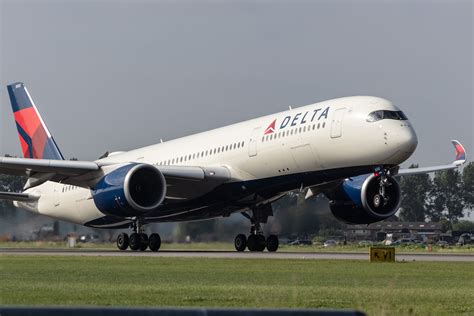
The expansion rests on two major long-haul launches, each carrying symbolic and commercial weight. First is Los Angeles–Melbourne, inaugurated on December 3, 2025, with a three-weekly Airbus A350-900. This route becomes Delta’s fourth-longest nonstop across its entire network, linking Southern California directly to Australia’s cultural capital. It also restores a three-carrier competitive environment on the route for the first time since 2020, joining Qantas and United.
Second, and arguably more geopolitically resonant, is Delta’s return to Los Angeles–Hong Kong, launching June 6. Delta last served the market from LAX in 1995, an era when Kai Tak Airport and the MD-11 still defined transpacific travel. Its re-entry comes after an eight-year absence from Hong Kong entirely, positioning Delta once again in one of Asia’s most strategically important aviation markets.

Competing in Crowded Skies Without Blinking
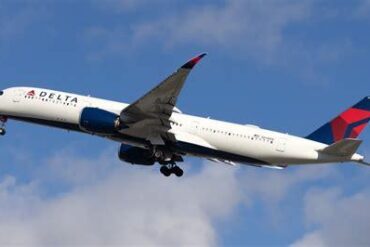
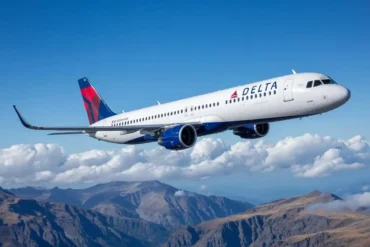
From Los Angeles to Hong Kong, Delta will coexist with Cathay Pacific, operating multiple daily Boeing 777-300ER flights, and United Airlines, whose services continue onward to Southeast Asia. Delta’s choice to deploy the A350-900 with 275 seats underscores a calibrated approach: large enough to capture premium and cargo revenue, yet efficient enough to manage risk in a competitive corridor.
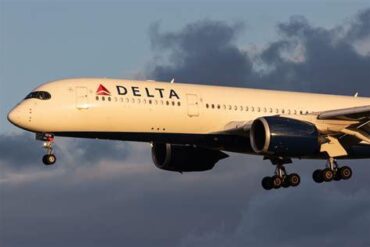
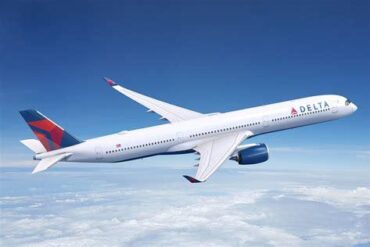
This same aircraft anchors Delta’s broader LAX long-haul portfolio in Q3 2026, serving Paris Charles de Gaulle, Tokyo Haneda, Sydney, Shanghai Pudong, Melbourne, and Hong Kong. The consistency simplifies operations and reinforces Delta’s premium positioning, especially as the A350’s cabin product aligns closely with the airline’s top-tier international brand.
A Near-Record Quarter With Historical Context
Despite the eye-catching growth, Q3 2026 will not be Delta’s all-time Los Angeles record. With 448 departures, it becomes the airline’s second-best Q3 since 2009, narrowly trailing the 2015 peak. That historical framing matters because it shows Delta is not chasing novelty; it is reclaiming scale once proven viable.
Over the years, Delta has cycled through numerous long-haul experiments from LAX. Routes to São Paulo, Tokyo Narita, Amsterdam, and London Heathrow have come and gone, reflecting shifts in alliances, aircraft economics, and competitive dynamics. The current network is leaner, more focused, and arguably more resilient, centered on markets where nonstop demand and alliance connectivity overlap cleanly.
Why This Bet Matters Beyond Los Angeles
Delta’s Los Angeles expansion is not merely about one hub; it is a signal to the market. It suggests confidence in transpacific recovery, belief in premium international demand resilience, and willingness to contest West Coast geography long dominated by rivals. By committing widebody capacity during the most lucrative quarter of the year, Delta is effectively locking in its belief that LAX can sustain long-haul growth without eroding yields.
For passengers, the result is more nonstop options, newer aircraft, and intensified competition on some of the world’s longest routes. For the industry, it is a reminder that even in an era of cautious growth, bold, targeted bets still shape airline strategy. Delta’s 42% long-haul surge from Los Angeles in 2026 is not a gamble made lightly; it is a calculated move grounded in history, hardware, and hard-nosed network logic.