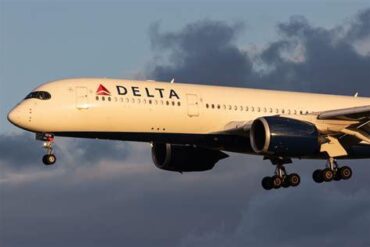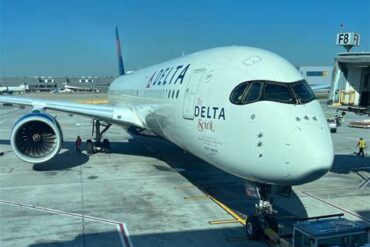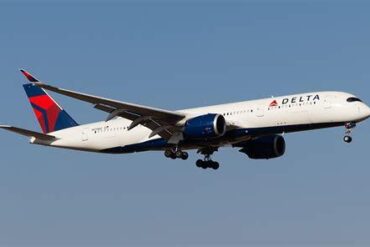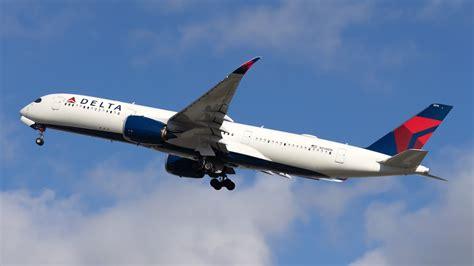
Delta Air Lines has introduced one of its most ambitious ultra-long-haul services yet, unveiling new 16-hour Airbus A350-900 flights between Los Angeles and Melbourne. The route, which launched on December 3, marks the carrier’s first entry into the Australian state of Victoria and expands its growing transpacific portfolio at a moment when demand to Australia is surging across multiple airlines.
Delta Strengthens Its Transpacific Ambitions With A350-900 Service
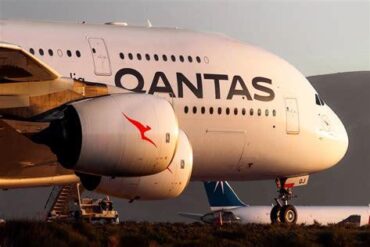
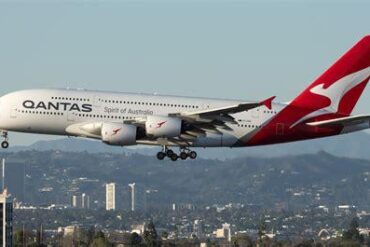
The new Los Angeles–Melbourne route operates three times weekly, placing Delta head-to-head with Qantas and United on a city pair that has not seen three carriers at once since 2020. Delta deploys its 275-seat Airbus A350-900, an aircraft configured with a notably premium-heavy layout including 40 Delta One suites and 40 Premium Select seats, alongside Comfort+ and Main Cabin capacity. The strategy leans heavily into high-yield long-haul demand, a hallmark of Delta’s global growth plan.
The A350-900’s long-range performance enables a westbound block time stretching up to 16 hours and 5 minutes, slotting this route into Delta’s top five longest flights worldwide. Despite the considerable duration, the service falls short of the longest Australia–North America routes, a testament to the sheer geographic sweep of the Pacific.
A New Chapter In Delta’s Australia Network
This new Melbourne link is part of Delta’s broader expansion across Australia. The airline now operates three nonstop routes from Los Angeles using the A350-900: Sydney (daily to 11 weekly), Brisbane (three weekly), and Melbourne (three weekly). This totals up to 17 weekly departures, representing Delta’s largest-ever commitment to the Australian market.
The escalation is significant: mid-January schedules reveal Delta’s Australia-bound departures have increased by 21% year-over-year and an impressive 143% compared to 2019, demonstrating steady recovery and strong demand from both leisure and premium travelers.
Competitive Pressure Rises As Multiple Airlines Expand Australia Service
Delta’s arrival in Melbourne coincides with an unusually lively period of network expansion across Australia. Virgin Australia, operating on behalf of Qatar Airways, recently inaugurated Melbourne–Doha service; Malaysia Airlines has resumed Brisbane; Qatar Airways is back in Canberra; Jetstar launched Perth–Manila and Brisbane–Cebu; and China Southern touched down in Darwin.
Across the Pacific, competition is even fiercer. In the Australia–United States market, Delta now holds 14% of nonstop departures, placing it behind United (40%) and Qantas (31%), but ahead of American (11%) and Alaska/Hawaiian (4%). With Jetstar exiting the long-haul U.S. market, full-service carriers now dominate the transpacific landscape, intensifying battles for corporate travel and premium leisure passengers.
A Big Year For U.S.–Australia Connectivity
The Los Angeles–Melbourne launch is part of a broader web of new transpacific routes emerging in 2025. Qantas kicked off Melbourne–Honolulu in May; American Airlines begins Los Angeles–Brisbane this month; and United is on the cusp of launching San Francisco–Adelaide, the first nonstop link between South Australia and North America.
Each addition reshapes the competitive dynamics of the Pacific, strengthening connectivity, boosting tourism flows, and offering passengers more options during a renaissance period for long-haul aviation.
Flight Schedule For Delta’s LAX–MEL Service
Delta’s three-weekly rotation is optimized for transpacific connectivity, with westbound flights departing Los Angeles at 9:05 p.m. on Mondays, Wednesdays, and Fridays, arriving in Melbourne at 8:00 a.m. two days later. The eastbound return leaves Melbourne at 10:10 a.m. on Wednesdays, Fridays, and Sundays, landing the same day in Los Angeles at 6:00 a.m. thanks to favorable tailwinds.
These timings deliver strong links to Delta’s domestic network in Los Angeles, enhancing one-stop access from U.S. cities including New York, Atlanta, Minneapolis, and Seattle.
A Confident Step Toward Long-Haul Dominance
Delta’s Los Angeles–Melbourne debut sends a strong signal about the airline’s future global ambitions. Backed by the quiet efficiency and long-haul prowess of the Airbus A350-900, the carrier is positioning itself as a more dominant player in the Pacific, challenging incumbents with a premium-forward product and steadily increasing frequencies.
The resurgence of transpacific demand, combined with Delta’s strategic fleet choices, creates favorable conditions for further growth—an evolving story that promises more long-range developments on the horizon.