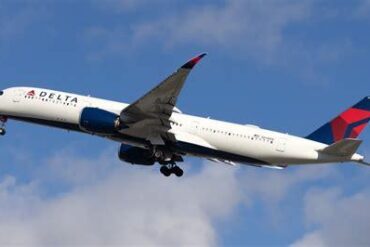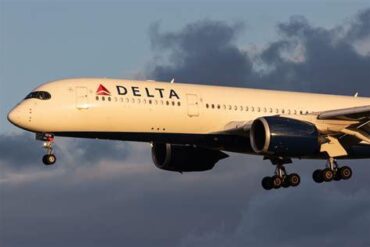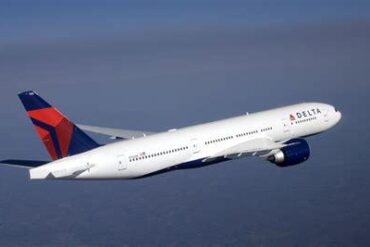
Delta Air Lines is expanding its footprint in the South Pacific with a bold new transpacific route connecting Los Angeles International Airport (LAX) to Melbourne Airport (MEL), commencing December 3, 2025. This move not only underscores Delta’s growing ambition in the Oceania region but also strategically positions the airline to compete head-on in one of the most sought-after long-haul markets.
Delta’s Third Longest Route and a Strategic Pacific Expansion
The forthcoming LAX-MEL route will span 7,921 miles, making it Delta’s third longest nonstop service—trailing only its Atlanta-Cape Town and Atlanta-Johannesburg operations. The schedule is carefully structured to maximize connectivity and optimize crew rest requirements:
- DL11: Departs LAX at 9:25 PM on Mondays, Wednesdays, and Fridays; arrives MEL at 8:15 AM (+2 days)
- DL12: Departs MEL at 10:25 AM on Wednesdays, Fridays, and Sundays; arrives LAX at 6:10 AM the same day
The westbound leg is scheduled at 15 hours 50 minutes, while the eastbound return clocks in at 14 hours 45 minutes. Such durations reflect the prevailing tailwinds and headwinds of the Pacific jet streams.
Premium Experience on the Airbus A350-900
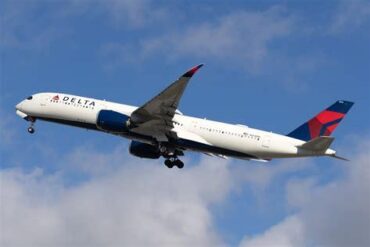
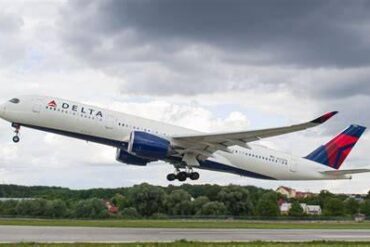
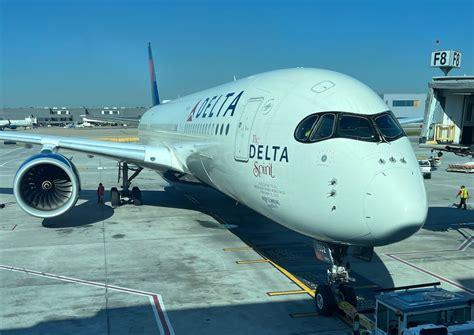
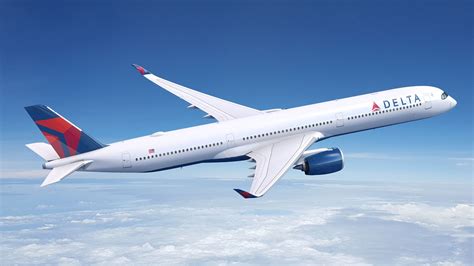
Delta will operate the new route using its Airbus A350-900, one of the most advanced aircraft in its fleet. The jetliner is configured with 275 seats, arranged to satisfy both premium and budget-conscious travelers:
- 40 Delta One Suites (Business Class)
- 40 Premium Select (Premium Economy)
- 36 Comfort+ (Extra Legroom Economy)
- 159 Main Cabin (Economy)
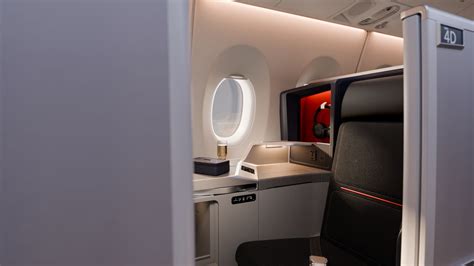
The Delta One Suites offer fully lie-flat seats with privacy doors, direct aisle access, chef-curated meals, and premium bedding. Premium Select is a standout product, featuring increased recline, wider seats, and elevated dining—suitable for travelers who seek luxury without the business-class price tag.
Demand Dynamics: Why Melbourne?
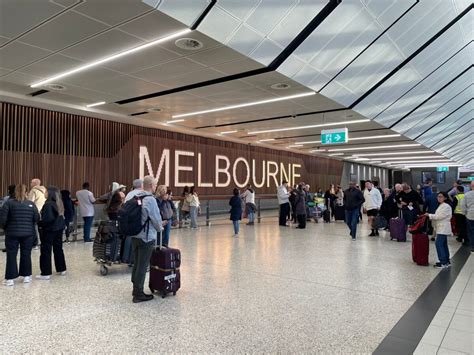
Melbourne is not just a tourism hub—it is a gateway to Australia’s cultural, academic, and business sectors. With over 8.3 million international passengers annually, it is Australia’s second busiest airport in terms of international traffic, after Sydney. Comparatively, Brisbane manages only 2.5 million, underscoring why Delta’s realignment of assets to Melbourne is a tactical decision with higher yield potential.
Delta’s South Pacific service map, once this route is operational, will include:
- Year-round service to Sydney (SYD)
- Seasonal service to Auckland (AKL), Brisbane (BNE), and Papeete (PPT)
- Now: Year-round service to Melbourne (MEL)
Filling the Void: Post-Virgin Australia Alliance
Delta’s expansion comes in the wake of the dissolution of its joint venture with Virgin Australia during the COVID-19 pandemic. That partnership had previously enabled seamless connections throughout Oceania. Attempts to establish new linkages with carriers like Regional Express (Rex) faltered as Rex struggled to expand beyond turboprop operations.
This direct LAX-MEL flight allows Delta to restore some of that lost connectivity, bypassing the need for alliances to cover long-haul Australian routes. It also aligns with Delta’s broader strategy to deploy next-gen widebodies like the A350-900 on premium long-haul markets that offer strong origin-destination demand.
Market Positioning and Competitive Implications
With American Airlines, United, and Qantas all increasing transpacific capacity—especially to Sydney and Brisbane—Delta’s MEL launch is timely and competitive. The limited nonstop options from the U.S. to Melbourne have long forced passengers to connect via Sydney or Auckland. This nonstop service will fill a glaring void in the market.
Although some passengers may still prefer Brisbane for cost-saving reasons, Melbourne promises greater frequency, improved schedule integrity, and a city that holds broader appeal for both leisure and corporate travelers.
A Pacific Reorientation: The A350 Strategy
This route further confirms Delta’s pivot to deploying A350s on transpacific routes, a trend seen with other destinations like Sydney and Tokyo. While Airbus A330-300 and A330neo aircraft continue to serve Europe and the Caribbean, the A350’s ultra-long-range capability, fuel efficiency, and passenger comfort make it ideal for flights surpassing 14 hours.
There is internal speculation that as more A350-1000s enter Delta’s fleet, we could see flagship deployments on high-demand European routes such as Atlanta to Amsterdam (ATL-AMS). Until then, Delta appears focused on saturating the Pacific with its most capable long-haul hardware.
SkyMiles and Launch Pricing: Expectation vs. Reality
Initial fare leaks indicate Delta One round-trip pricing north of $10,500, a significant premium over the $6,500–$8,500 range typical on LAX–SYD. Early adopters using SkyMiles noted redemption rates exceeding 700,000 miles for round-trips in Delta One—a stark contrast to 255,000-mile redemptions seen for Brisbane in prior launches.
Despite the steep costs, many frequent flyers are betting on future promotions similar to those offered during the LAX–Auckland rollout. Mileage enthusiasts are advised to stay alert for limited-time award deals or flash sales in the weeks following the formal sale period.
Competitive Landscape: Capacity and Infrastructure
The timing of Delta’s move is also noteworthy from a macro-infrastructure perspective. Melbourne Airport is actively investing in terminal upgrades to accommodate increased international traffic, unlike Brisbane, which, while hosting the 2032 Olympics, remains overcapacity and under-equipped in the short term.
With airlines like United and American adding overlapping service to Brisbane, the saturation risk is real. Shifting Delta’s aircraft assets to a higher-demand and better-equipped airport like Melbourne may prove more sustainable. Analysts predict that the current Brisbane service, supported by temporary subsidies, might eventually be consolidated into Melbourne for better yield management.
Looking Forward: Future Pacific Ambitions
Delta’s LAX–MEL route is more than just a new dot on the map—it is a key puzzle piece in Delta’s long-term Pacific strategy. Industry insiders speculate that future A350-1000 deliveries could unlock ultra-long-haul routes to Southeast Asia, such as Los Angeles to Singapore (LAX–SIN) or even Seattle to Singapore (SEA–SIN).
Executives acknowledge that the Asia-Pacific market remains complex, with regulatory, competitive, and economic hurdles. But this move signals Delta’s renewed commitment to Oceania and a methodical approach to rebuilding a resilient, premium transpacific network.
Conclusion: A Route That Reflects Bigger Ambitions
Delta’s decision to launch nonstop service between Los Angeles and Melbourne is a calculated and strategic play. It leverages the capabilities of the A350-900, taps into strong demand, fills a longstanding market gap, and positions the airline for future growth in the South Pacific.
For travelers, this route offers a new level of convenience and comfort to Australia’s cultural capital. For Delta, it’s a statement: the Pacific is no longer a secondary theater—it’s a primary frontier for growth.
Flights are now available for booking. As the inaugural date approaches, travelers and aviation enthusiasts alike will be watching closely to see how this major international expansion unfolds.