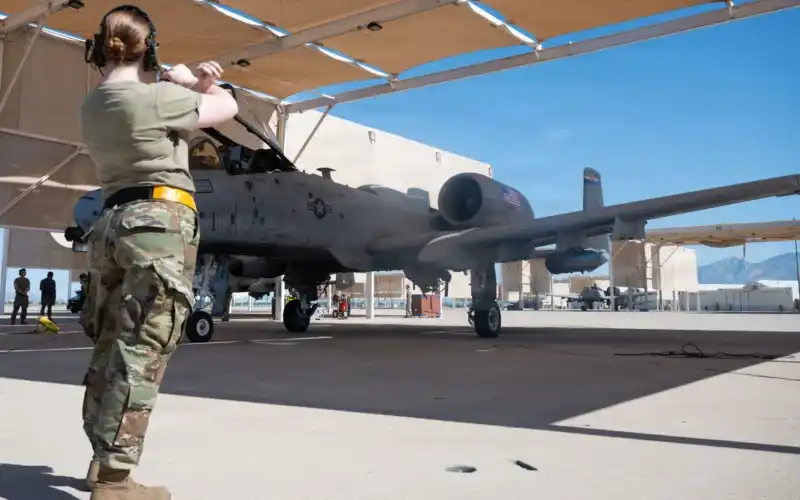
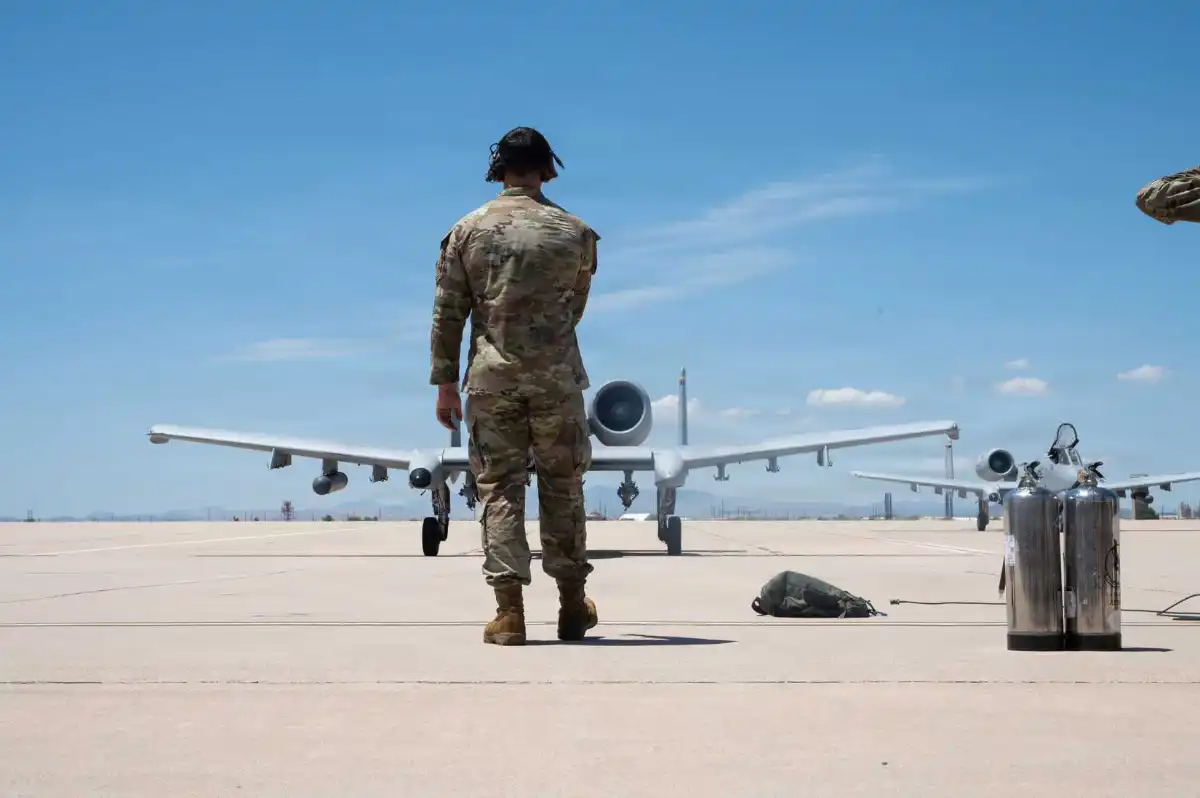
The A-10 Warthog has reached one of the most symbolic milestones in its long United States Air Force career. On July 29, 2026, a two-ship formation performed the final A-10 sortie from Davis-Monthan Air Force Base in Tucson, Arizona, ending a training tradition that had shaped virtually every Air Force Thunderbolt II pilot for five decades. The aircraft itself is not disappearing immediately, but the base that became synonymous with Warthog pilot training has now turned the page.
The final flight came only months after the 357th Fighter Squadron graduated its last class of A-10 students. Ten pilots completed mission qualification training in March 2026 before graduating during a formal ceremony on April 3. For generations of pilots, instructors, maintainers, and support personnel, Davis-Monthan was more than another assignment. It was the place where they learned how to operate one of America’s most distinctive combat aircraft.
The timing makes the transition particularly striking. In the same month that the final A-10 students graduated, a Warthog supporting a combat search and rescue operation over Iran reportedly absorbed enemy fire while helping protect efforts to recover a downed F-15E crew. The aircraft eventually became too damaged to land safely, forcing its pilot to eject over Kuwait. Yet the episode demonstrated precisely why the A-10 remains so difficult to retire: its battlefield strengths are deeply connected to the risks that make the aircraft increasingly difficult to justify in a future high-end war.
Davis-Monthan and the End of A-10 Pilot Training
For approximately 50 years, Davis-Monthan Air Force Base served as the central training ground for A-10 pilots. The 357th Fighter Squadron became inseparable from the Thunderbolt II, producing generations of aviators trained specifically for close air support, battlefield interdiction, forward air control, and combat search and rescue support.
The final class marked the end of that pipeline. After completing their training, the ten student pilots became the last group to graduate from a program that had existed through enormous changes in American air warfare. The A-10 had entered service during the Cold War, fought in the Gulf War, supported operations in Afghanistan and Iraq, and continued flying missions long after many expected the aircraft to be retired.
The final training sorties therefore represented more than a routine graduation. They marked the conclusion of an institutional relationship between one aircraft and one base. Davis-Monthan had taught pilots how to exploit the Warthog’s unusual combination of endurance, low-speed handling, weapons capacity, and battlefield resilience. That specialized knowledge will now have to be carried into a different generation of aircraft and tactics.
When Lt. Col. Ryan Rutter, commander of the 357th Fighter Squadron, shut down his A-10 after the final flight, the emotional weight of the moment was obvious. The significance was not simply that another aircraft type was leaving a base. Years of professional relationships, operational experience, and personal identity were tied to the Warthog.
The final formation was flown by Rutter and Lt. Col. Rodney Dwyer, commander of the 355th Operations Group. Their two-ship fini-flight provided a fitting conclusion to the Davis-Monthan A-10 era. Once the aircraft landed, the familiar sound of Warthog engines at the base became part of aviation history.
Why the Air Force Has Struggled to Retire the Warthog
The Air Force has attempted to retire the A-10 fleet repeatedly. Beginning with budget requests in 2015, 2016, and 2017, senior leaders argued that resources devoted to the aging close-air-support aircraft would be better invested in newer capabilities.
Congress repeatedly resisted those efforts.
The disagreement was never simply about whether the A-10 was a good aircraft. The more complicated question was whether its strengths remained relevant against the threats the United States expects to face in the future.
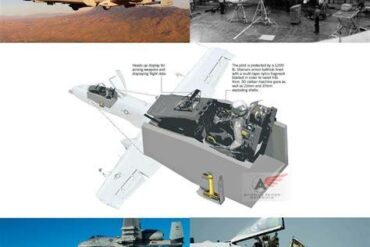
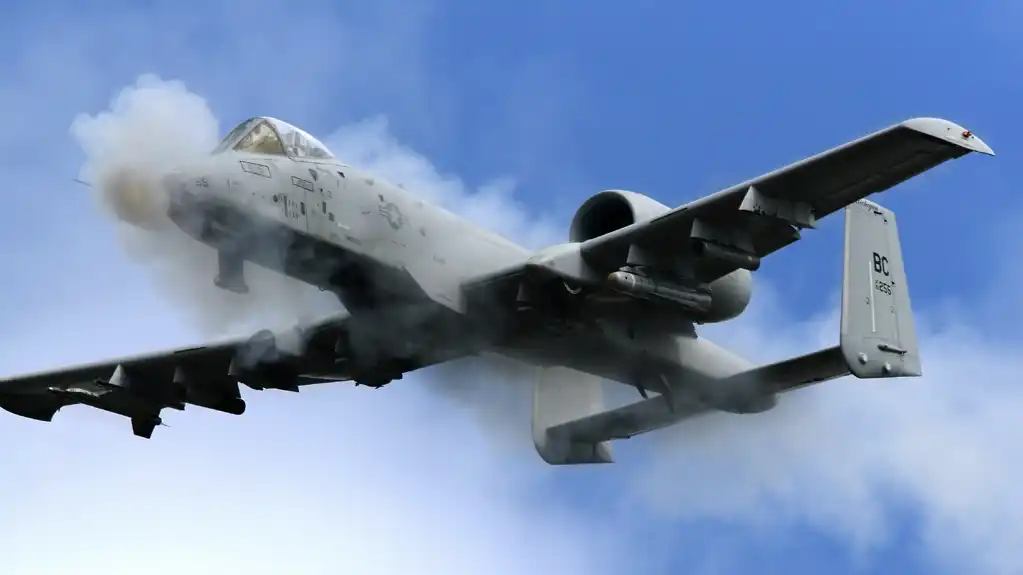
The Warthog was designed around a very specific battlefield problem. Its massive 30 mm GAU-8/A cannon, heavily protected cockpit, redundant systems, rugged landing gear, and relatively slow flight characteristics were optimized for attacking ground targets while operating close to friendly troops. The aircraft could remain over an area for extended periods and provide responsive fire support when ground forces needed it most.
Its reputation for survivability became legendary. The A-10 earned the nickname “flying tank” for good reason. Combat aircraft returned from missions with severe battle damage, including damaged engines and compromised airframes, while still carrying their pilots home.
That resilience creates a powerful argument for keeping the aircraft. It also creates the central contradiction in the retirement debate.
An aircraft designed to survive damage by flying low and slow must still survive the weapons that modern air-defense networks can bring against it. Against relatively permissive battlefields, the A-10’s characteristics can be valuable. Against sophisticated, mobile, layered defenses operated by a peer adversary, those same characteristics can become liabilities.
The A-10’s Greatest Strength Is Also Its Greatest Weakness
The Warthog’s ability to operate close to the battlefield has always been central to its identity. Pilots can fly relatively slowly, visually acquire targets, communicate with ground forces, and remain available to provide repeated attacks.
But modern warfare is increasingly dominated by long-range sensors, networked command systems, electronic warfare, surface-to-air missiles, and precision weapons.
That changes the calculation dramatically.
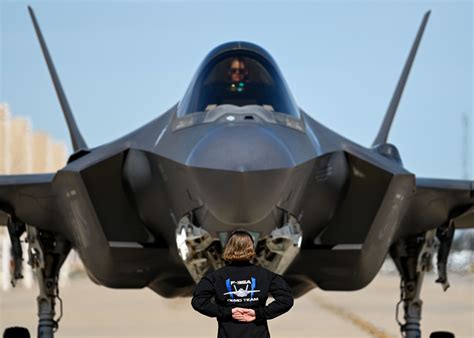
An aircraft that must spend substantial time within an enemy’s weapons engagement zone faces a fundamentally different problem from a fighter capable of launching weapons from much greater distances. The F-35 Lightning II, for example, was designed around stealth, sensor fusion, networking, and survivability against sophisticated threats. It does not reproduce every characteristic of the A-10, but it provides a different way of delivering combat power.
This distinction is crucial because the Air Force does not necessarily view the F-35 as a direct one-for-one replacement for the Warthog. Instead, the service is moving toward a broader architecture in which close air support and battlefield protection can be provided through combinations of stealth fighters, precision weapons, unmanned systems, rescue aircraft, and specialized platforms.
The result is a gradual transformation of the mission rather than a simple aircraft swap.
Operation Epic Fury Strengthened the Case for the A-10
The retirement debate became even more complicated in 2026 following the combat search and rescue operation after an F-15E Strike Eagle was shot down over Iran.
On April 3, two crew members ejected from the aircraft. The recovery operation became a major combat search and rescue effort involving hundreds of personnel and dozens of aircraft. One survivor, using the callsign Dude 44 Alpha, was recovered after approximately seven hours under dangerous conditions, while the weapon systems officer was not recovered until nearly two days later during a nighttime operation.
A-10s performed the traditional “Sandy” close air support role, operating in support of the recovery effort and helping place themselves between survivors and hostile forces.
During the operation, one A-10 came under enemy fire. According to the account provided by Air Force leadership, the pilot continued the mission, eventually escaped the battlespace, and later ejected over Kuwait after determining that the damaged aircraft could not safely land.
The episode was an extraordinary demonstration of the Warthog’s battlefield philosophy. The aircraft was being used for exactly the kind of dangerous, low-level support mission for which it had been designed decades earlier.
Yet the incident also demonstrated the opposite side of the argument. The A-10 was hit by the very air defenses that modern Air Force planners say make its long-term survival increasingly difficult.
That tension explains why the retirement debate refuses to disappear.
Why the A-10 Is Still Flying Into the 2030s
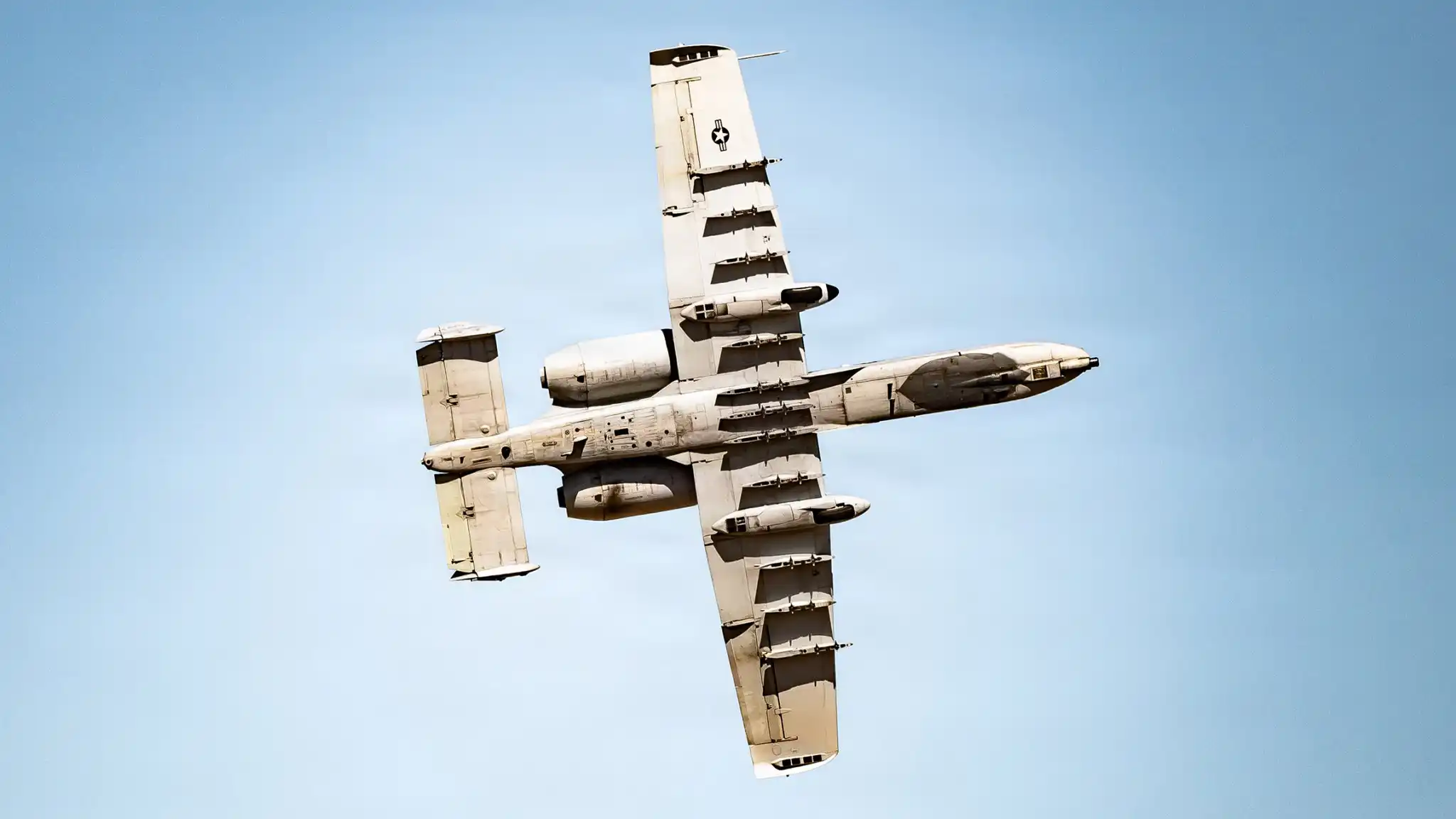
The Air Force had previously planned to remove the A-10 entirely by 2028. Its fiscal 2026 proposal sought to retire all 162 remaining aircraft three years ahead of schedule.
Congress intervened again.
Instead of allowing the entire fleet to disappear, lawmakers limited the number of A-10s that could be retired and required the service to maintain a minimum of 103 combat-ready aircraft. That decision ensured that the Warthog would remain relevant even as its presence continued to shrink.
Secretary of the Air Force Troy Meink subsequently pushed the projected retirement date to at least 2030. A bipartisan proposal known as the “BRRRRT Act” was also introduced in July 2026 seeking to extend the aircraft’s service life further.
The financial argument for retirement remains substantial. Previous Air Force proposals estimated billions of dollars in savings from eliminating the fleet, while the service has also had to invest significant sums to keep aging A-10 airframes operational.
The fleet’s age is impossible to ignore. The average A-10 airframe is now more than 43 years old, based on the reference material, while the basic design dates to the early 1970s. Keeping such aircraft flying requires maintenance resources that could otherwise support newer platforms.
The Air Force therefore faces a difficult tradeoff: preserve a uniquely capable aircraft that troops value, or redirect resources toward platforms designed for the increasingly complex battlespace expected in the 2030s and beyond.
Davis-Monthan Is Becoming a New Kind of Combat Airpower Hub
The departure of the A-10 does not mean Davis-Monthan is losing its importance. In many ways, the base is being transformed into something broader.
The 47th Fighter Squadron, formerly associated with A-10 operations, is transitioning toward the F-35A. Its arrival will establish a new fifth-generation fighter training and readiness presence at the base.
At the same time, Davis-Monthan is expanding its combat search and rescue mission. Units and personnel associated with rescue, weapons, testing, and aircraft maintenance are moving into the new structure, including the 58th and 66th Rescue Squadrons, the 34th Weapons Squadron, and the 855th Aircraft Maintenance Squadron.
This creates an unusual combination.
On one side is the F-35, a high-speed, stealthy aircraft built to penetrate contested environments and operate as part of a sophisticated information network. On the other is the OA-1K Skyraider II, a turboprop Armed Overwatch platform designed for missions where endurance, low-speed operations, and the ability to use relatively austere airfields are more important than supersonic performance.
Alongside rescue helicopters, these aircraft create a more diverse approach to missions once associated heavily with the A-10.
The A-10’s Legacy Will Be Hard to Replace
The Warthog’s retirement debate has never been entirely about technology. It is also about trust.
Ground troops developed a remarkable confidence in the aircraft because its pilots could remain nearby, communicate directly with forces on the ground, and continue fighting after sustaining damage that might have ended another aircraft’s mission.
That relationship cannot simply be recreated by installing new sensors or replacing an airframe with a newer fighter.
At the same time, modern air combat increasingly rewards capabilities the A-10 was never designed to provide. Stealth, electronic warfare, advanced sensors, networking, stand-off weapons, and long-range engagement are increasingly central to surviving against sophisticated adversaries.
The question is therefore not whether the A-10 remains useful. Clearly, it does.
The harder question is whether it remains useful enough to justify the cost and risk of maintaining an aging fleet in a radically changing battlespace.
The Air Force’s answer has been increasingly clear since 2015: eventually, resources must move elsewhere. Congress has consistently answered that the transition cannot happen too quickly.
The Final Davis-Monthan Sortie Marks a Turning Point
The July 29 final sortie should not be mistaken for the immediate end of the A-10 Warthog. The aircraft is expected to remain in service for years, and congressional action could extend its operational life further.
But the final flight from Davis-Monthan is still historic.
For half a century, pilots arrived in Tucson to learn how to fly one of the most recognizable combat aircraft ever built. They learned the peculiarities of a platform whose battlefield philosophy depended on proximity, persistence, firepower, and survivability. They left knowing that the Warthog was not merely another fighter in the inventory.
Now the training mission has ended.
The base is preparing for a future built around the F-35, combat search and rescue, Armed Overwatch, advanced weapons, and integrated airpower. The transition reflects a broader change in how the Air Force expects to fight.
The Warthog’s story, however, is not finished. Its final years may still produce more examples of the resilience that made the aircraft famous. Yet its departure from Davis-Monthan represents something more profound than a change of aircraft.
It is the closing of a chapter that began when the A-10 entered service and continued through decades of combat.
The sound of the Warthog may still be heard elsewhere. At Davis-Monthan, however, the era of training America’s A-10 pilots has finally come to an end.