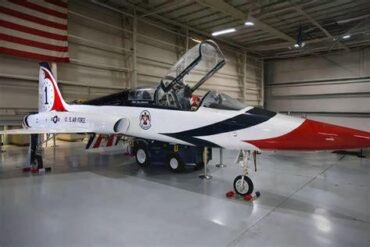
For more than six decades, NASA astronauts have climbed into the same basic family of jet aircraft to prepare for the unforgiving realities of spaceflight. Since 1964, the Northrop T-38 Talon has been a familiar sight around NASA facilities, carrying astronauts through high-speed training flights, proficiency missions, spacecraft pilot preparation, and airborne testing. Few aircraft have been associated so closely with the American human spaceflight program for so long. Yet the jet that helped prepare generations of astronauts for Gemini, Apollo, Space Shuttle, and modern Artemis missions is approaching an unavoidable turning point.
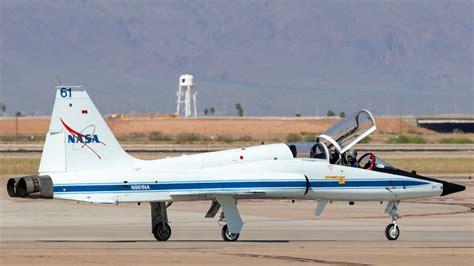
NASA operates a small fleet of T-38N Talons, a specialized version distinct from the U.S. Air Force’s T-38A, T-38B, and T-38C variants. The agency’s fleet has remained useful because the Talon provides something that is difficult to reproduce in a simulator: real, high-performance flight in an aircraft that demands constant attention. However, the broader support structure that has kept the T-38 viable is disappearing. The U.S. Air Force is replacing its own T-38 fleet with the Boeing-Saab T-7A Red Hawk, leaving NASA with a shrinking ecosystem of parts, maintenance expertise, engineering resources, and institutional support.
The situation marks a remarkable reversal. NASA has not needed to seriously consider a new astronaut jet trainer since the Lyndon B. Johnson administration. The T-38 was introduced to NASA in the 1960s because it was already available through the Air Force, allowing the space agency to benefit from a mature military aircraft without having to develop an expensive dedicated trainer. More than 60 years later, Johnson Space Center has begun looking outward, seeking information from aircraft manufacturers about modern platforms that could eventually take over the T-38’s unique role.
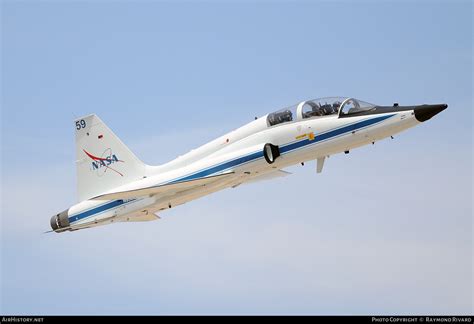
The T-38N Has Served NASA Since 1964
The T-38’s relationship with NASA began during the Gemini era, when astronaut crews needed demanding aircraft training before attempting increasingly complex space missions. The original aircraft entered U.S. Air Force service in 1961, just three years before the first Talons were transferred to NASA. Since then, the aircraft has become deeply embedded in the astronaut training culture.
Unlike a conventional classroom trainer, the T-38 exposes astronauts to the physical and operational demands of fast jet aviation. NASA’s astronauts are not simply learning how to manipulate controls. They are maintaining proficiency, managing workload at high speed, responding to changing conditions, communicating with another crew member, and making decisions while operating an aircraft with limited margins for error.
The NASA version is particularly important because its mission differs from that of a standard military trainer. The Air Force eventually came to view the T-38 as inadequate for preparing pilots to operate increasingly sophisticated fifth-generation fighters. NASA sees many of the same characteristics as advantages. The aircraft’s relatively demanding handling qualities require astronauts to develop precise stick-and-rudder skills, situational awareness, cockpit discipline, and rapid decision-making.
That distinction explains why simply finding a newer aircraft is not enough. NASA needs an airplane capable of preserving the training characteristics that made the T-38 so valuable in the first place.
Why Astronauts Still Need A Supersonic Jet
The T-38’s speed is more than a historical curiosity. Powered by two General Electric J85 afterburning turbojet engines, the aircraft can reach approximately Mach 1.6 at high altitude. It can climb to around 30,000 feet and expose its two-person crew to substantial acceleration forces during rapid maneuvers.
Former Space Shuttle pilot Terry Virts has described the T-38 as one of the most important forms of astronaut training because it involves actual flight rather than simulation. Canadian astronaut Jeremy Hansen, who flew on Artemis II, has similarly discussed the importance of real aircraft training. The distinction matters because simulators can reproduce procedures and scenarios but cannot completely duplicate the physical consequences of flying a real aircraft.
For astronauts, that realism has a direct connection to spacecraft operations. A T-38 requires its crew to recognize problems, control the aircraft, manage energy, communicate clearly, and respond immediately. A mistake can produce genuine aerodynamic or mechanical consequences rather than merely generating a simulated warning.
The aircraft’s demanding performance also resembles an important characteristic of spacecraft such as the Space Shuttle. The Shuttle had a very poor glide ratio compared with conventional aircraft and had to be flown with considerable precision during its approach to a runway. Astronauts therefore benefited from experience operating an aircraft that rewarded accurate energy management and rapid reactions.
NASA does not necessarily need another T-38. It needs another aircraft that can reproduce the qualities that made the T-38 useful.
The Air Force’s T-7A Replacement Creates NASA’s Problem
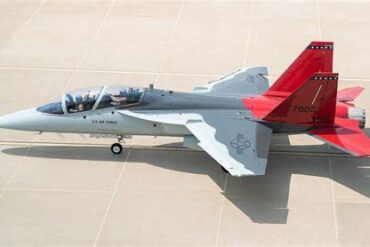
The obvious successor would appear to be the T-7A Red Hawk, the aircraft selected by the U.S. Air Force to replace its T-38C fleet. The T-7A is modern, supersonic, digitally designed, and specifically intended to prepare pilots for advanced fighter aircraft.
NASA’s interest in the T-7A is therefore logical. A common aircraft could potentially provide access to an established production line, modern logistics, and a continuing supply of trained maintenance personnel. The problem is timing.
The Air Force’s T-7A program has experienced substantial delays. The Air Force did not approve the program’s Milestone C decision until April 2025, more than a year and a half later than originally planned. The first low-rate production contract covered 14 aircraft at a reported value of $219 million.
The Government Accountability Office has also identified continuing challenges involving software completion, maintenance personnel, spare parts, and flight-test aircraft availability. The Air Force’s planned full-rate production decision has moved from January 2027 to January 2029, according to the reference material.
Those delays make the T-7A an uncertain near-term solution for NASA. The Air Force’s transition is already taking longer than originally expected, while NASA cannot simply assume that its own requirements will fit neatly into a military procurement program designed around a different training mission.
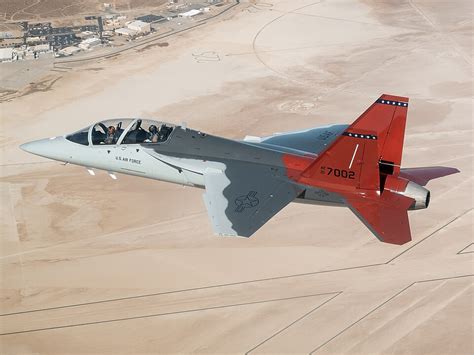
The T-7A Is Not A Simple Plug-In Replacement
There is another important distinction between the two missions. The Air Force wants a trainer capable of preparing pilots for modern fighter aircraft. NASA wants an aircraft that can help astronauts maintain Spaceflight Readiness Training, or SFRT.
Those goals overlap, but they are not identical.
The T-7A has been developed around advanced military pilot training, while NASA values the T-38 partly because of its relatively unforgiving flight characteristics. The space agency therefore has to determine whether a new aircraft offers the right balance of speed, performance, workload, handling, safety, availability, and operating cost.
The T-7A has also experienced technical and testing challenges. The Pentagon’s Director of Operational Test and Evaluation identified deficiencies involving the Collins Aerospace ACES 5 ejection-seat system in 2024, while environmental testing uncovered issues that required additional evaluation. Earlier development work also encountered flight-control software and wing-rock problems.
These issues do not necessarily mean the T-7A cannot eventually become NASA’s trainer. They demonstrate, however, why NASA is examining the market rather than simply placing its future behind the Air Force’s procurement schedule.
NASA Is Looking Beyond One Aircraft
Johnson Space Center’s market-research notice represents an unusually significant development because NASA is not formally asking industry to deliver a specific aircraft. Instead, the agency is gathering information about what modern platforms could meet its needs.
NASA intends to conduct a limited-scope evaluation program involving a small number of modern aircraft. The purpose would be to examine operational compatibility, logistics, costs, and the effect of a replacement aircraft on astronaut training before making a larger commitment.
That approach gives NASA an opportunity it did not really have in the 1960s. The T-38 became part of the astronaut program largely because it was already available and supported by the Air Force. Today, NASA can define its own requirements and investigate aircraft that may have been designed for different customers.
The agency is also considering financial arrangements beyond a conventional purchase. The market research specifically raises possibilities including leasing, lease-to-own agreements, and barter arrangements. Those options reflect NASA’s limited procurement resources and the economic logic that has kept the T-38 alive for so many years.
The T-38’s Greatest Advantage Was Its Huge Support Network
NASA’s continued use of the Talon has never meant that maintaining a tiny fleet was inexpensive by itself. The secret was scale.
The U.S. military operated hundreds of T-38s for decades. That large fleet supported a massive industrial and maintenance ecosystem, making components, engineering services, depot work, and technical expertise available to NASA. The space agency could operate a relatively small number of aircraft while benefiting from infrastructure created primarily for the Air Force.
NASA’s own fleet has been described in the range of roughly 25 to 32 aircraft, depending on the period and accounting. A fleet that small would struggle to sustain a specialized aircraft program independently.
NASA has nevertheless modernized its Talons over the years. The aircraft have received upgraded avionics, including glass cockpits, as well as engine and other improvements intended to keep them safe and useful. These modifications demonstrate why age alone does not explain the replacement decision.
The fundamental problem is the shrinking support base. Once the Air Force retires its remaining T-38s, NASA will lose the economies of scale that made continued operation practical.
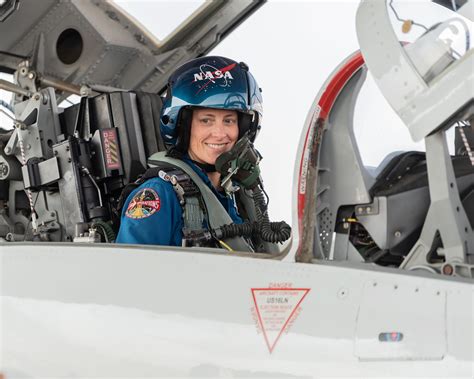
Artemis Makes The Replacement Question More Urgent
NASA’s need for a replacement is becoming more pressing as the agency enters a new phase of human spaceflight. The Artemis II crew carried NASA astronauts Reid Wiseman, Victor Glover, and Christina Koch alongside Canadian astronaut Jeremy Hansen on a crewed lunar mission, representing the first human mission around the Moon in more than five decades.
The program’s future missions will require a continuing pipeline of astronauts who remain proficient in high-performance aircraft. Artemis III and Artemis IV are part of a broader sequence of missions intended to expand human activity around the Moon, while NASA continues preparing crews for increasingly complex operations.
Every astronaut who flies a demanding spacecraft must maintain a broad collection of skills. The T-38 is only one component of that training system, but it occupies an unusual position because it gives astronauts experience with a real aircraft operating at high speed and under real aerodynamic and mechanical constraints.
That makes the replacement schedule important. NASA cannot simply wait until every T-38 reaches the end of its useful life and then search for an alternative. A new aircraft must be evaluated, integrated into training procedures, supported with parts and maintenance, and accepted by instructors and astronauts while the existing fleet continues flying.
What NASA Needs From Its Next Astronaut Jet
The replacement aircraft will ultimately have to satisfy a demanding combination of requirements. It needs enough performance to provide meaningful high-speed flight experience, while also offering reliable availability for a small fleet. It must support modern avionics and training practices without removing the physical workload that makes real flight valuable.
Cost will also matter. NASA’s history with the T-38 demonstrates the agency’s preference for using existing infrastructure whenever possible rather than creating an entirely independent aircraft ecosystem. A successful successor therefore may depend as much on logistics and sustainment as on maximum speed.
The aircraft also needs to remain relevant for decades. NASA’s experience with the T-38 shows that a trainer can remain useful far beyond its original design horizon if a strong support network exists. The next aircraft could similarly become part of astronaut culture for generations.
The T-38’s extraordinary longevity has therefore created an unusual challenge. NASA is not merely replacing an old airplane. It is replacing a training philosophy that has accompanied American astronauts from the Gemini program to Artemis.
For more than 60 years, the Talon provided a rare combination of speed, workload, risk, and simplicity. Its replacement will have to deliver modern technology without eliminating the demanding real-world flying experience that astronauts and instructors consider so valuable. As the Air Force moves toward the T-7A and the T-38 support network contracts, NASA’s search for the next astronaut jet has become unavoidable. The aircraft that eventually takes the Talon’s place will not simply fill a hangar. It will inherit one of the longest-running roles in the history of American human spaceflight.