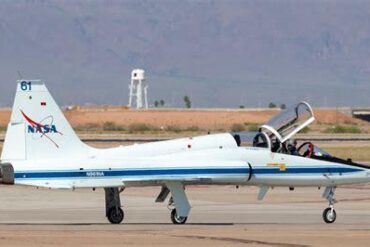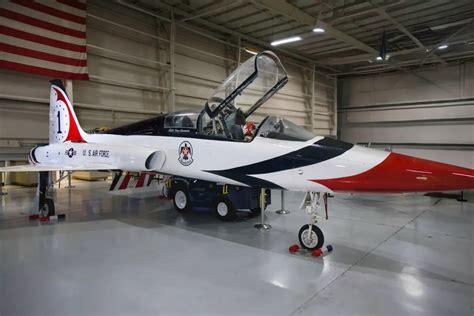
The U.S. Air Force has ordered a rare fleetwide operational pause for every T-38 Talon trainer aircraft following a crash during a routine training mission in Alabama. The decision immediately sent shockwaves through military aviation circles because grounding an entire aircraft fleet is one of the most serious safety measures the Air Force can impose outside of wartime emergencies or confirmed technical failures.
The incident involved a T-38 assigned to the 14th Flying Training Wing at Columbus Air Force Base in Mississippi. During the May 12 training sortie, the aircraft went down in rural Alabama, forcing both pilots to eject. Both survived the crash, although one aviator — a member of the Japan Air Self-Defense Force training alongside American crews — suffered a broken leg during the emergency escape.
The Air Force moved quickly after the accident, but what made the situation more alarming was the emergence of another unusual event the same day. Reports indicated a second T-38C transmitted a 7700 emergency squawk code, the universal aviation signal for a serious in-flight emergency. While military officials have not publicly confirmed a direct connection between the two aircraft, the timing immediately intensified concerns about a broader mechanical or systemic issue within the aging trainer fleet.
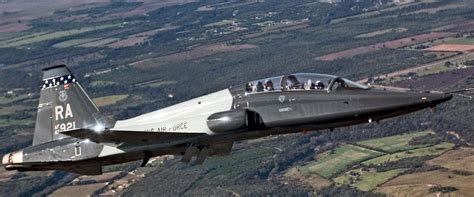
On May 19, the Air Force officially paused operations across the entire T-38 inventory while safety investigators began examining crash evidence and maintenance data. According to the service, the operational stand-down will allow inspection teams to determine whether the Alabama mishap points to a fleetwide safety concern rather than an isolated accident.
The move is extraordinary because the T-38 remains one of the most important aircraft in the Air Force training pipeline. More than six decades after entering service, the sleek supersonic trainer still serves as the bridge between basic flight training and frontline combat aircraft. Every future pilot destined for advanced platforms such as the F-22 Raptor, B-2 Spirit, or other high-performance Air Force aircraft passes through the Talon program first.
Why The T-38 Talon Still Matters To The Air Force
The Northrop T-38 Talon first entered operational service in 1961, making it the world’s first supersonic trainer aircraft. Despite its age, the aircraft continues to occupy a central role in pilot development because the Air Force has never fully replaced its unique capabilities.
More than 1,100 T-38s were originally produced, and over 450 remain active today. The jet was designed to teach student pilots how to manage high-speed flight, rapid climbs, precision formation flying, and advanced aerobatic maneuvers before transitioning to combat aircraft. Even now, few training jets can replicate the performance envelope the Talon offers at relatively low operating costs.
The aircraft’s twin General Electric J85 turbojet engines allow it to exceed Mach 1 while climbing above 55,000 feet. For generations of military aviators, the T-38 has represented the first true taste of fighter-style flying. Its narrow fuselage, aggressive acceleration, and demanding handling characteristics force students to master discipline and precision early in their careers.
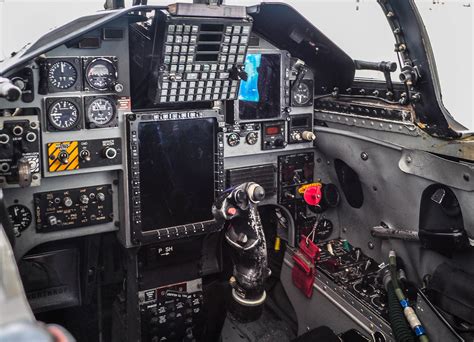
Although the latest T-38C variant introduced upgraded avionics and modernized cockpit displays in the early 2000s, the underlying airframe remains fundamentally rooted in Cold War-era engineering. That reality has increasingly become a challenge for maintainers and flight safety officials alike.
Aging Aircraft And Growing Maintenance Problems
The Air Force has spent years trying to keep the Talon operational while balancing rising maintenance burdens. The aircraft’s age has transformed routine upkeep into a constant logistical struggle, particularly surrounding its aging J85 engines.
By 2020, maintenance bottlenecks had become so severe that Air Education and Training Command warned pilot production targets were under pressure. Overhaul delays inside the Air Force depot system created growing concerns about aircraft availability, forcing leadership to seek outside industry support.
Lt. Gen. Brian Robinson openly acknowledged the difficulties at the time, describing the engine as old, mechanically complex, and increasingly difficult to sustain. The Air Force eventually awarded a $237 million maintenance contract to StandardAero in an effort to stabilize engine overhauls and preserve training capacity.
Still, maintenance improvements can only extend the service life of the aircraft so far. The Talon fleet continues flying at extremely high operational tempos because there is currently no fully fielded replacement ready to assume its mission.
That pressure likely contributes to why the aircraft continues appearing in accident and emergency reports. While the T-38 has served reliably for decades, the strain of constant use on an aging fleet inevitably raises risks.
The T-7A Red Hawk Cannot Arrive Fast Enough
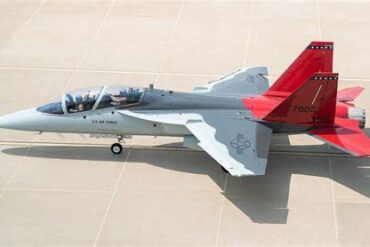
The Air Force has already committed to replacing the Talon with the Boeing-Saab T-7A Red Hawk, a next-generation trainer designed specifically for modern combat pilot instruction. The aircraft features advanced digital systems, improved safety architecture, and training technologies tailored for fifth-generation fighter preparation.
However, the transition has moved slower than originally planned. Although production approval for the T-7A was finally granted in April 2026, the aircraft is still years away from replacing the Talon at scale.
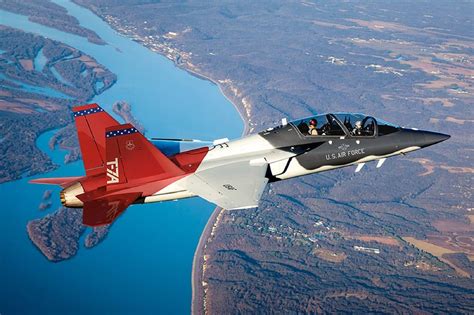
Current plans call for the earliest T-38 retirements to begin in 2027, while complete fleet phase-out may not occur until the 2030s. That timeline means the Air Force remains heavily dependent on a trainer aircraft first introduced during the Kennedy administration.
Until the Red Hawk enters widespread service, the Talon remains indispensable despite mounting concerns about age and reliability. For now, Air Force pilot trainees will rely more heavily on simulators while investigators determine whether the Alabama crash exposed a deeper issue hidden within one of America’s oldest operational military aircraft fleets.