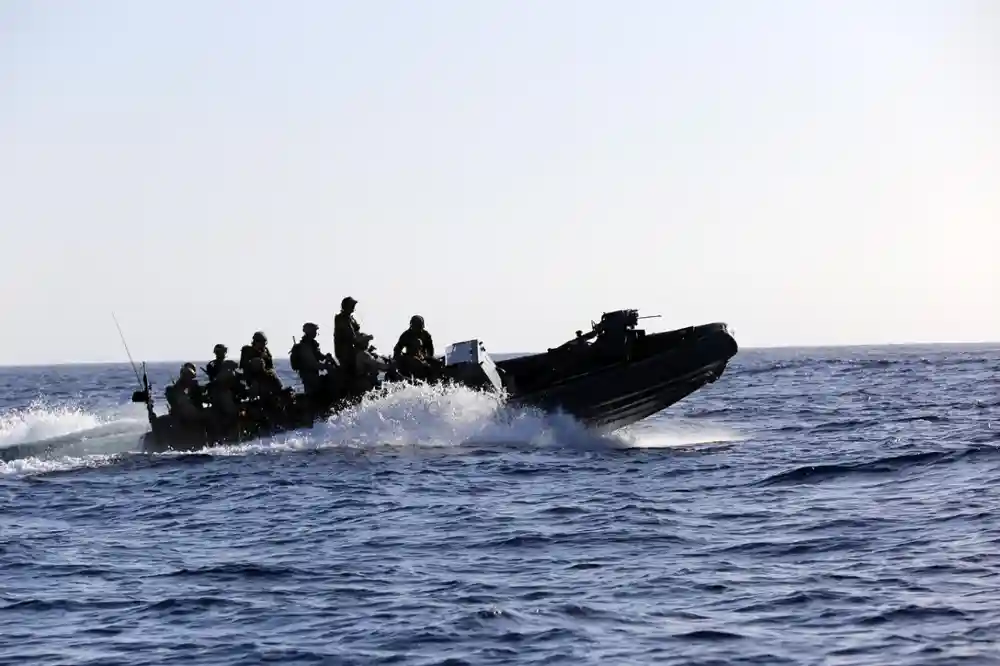
In 2023, a routine Naval Special Warfare training mission in San Diego Bay turned into a critical emergency when a rigid-hull inflatable boat (RHIB) crashed near the mouth of the bay, resulting in five sailors being hospitalized, including one who was knocked unconscious and rescued by a fellow sailor. At the time, the Navy remained tight-lipped about the severity of the incident. Two years later, an investigative report has shed light not only on what went wrong that morning but also on a potential cover-up within the Navy ranks.
Critical Information Deleted From Navy Systems
A 91-page internal report, uncovered in 2025 by San Diego’s Team 10 through a Freedom of Information Act (FOIA) request, revealed a disturbing development: critical GPS data and track lines from the three boats involved in the crash had been intentionally deleted. This loss of navigational evidence has significantly obstructed efforts to fully understand how the crash occurred and why safety protocols failed so dramatically.
The deleted data included time-stamped movement details and positioning records that could have pinpointed procedural failures or navigational errors. The report confirmed that this data wipe occurred after the crash but stopped short of identifying the individual responsible. All personnel involved denied responsibility, and no formal admission of deletion has been made. The Navy, when questioned about the deletion, declined to elaborate beyond stating that policy changes have been implemented to enhance training safety.
Contradictory Statements and SEAL Team Involvement
Adding further complexity, the official Navy account of the incident claimed no Navy SEALs were involved, contradicting the findings in the internal report. According to the documents, SEAL Team 1 members were present during the pre-mission safety briefing, aboard the vessels during the incident, and involved in the follow-up investigation. In fact, one of the five injured sailors was identified as a Navy SEAL.
The contradiction was addressed by Team 10 when they reached out to Captain Jodie Cornell, a spokesperson for Naval Special Warfare Command. Cornell reaffirmed the claim that no SEALs were involved — a statement sharply disputed by both the report and former Navy SEAL Jake Zweig, who remarked: “SEALs are gonna cover their butts… Probably the hardest community in the world to do an investigation on.”
This discrepancy suggests a deliberate effort to downplay SEAL involvement, possibly to protect reputations or avoid internal disciplinary scrutiny.
Lapses in Protocol and Accountability
The sailor who was steering the RHIB at the time of the crash admitted to multiple violations: he was motion sick, drowsy, and rushing to return to shore at a “dangerously high rate of speed”. Compounding the recklessness, he was not wearing the required night-vision goggles, significantly reducing visibility in the early morning darkness.
Despite acknowledging these errors, the sailor received only light disciplinary action, raising further concerns about how infractions are handled within elite Navy units. The report made it clear that he bore primary responsibility for the accident, but no charges or formal reprimands were disclosed.
Institutional Silence and a Pattern of Omission
The incident echoes a broader pattern of limited transparency within military investigations, particularly when special operations units are involved. By omitting SEAL involvement and failing to disclose data deletion, the Navy risks undermining public trust in its accountability mechanisms.
While it is true that this crash did not result in fatalities, it highlights systemic vulnerabilities: procedural neglect, inconsistent discipline, and potential institutional cover-ups. The Navy’s commitment to safety reforms is welcome, but without clarity on how and why the deletion occurred, the integrity of the investigation remains in question.
The San Diego crash and its aftermath serve as a cautionary tale about the dangers of selective transparency and the need for robust, impartial oversight in military operations. As reforms are implemented, the ultimate test will be whether future incidents are handled with the honesty and rigor that sailors — and the public — deserve.