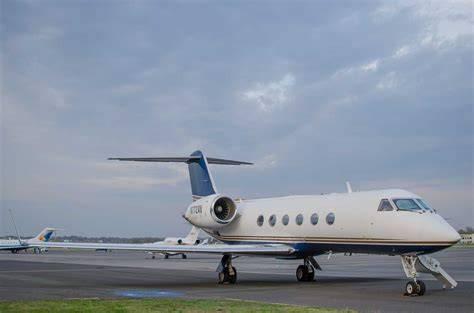
Flying privately from New York to California can transform a long transcontinental journey into a remarkably streamlined experience. Instead of navigating crowded terminals, arriving hours before departure, and dealing with conventional airline schedules, private travelers can use business aviation airports closer to their final destinations. That convenience comes at a significant price, however, and the final bill can vary dramatically depending on the aircraft, itinerary, passenger count, airport, and timing.
For a useful benchmark, consider a flight from Teterboro Airport (TEB) in New Jersey to Van Nuys Airport (VNY) near Los Angeles. The two airports are closely associated with private aviation and provide convenient access to New York City and Los Angeles. A nonstop private-jet flight generally takes around five and a half to six and a half hours, depending on the aircraft, winds, routing, and operating conditions.
The most important point is that there is no single fixed price for a private jet between New York and California. A one-way charter can cost roughly $35,000 to more than $50,000, while larger or more luxurious aircraft can push the figure substantially higher. Round trips can easily exceed $100,000, particularly when the aircraft must remain available for the passengers or incur additional positioning, overnight, and crew expenses.
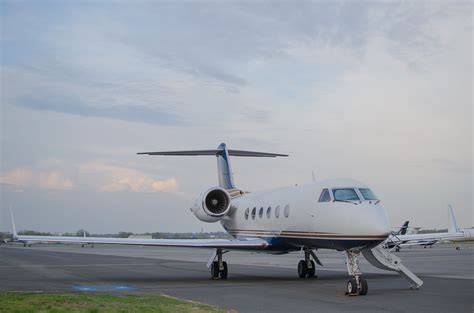
Private Jet Charter Cost From New York to Los Angeles
For many travelers, Los Angeles is the most practical California destination against which to measure private-jet pricing. A midsize or super-midsize aircraft provides the range required for the journey while offering a cabin substantially more comfortable than a conventional narrow-body airliner.
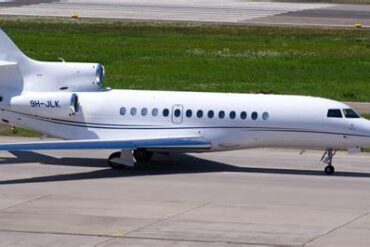
Reference charter estimates indicate that a one-way private jet from New York to Los Angeles can begin around $40,000 on an aircraft such as the Cessna Citation Longitude. A heavier aircraft, such as a Bombardier Challenger 604 or Dassault Falcon 2000LXS, may push the price toward $50,000 or more. Other charter estimates have placed a Bombardier Challenger 300 on the route at approximately $34,000 to $41,000 one way, demonstrating just how much pricing can differ between operators.
The aircraft itself is only part of the calculation. Charter companies must account for crew, fuel, maintenance, aircraft utilization, airport charges, and sometimes the cost of moving the aircraft into position before the trip. If the aircraft is based somewhere other than New York, the customer may effectively pay for part of that repositioning.
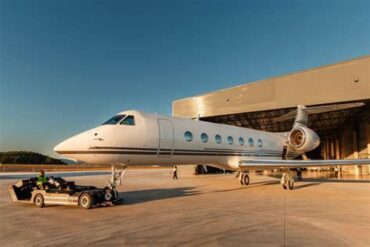
For a round trip, the economics can become even more complicated. One estimate for a Gulfstream G450 puts a New York–Los Angeles round trip at approximately $102,000, including the aircraft, crew, and fuel. Positioning flights, landing charges, federal excise taxes, and overnight expenses may be additional. This illustrates why two apparently similar private-jet quotes can have surprisingly different final totals.
How Much Does a Private Jet Cost Per Hour?
Private aviation is commonly priced using an hourly rate, but the advertised hourly figure should not automatically be interpreted as the total amount a passenger will pay. Depending on aircraft category, charter rates can range from several thousand dollars per hour to well above $10,000 per hour.
A turboprop such as the Pilatus PC-12 may have an indicative charter rate of roughly $1,200 to $1,800 per hour, while a very light jet such as the Embraer Phenom 100 may fall around $1,500 to $2,250. Light jets can command approximately $2,200 to $3,000 per hour, while midsize aircraft such as the Learjet 60 can reach roughly $2,800 to $3,800.
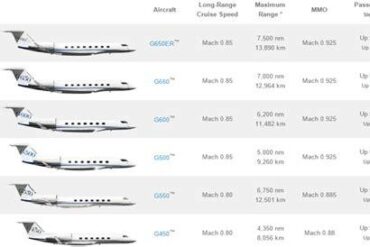
At the larger end of the market, a super-midsize jet such as the Citation Sovereign may cost approximately $3,800 to $5,000 per hour. Heavy jets can reach $5,000 to $8,000 per hour, while ultra-long-range aircraft such as the Gulfstream G650 can command approximately $8,500 to $14,000 per hour.
These figures help explain why the New York–California journey can produce such a substantial bill. A flight lasting approximately six hours on a large aircraft can accumulate tens of thousands of dollars in flight-related costs before additional charges are considered.
What Determines the Cost of a New York to California Private Jet?
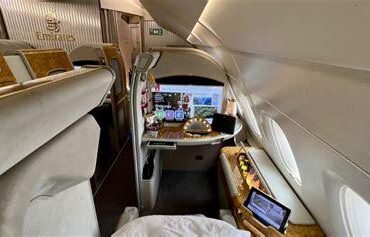
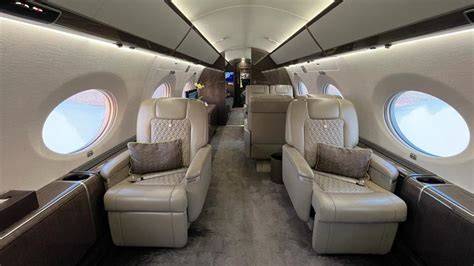
The aircraft type is arguably the biggest factor. A light jet may offer a lower price but could have less cabin space, fewer amenities, and tighter baggage limitations. A heavy or ultra-long-range jet offers a larger cabin, more luggage capacity, multiple seating areas, and greater comfort, but those advantages come with higher fuel consumption and operating expenses.
The number of passengers also matters, although not in the same straightforward way as airline ticket pricing. A private aircraft is normally chartered as an entire aircraft rather than sold seat by seat. Taking eight passengers instead of four therefore does not necessarily double the charter price. Instead, passengers can divide the overall aircraft cost among themselves, potentially making a larger jet economically attractive for a group.
Flight timing can also influence the price. Peak travel periods, holidays, major events, and periods of unusually strong private-aviation demand can increase charter rates. Aircraft availability becomes particularly important when several customers are competing for the same category of jet.
Positioning is another major consideration. If an aircraft is not already located near New York, it may need to fly empty to the departure airport. Similarly, if it must return to its home base after dropping passengers in California, those repositioning costs may be reflected in the quote.
Additional charges can include landing fees, airport handling, permits, fuel surcharges, crew accommodation, crew per diem, catering, ground transportation, and overnight expenses. Some quotes bundle several of these expenses into a single figure, while others itemize them separately.
Teterboro and Van Nuys: Why Private Travelers Use These Airports
The airport selected can have a surprisingly important impact on the private-jet experience. Teterboro Airport is particularly useful for travelers originating in the New York metropolitan area because it is dedicated primarily to general and business aviation and sits only about 12 miles from Manhattan under typical geographic measurements.
Instead of traveling through a major commercial hub, private passengers can arrive at a fixed-base operator, complete the necessary procedures, and board their aircraft with considerably less airport friction. The experience is one of the principal reasons people are willing to pay a premium for private aviation.
In Southern California, Van Nuys Airport is similarly important. Located within practical driving distance of central Los Angeles, it is one of the world’s major business-aviation airports. Its extensive private-aviation infrastructure makes it a natural destination for charter flights arriving from New York.
The combination of Teterboro and Van Nuys therefore provides more than an aircraft connection. It creates a city-to-city private aviation itinerary that can significantly reduce the amount of time spent traveling to and through large commercial airports.
What Does It Cost to Own a Private Jet for the Trip?
Chartering is not the only way to fly privately. For travelers who spend hundreds of hours in the air every year, private jet ownership can become a more logical financial proposition, although ownership introduces an entirely different set of expenses.
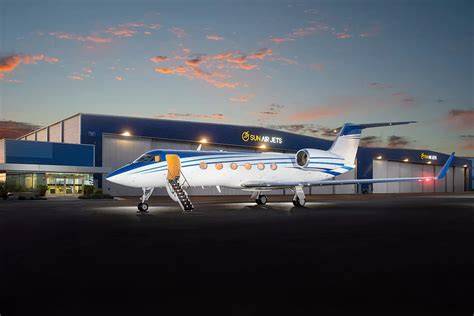
A pre-owned Gulfstream IV, for example, can be acquired for several million dollars depending on its age, condition, maintenance history, avionics, interior, and market availability. One set of operating estimates for an aircraft in this category puts annual costs at more than $1.6 million for approximately 200 flight hours.
Using an estimated New York–Los Angeles air distance of roughly 2,446 miles, an operating-cost calculation based on an average cost of about $19.12 per mile produces a theoretical one-way operating cost of approximately $46,768. Another methodology using different annual utilization assumptions produces a figure closer to $62,630.
The large difference between these numbers highlights an important reality about aircraft ownership: there is no universal cost-per-flight figure. Fixed expenses such as insurance, hangarage, management, crew, and maintenance programs must be allocated across the number of hours flown. The more an aircraft flies, the more effectively some fixed costs can be distributed across its utilization.
Ownership therefore makes the most financial sense for travelers with high annual flight demand. Someone taking only a few private trips each year is unlikely to benefit financially from purchasing an aircraft, regardless of how attractive ownership might appear.
Fractional Ownership Can Reduce the Financial Burden
Between full ownership and traditional chartering sits fractional ownership. Instead of purchasing an entire aircraft, customers acquire a share and receive a corresponding allocation of flying hours.
A typical fractional structure might divide an aircraft into 16 shares. A 1/16 share could correspond to approximately 50 hours of annual flying, while a larger share could provide more available hours. The exact structure varies by provider and aircraft.
The attraction is straightforward. The customer receives access to a professionally managed aircraft without personally carrying the full burden of acquisition, crew, insurance, hangarage, maintenance, and other ownership responsibilities.
There are still significant expenses, including the initial share purchase, management fees, and occupied hourly charges. Nevertheless, for someone who flies privately frequently but does not need an aircraft exclusively available to them, fractional ownership can provide a more balanced solution.
Jet Cards and Membership Programs
A private jet membership or jet card provides another alternative. Customers generally pre-purchase flying access and receive predetermined or structured hourly pricing, depending on the provider and program.
The principal advantage is predictability. Instead of negotiating a completely new aircraft charter for every journey, members may have access to established rates, guaranteed availability under certain conditions, and standardized service levels.
For frequent travelers flying between New York and California, this can be particularly useful. A person who makes repeated business trips may value predictable availability and simplified booking more than finding the absolute cheapest individual charter on every occasion.
The downside is that membership programs can involve substantial upfront commitments and restrictions. Availability rules, peak-day pricing, minimum charges, and cancellation policies vary, so the headline hourly rate should never be evaluated in isolation.
Empty-Leg Private Jet Flights Can Be Much Cheaper
For travelers with flexible schedules, an empty-leg flight can dramatically reduce the cost of private aviation. An empty leg occurs when an aircraft needs to reposition without passengers, either returning to its base after dropping off travelers or flying empty to collect its next customer.
Rather than allowing that seat capacity to go unused, an operator or broker may offer the flight at a heavily discounted rate. Discounts can sometimes reach 50%, 75%, or even 90% compared with a conventional charter, although the actual discount varies considerably.
The trade-off is flexibility. Empty legs are created by existing aircraft movements, so the departure time, route, aircraft type, and destination are dictated primarily by the operator’s schedule. A traveler who must leave New York at 9 a.m. on a specific Friday cannot assume that an attractive empty leg will be available.
For someone with a flexible itinerary, however, this can be one of the most effective ways to experience private aviation without paying the full cost of a dedicated charter.
Is Flying Private From New York to California Worth the Cost?
The answer depends heavily on what the traveler values. Private aviation is not simply a more expensive airline ticket. Its value comes from combining time savings, flexibility, privacy, airport access, personalized service, and control over the travel schedule.
For executives, the ability to avoid lengthy airport processes and arrive closer to the final destination can potentially recover several productive hours. For celebrities and high-profile individuals, privacy can be equally important. Families and groups can also benefit from having an entire aircraft cabin rather than sharing a commercial aircraft with hundreds of other passengers.
The financial equation becomes more compelling when several passengers share the charter. A $40,000 aircraft divided among eight travelers works out to $5,000 per person, although that still represents a premium compared with commercial aviation.
The most expensive mistake is often assuming that the first quote represents the market price. Private-jet pricing is dynamic, and aircraft availability can change quickly. Travelers should provide the exact dates, passenger count, preferred airports, baggage requirements, catering needs, and any special requests when requesting quotes.
The Bottom Line on New York to California Private Jet Costs
A reasonable planning figure for a private jet from New York to Los Angeles is approximately $35,000 to $50,000 or more one way, with larger aircraft and complex itineraries potentially costing substantially more. A round trip can readily exceed $100,000 once aircraft category, positioning, overnight requirements, taxes, and other expenses enter the equation.
For occasional private travelers, chartering is generally the simplest approach. Frequent travelers may find that fractional ownership, jet cards, or membership programs offer better long-term convenience. Travelers with highly flexible schedules should also investigate empty-leg opportunities, which can produce dramatic discounts when the right flight becomes available.
Ultimately, the price of private aviation is determined by much more than the distance between New York and California. The aircraft, schedule, airport, positioning requirements, passenger count, market demand, and additional services all influence the final quote. For travelers who place an exceptionally high value on time, privacy, flexibility, and convenience, the premium can be justified. For everyone else, commercial airlines remain dramatically cheaper—and that is precisely why private aviation remains a luxury rather than an ordinary way to cross the country.