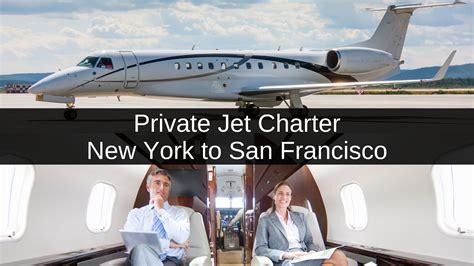
Flying privately between San Francisco and New York remains one of the most sought-after business aviation routes in the United States. Connecting the innovation-driven economy of Silicon Valley with the financial powerhouses of Manhattan, this transcontinental corridor serves thousands of executives, entrepreneurs, investors, celebrities, and high-net-worth travelers every year. While private jet brokers often advertise attractive hourly rates, the true cost of chartering an aircraft across the country is far more complex than many first-time clients expect.
In 2026, the actual price of a private jet charter from San Francisco to New York typically ranges from $32,000 to more than $100,000 one way, depending on aircraft category, passenger count, airport selection, weather conditions, positioning requirements, and seasonal demand. Understanding how these factors influence pricing can help travelers make smarter charter decisions while avoiding unexpected costs.
The route spans approximately 2,578 miles (4,149 kilometers) and represents one of the longest domestic missions regularly flown by business aircraft. Unlike shorter regional flights where turboprops and light jets excel, a coast-to-coast journey requires aircraft with substantial range capabilities, advanced performance characteristics, and sufficient fuel reserves to complete the mission efficiently.
For corporations, time-sensitive executives, and travelers seeking maximum flexibility, private aviation continues to offer an unmatched combination of speed, privacy, productivity, and convenience. However, achieving those benefits comes with a premium price tag.
After all, the value proposition of private aviation is not simply transportation. It is the ability to bypass crowded terminals, eliminate lengthy security queues, avoid airline schedules, and travel directly between strategic business centers on your own timetable.
By 2026, rising fuel costs, increased demand for premium aviation services, sustainable aviation fuel initiatives, and persistent supply chain pressures have all contributed to higher charter rates across the industry.
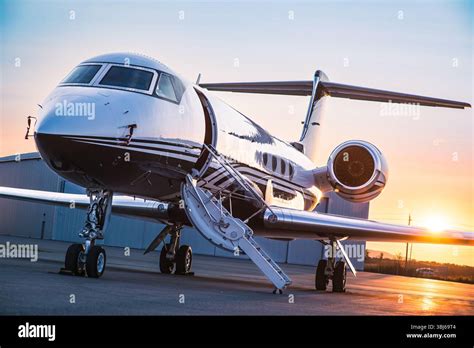
Understanding the True Cost of a Coast-to-Coast Private Jet Flight
Many travelers mistakenly assume that charter pricing is calculated solely by multiplying an hourly aircraft rate by flight duration. While flight time certainly forms the foundation of the invoice, the final cost includes numerous operational variables that collectively determine the actual charter price.
For a typical San Francisco-to-New York mission, flight times generally range between 4 hours and 45 minutes and 5 hours and 30 minutes, depending on winds, routing, and air traffic conditions. Charter operators calculate pricing based on occupied flight hours, meaning the time passengers are onboard while the aircraft is actively flying.
Super-midsize jets generally command hourly rates ranging from $6,500 to $10,000, while heavy jets typically fall between $8,000 and $15,000 per hour. Multiplying those figures by a five-hour transcontinental mission immediately illustrates why coast-to-coast private travel remains a premium service.
However, the aircraft operating cost represents only the beginning. Clients must also account for federal taxes, airport fees, handling charges, crew expenses, aircraft positioning costs, and occasionally weather-related operational surcharges.
The difference between a seemingly straightforward charter quote and the final invoice can easily amount to several thousand dollars. This is why experienced charter customers demand detailed cost breakdowns before confirming a booking.
Why Light Jets Rarely Make Sense on This Route
Although light jets remain highly efficient for shorter domestic missions, they are generally ill-suited for a nonstop journey between Northern California and New York.
Aircraft such as the Citation CJ3 or Learjet 75 often lack sufficient range reserves to comfortably complete the mission under all operational conditions. Strong headwinds, passenger loads, luggage volume, and air traffic routing restrictions can force these aircraft to schedule fuel stops during the trip.
A fuel stop may sound minor on paper, but in practice it undermines many of the advantages that private aviation is intended to provide.
Passengers lose valuable time during descent, refueling, and departure procedures. Additional landing fees are incurred. Ground handling charges increase. Crew duty considerations become more complicated. Fuel consumption rises due to the extra takeoff and climb cycle.
As a result, most charter operators strongly recommend larger aircraft categories capable of reliably completing the mission nonstop.
The Most Popular Aircraft for San Francisco–New York Charters
The majority of charter customers flying between Silicon Valley and New York select either super-midsize jets or heavy-cabin aircraft. These categories strike the ideal balance between performance, comfort, efficiency, and nonstop capability.
Among super-midsize aircraft, the Cessna Citation Longitude, Bombardier Challenger 350, and Embraer Praetor 600 have become particularly popular choices.
These jets typically accommodate between eight and nine passengers while providing stand-up cabins, generous baggage compartments, high-speed Wi-Fi connectivity, and sufficient range for transcontinental missions.
For travelers seeking a more luxurious experience, heavy jets represent the next tier of business aviation.
Aircraft including the Gulfstream G450, Bombardier Challenger 605, and Dassault Falcon 2000 deliver wider cabins, greater luggage capacity, larger lavatories, full-service galleys, and significantly enhanced passenger comfort.
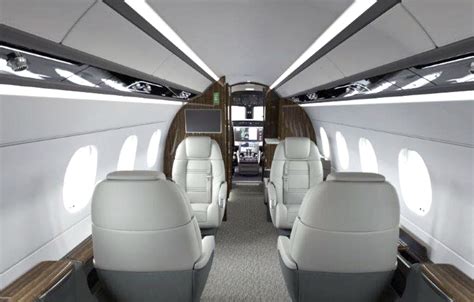
Heavy jets also frequently include a dedicated flight attendant, adding an additional layer of service and operational support throughout the journey.
The difference becomes particularly noticeable when transporting multiple executives, conducting in-flight meetings, or traveling with extensive luggage and equipment.
While the cost increase can be substantial, many corporate travelers view the productivity benefits as a worthwhile investment.
Estimated Charter Pricing by Aircraft Category in 2026
For travelers evaluating aircraft options, understanding the general pricing ranges can provide a useful benchmark.
A typical Citation Longitude charter between San Francisco and New York generally falls between $36,000 and $48,000 one way.
A Challenger 350 often costs between $38,000 and $52,000, depending on availability and seasonal demand.
Moving into heavy jets, a Dassault Falcon 2000 commonly commands between $50,000 and $70,000.
A Gulfstream G450 may range from $60,000 to $85,000 or more for a one-way charter.
Ultra-long-range aircraft such as the Gulfstream G650 and Bombardier Global 6500 can push total charter costs beyond $100,000, particularly during peak travel periods.
These estimates typically include aircraft operation and crew costs but may not fully account for every ancillary fee.
The Powerful Role of Jet Stream Winds
One of the least understood aspects of transcontinental aviation is the dramatic impact of atmospheric winds.
The jet stream consistently flows from west to east across North America, creating vastly different operating conditions depending on travel direction.
Flights departing San Francisco and heading toward New York often benefit from strong tailwinds. These favorable winds reduce flight time, lower fuel consumption, and improve overall operating efficiency.
The return flight tells a completely different story.
Aircraft traveling westbound frequently encounter significant headwinds that can add an hour or more to the total journey.
During winter, jet stream velocities can exceed 120 knots, transforming what would normally be a five-hour flight into a mission lasting well over six hours.
For charter operators, longer flight times translate directly into higher costs.
Fuel consumption increases. Crew utilization rises. Aircraft scheduling becomes more constrained.
Passengers may never see these calculations occurring behind the scenes, but they play a major role in determining final charter pricing.
Why Some Clients Upgrade to Larger Aircraft
The uncertainty created by strong winter headwinds often encourages travelers to upgrade from super-midsize aircraft to heavy or ultra-long-range jets.
While a Challenger 350 may comfortably complete an eastbound mission, challenging westbound conditions can place greater demands on fuel reserves.
Corporate travelers operating under strict schedules often prefer the certainty offered by larger aircraft.
Models such as the Gulfstream G650 and Bombardier Global 6500 possess immense fuel capacity and performance margins that allow them to maintain nonstop capability even under difficult atmospheric conditions.
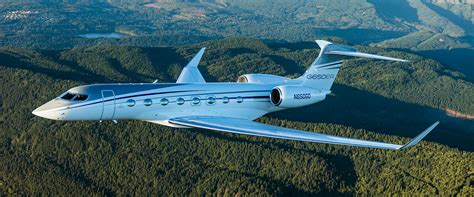
The additional charter expense effectively becomes a form of insurance against delays, diversions, and unscheduled fuel stops.
For executives attending critical meetings, preserving schedule integrity often outweighs the additional cost.
Hidden Fees That Surprise First-Time Charter Customers
Many first-time charter clients focus exclusively on aircraft hourly rates while overlooking a variety of additional expenses.
One of the most common is aircraft positioning.
If the selected jet is not already located at the departure airport, it must travel empty to pick up passengers. These repositioning flights, commonly called deadhead legs, generate operating costs that are frequently passed along to the charter client.
Airport fees represent another significant expense.
Large commercial airports often impose higher landing fees, parking charges, and ground handling costs than smaller executive airports.
Crew expenses can also add up when overnight accommodations are required.
Federal taxes remain unavoidable as well. Domestic charter flights in the United States are subject to a 7.5% Federal Excise Tax, along with passenger segment fees that increase the final invoice.
Weather-related expenses can be especially unpredictable.
During winter operations, mandatory de-icing procedures can add $3,000 to $6,000 or more to a single flight.
These costs may appear suddenly and are largely beyond the control of both operators and passengers.
How Alternative Airports Can Reduce Costs
Savvy charter customers often save thousands of dollars simply by choosing different airports.
Rather than departing from heavily congested San Francisco International Airport, many operators recommend utilizing Oakland or San Jose.
These airports frequently offer lower handling fees, reduced taxi delays, and greater operational flexibility.
On the East Coast, alternatives to busy New Jersey and New York airports can provide similar benefits.
Westchester County Airport and Morristown Municipal Airport are popular choices among experienced charter travelers seeking to minimize delays and reduce operating costs.
Beyond the financial savings, these secondary airports often provide a smoother overall travel experience.
Passengers spend less time waiting on taxiways and more time reaching their final destination.
The Empty Leg Opportunity
Among the most effective strategies for reducing private jet costs is taking advantage of empty leg availability.
Empty legs occur when an aircraft must reposition without passengers to fulfill another scheduled charter assignment.
Since operators would otherwise fly the aircraft empty, they frequently offer these flights at substantial discounts.
On the San Francisco–New York corridor, discounts of 30% to 50% are not uncommon.
A flight that might normally cost $50,000 could potentially be secured for $25,000 to $35,000 under the right circumstances.
The tradeoff is flexibility.
Empty-leg schedules depend entirely on the needs of the original charter customer. Departure times can change, and flights may be canceled if the primary itinerary changes.
For travelers with adaptable schedules, however, empty legs represent one of the best values available in private aviation.
Peak Travel Seasons Can Dramatically Increase Prices
Private aviation pricing follows the same basic supply-and-demand principles as commercial travel, although the effects are often more pronounced.
During major holidays, championship sporting events, economic summits, and high-profile corporate gatherings, aircraft availability can tighten rapidly.
As fleet utilization rises, operators frequently implement premium pricing structures.
A charter that normally costs $45,000 may increase to $55,000 or more during peak demand periods.
Premium surcharges of 15% to 25% are increasingly common during major travel windows.
Booking early remains one of the most effective methods for avoiding these seasonal price spikes.
Advance planning provides access to a broader aircraft selection and generally results in more favorable pricing.
The Future of Transcontinental Private Jet Pricing
Looking ahead, several industry trends are expected to influence charter costs beyond 2026.
Sustainable aviation fuel programs continue expanding across major business aviation markets. Many operators now incorporate SAF surcharges directly into charter contracts as environmental initiatives become more widespread.
Aircraft maintenance costs remain elevated due to ongoing supply chain challenges affecting parts availability and repair timelines.
Meanwhile, growing demand from technology executives, private equity firms, investment managers, and global corporations continues supporting strong utilization rates across premium aircraft categories.
Despite rising costs, the appeal of private aviation remains remarkably resilient.
For travelers whose time carries exceptional value, the ability to arrive at a private terminal, board immediately, and fly nonstop across the continent continues to justify the investment.
A private jet charter from San Francisco to New York in 2026 is unquestionably expensive, but for many business leaders and affluent travelers, the combination of efficiency, flexibility, privacy, and productivity makes it one of the most valuable transportation tools available. When every hour matters, the true cost is often measured not only in dollars, but in the time saved along the way.