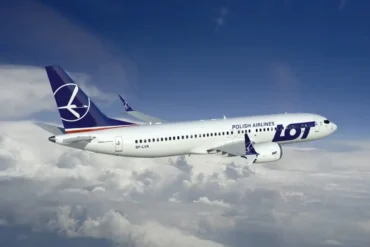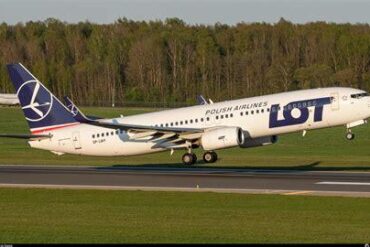
LOT Polish Airlines has entered a decisive new chapter in transatlantic aviation, inaugurating a nonstop 12-hour service between Warsaw and San Francisco. This landmark route not only connects Poland directly with Northern California for the first time, but also reinforces the airline’s growing ambition to dominate Central and Eastern Europe’s long-haul market. As global demand for transatlantic travel surges, the move signals a calculated expansion into one of the world’s most lucrative and strategically vital aviation corridors.
A Strategic Leap Into the US West Coast Market
The introduction of flights to San Francisco marks a long-anticipated breakthrough for LOT Polish Airlines. For years, the Polish capital’s largest unserved North American market remained untapped despite steady passenger demand. With approximately 26,000 annual round-trip travelers between Warsaw and San Francisco, the route presented a compelling opportunity—especially given the presence of a sizable Polish diaspora in Northern California.
What makes this route particularly attractive is its high-yield potential. Average fares have historically exceeded $1,170 one-way, placing it above comparable long-haul routes such as Los Angeles. Combined with a slightly shorter flight distance, the economics become even more favorable, allowing the airline to optimize both revenue and operational efficiency. This balance between demand and cost efficiency explains why San Francisco emerged as the logical next step in LOT’s North American strategy.
Four Weekly Flights Powered by Boeing 787 Dreamliners
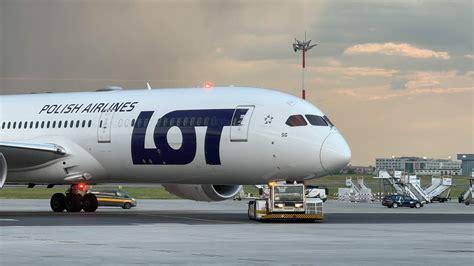
LOT Polish will initially operate four weekly flights on the Warsaw–San Francisco route during the peak summer season. The airline will deploy its modern fleet of Boeing 787-8 and 787-9 Dreamliners, configured with 252 and 294 seats respectively. These aircraft are specifically designed for ultra-long-haul comfort, offering improved cabin pressure, larger windows, and enhanced fuel efficiency—key factors for a journey approaching 12 hours.
The schedule has been carefully structured to maximize connectivity and passenger convenience. Departures from Warsaw are split between morning and late afternoon slots, while return flights from San Francisco provide both afternoon and late evening options. This staggered approach enhances flexibility and supports seamless connections across LOT’s expanding network.
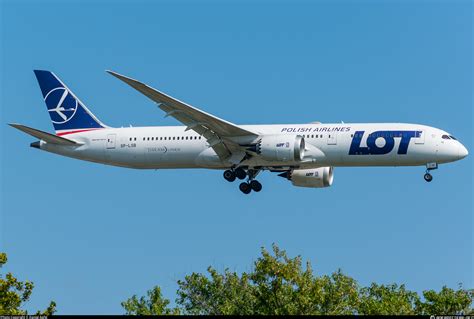
Warsaw Hub Strengthens as a Transatlantic Gateway
Beyond local demand, the success of this new route will hinge on connecting traffic through Warsaw Chopin Airport. LOT Polish has steadily transformed its home hub into a critical gateway linking North America with Central and Eastern Europe, as well as parts of the Middle East.
Connectivity analysis reveals that passengers arriving from San Francisco can access up to 46 onward destinations within a four-hour transfer window. These include key cities across Poland, the Balkans, Greece, Turkey, and emerging Eastern European markets. By slightly extending connection times, even long-haul destinations such as Delhi become viable, unlocking access to a market of nearly 280,000 annual passengers traveling between San Francisco and India.
This hub-and-spoke efficiency is central to LOT’s strategy. Rather than competing head-on with larger Western European carriers, the airline leverages its geographic position to offer shorter, more efficient connections for travelers heading east.
Record-Breaking North America Expansion
The San Francisco launch comes at a time when LOT Polish Airlines is achieving unprecedented scale in North America operations. During the peak summer month of August, the airline plans to operate 69 weekly flights across the United States and Canada—its highest level ever.
This network spans ten routes, with seven originating from Warsaw and additional services from Kraków and Rzeszów. High-frequency routes such as Toronto, New York JFK, and Chicago O’Hare dominate the schedule, while newer or niche destinations—including Miami and San Francisco—add strategic diversity.
The scale of this operation positions LOT as the leading carrier in Central and Eastern Europe for transatlantic services, accounting for over half of all flights in the region. Competitors such as American Airlines, United Airlines, and Air Canada operate significantly fewer services, highlighting LOT’s unique dominance in this geographic niche.
Competitive Positioning Without Codeshare Support
Interestingly, the launch of the San Francisco route comes without a renewed codeshare agreement with United Airlines, a fellow Star Alliance member. The partnership ended several years ago, leaving LOT to rely more heavily on its own network and interline arrangements.
Despite this, the airline appears confident in its ability to capture sufficient demand independently. The combination of strong local traffic, competitive fares, and extensive onward connections provides a solid foundation. Moreover, the absence of a codeshare may allow LOT greater control over pricing, inventory, and revenue optimization.
This independence reflects a broader trend among mid-sized carriers seeking to balance alliance benefits with strategic autonomy, particularly in high-demand long-haul markets.
San Francisco: A High-Value Aviation Prize
San Francisco is more than just another destination—it represents a premium transatlantic gateway with strong business, tech, and diaspora-driven demand. The city’s global significance, anchored by Silicon Valley and a thriving international community, ensures consistent passenger flows across multiple cabin classes.
For LOT Polish Airlines, entering this market is not merely about adding another route. It is about positioning itself within a high-value ecosystem where premium traffic, cargo opportunities, and long-term growth potential converge. Even capturing a small share of this demand could translate into substantial revenue gains.

A Defining Moment for LOT Polish Airlines
The Warsaw–San Francisco route stands as a defining milestone in LOT Polish Airlines’ evolution. It reflects a broader shift from regional operator to globally relevant long-haul carrier, capable of competing in one of the most demanding aviation markets.
With a carefully calibrated mix of aircraft efficiency, hub connectivity, and market selection, the airline is building a network that punches well above its weight. As passenger demand continues to rebound and reshape global travel patterns, this bold expansion into California may prove to be one of LOT’s most strategically significant moves yet.