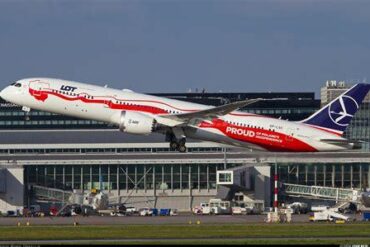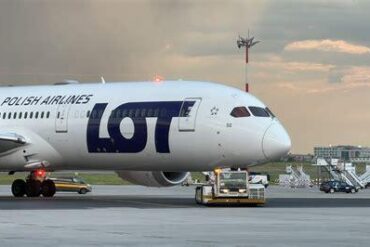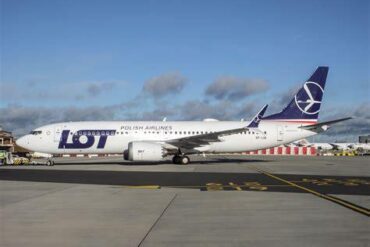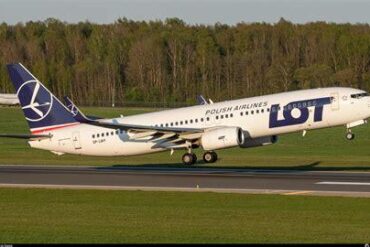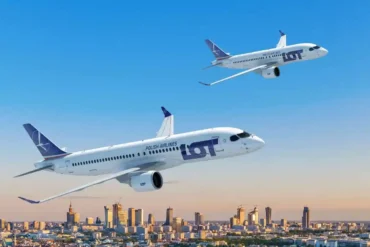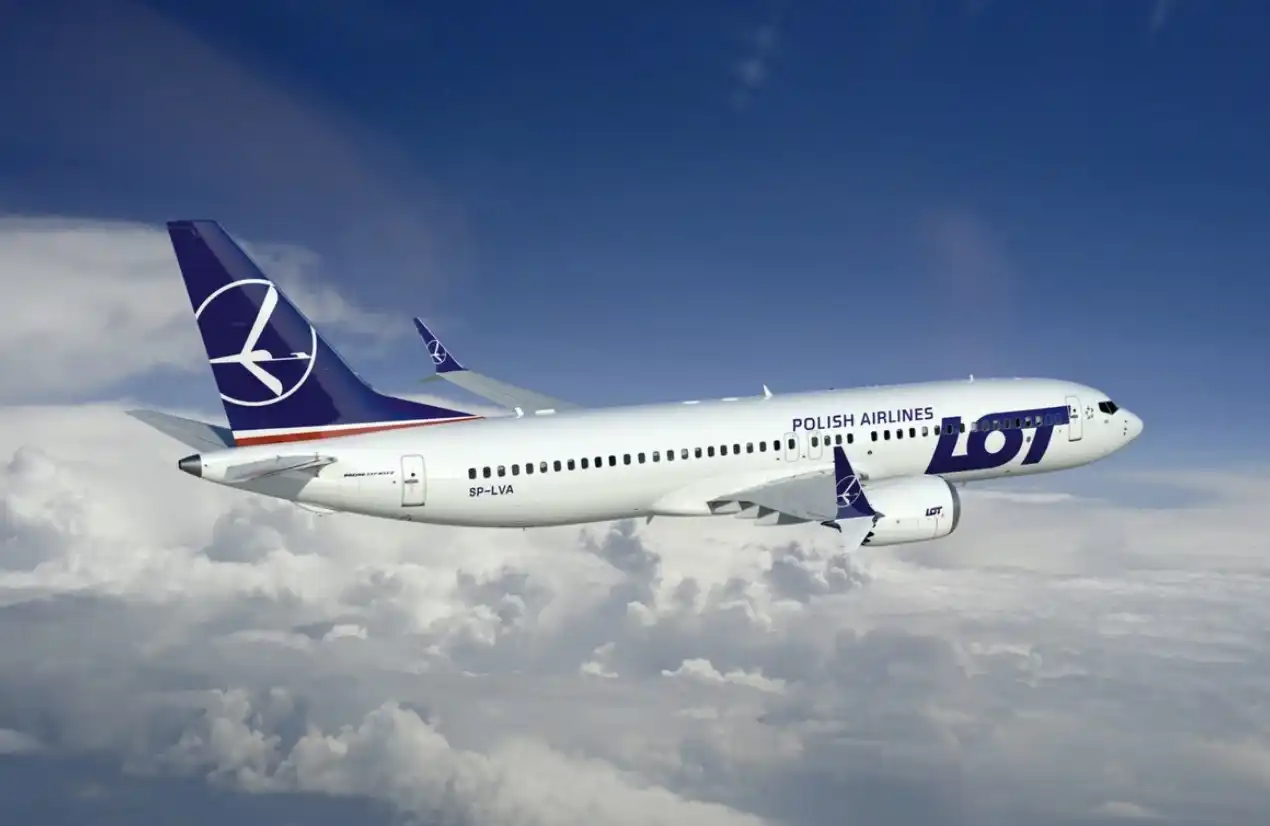
LOT Polish Airlines has opened a new chapter in its network development with the launch of direct flights between Warsaw Chopin Airport and Almaty, Kazakhstan. While the route reflects the carrier’s growing focus on Central Asia, it is also making aviation history within the airline’s own operations. According to current scheduling data, the return sector from Almaty to Warsaw is now the longest Boeing 737 family flight ever operated by LOT Polish Airlines, pushing the capabilities of the carrier’s narrowbody fleet to new limits.
The new service commenced on May 31 and immediately attracted attention among aviation observers. Traditionally, flights approaching eight hours have been associated with larger widebody aircraft designed specifically for long-haul operations. Yet LOT has entrusted the route to its modern Boeing 737 MAX 8, demonstrating how advances in aircraft efficiency and range continue to reshape airline route planning.
The launch also highlights the increasing strategic importance of Kazakhstan and the broader Central Asian region. Economic ties between Europe and Central Asia have expanded significantly in recent years, creating new opportunities for business travel, tourism, and trade. LOT’s new connection provides a direct link between Poland and Kazakhstan’s largest city while strengthening Warsaw’s position as a connecting hub for travelers moving between Western Europe and emerging Central Asian markets.
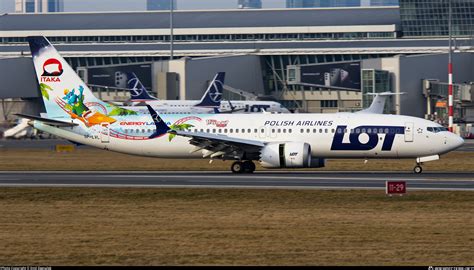
LOT’s Longest-Ever Boeing 737 Flight
The most remarkable aspect of the new route is not the eastbound flight from Warsaw to Almaty, but rather the westbound return journey. Flight LO197 from Warsaw to Almaty is scheduled with a block time of approximately six hours and twenty minutes, operating primarily as an overnight service. The return flight, however, tells a very different story.
Current schedules extending through March 2027 show block times reaching seven hours and forty minutes on the journey from Almaty back to Warsaw. That duration makes it the longest scheduled Boeing 737 operation in LOT Polish Airlines’ history.
Such timings are extraordinary for a single-aisle aircraft. Only a decade ago, routes of this length were rarely associated with narrowbody jets. The latest generation of aircraft, particularly the Boeing 737 MAX family, has enabled airlines to connect distant city pairs profitably without requiring larger long-haul aircraft.
The route will operate four times weekly during the summer season before transitioning to three weekly frequencies during winter, reflecting expected seasonal demand patterns.
Why The Flight Takes So Long
Interestingly, Almaty is not LOT’s most geographically distant destination. The reason the route requires such lengthy flying times is largely geopolitical rather than geographical.
Since Russian airspace remains unavailable to many European carriers, LOT must route its flights around Russian territory when operating to Kazakhstan. This detour significantly extends the distance traveled, particularly on westbound sectors.
Instead of taking the most direct path across Russian airspace, aircraft must follow alternative corridors that add substantial mileage and flight time. The result is a journey that approaches eight hours despite not being among the airline’s furthest destinations by straight-line distance.
This routing challenge has become a defining factor in airline network planning across Europe and Asia. Airlines must continuously adapt schedules, fuel calculations, and crew planning to accommodate longer flight paths while maintaining operational efficiency.
Central Asia Becomes Increasingly Important For LOT
The Almaty launch represents more than a record-setting flight. It forms part of a broader strategy aimed at strengthening LOT’s presence in Central Asia, a region experiencing growing economic relevance.
Kazakhstan serves as one of Central Asia’s largest economies and a key transportation crossroads linking Europe and Asia. Almaty, despite no longer being the national capital, remains the country’s financial and commercial center. Demand for direct air connectivity between the city and European business hubs has steadily increased.
LOT executives have emphasized that rising business activity and stronger commercial relationships are driving demand for nonstop connections. By offering direct access from Warsaw, the airline can capture both local traffic and connecting passengers traveling onward through its Polish hub to destinations across Europe and North America.
The Other Longest Boeing 737 MAX Routes In LOT’s Network
A review of LOT’s longest Boeing 737 MAX operations reveals a clear trend. Central Asia dominates the airline’s longest narrowbody flights.
Following Almaty, the second-longest MAX route is the return service from Nur-Sultan (Astana) to Warsaw, with block times reaching approximately seven hours and twenty minutes. Third place belongs to the flight from Tashkent, Uzbekistan, back to the Polish capital, scheduled for as much as six hours and fifty-five minutes.
The Middle East also features prominently in the rankings. LOT’s Dubai-Warsaw service can take up to six hours and forty-five minutes, while Riyadh-Warsaw reaches approximately six and a half hours.
Further down the list, destinations such as Tenerife, Marrakech, Baku, Keflavik, and Lisbon demonstrate the impressive operational flexibility of the Boeing 737 MAX 8. These routes span multiple continents and climate zones, highlighting how modern narrowbody aircraft have expanded airline network possibilities.
What Passengers Experience On Board
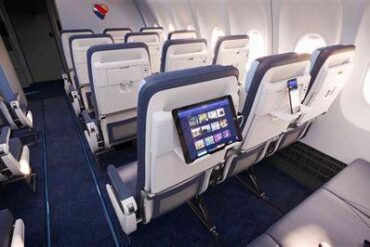
Despite operating some surprisingly long sectors, LOT’s Boeing 737 MAX 8 fleet remains primarily configured for short- and medium-haul European operations. The aircraft feature a flexible two-class cabin arrangement designed to adapt to varying passenger demand.
Business class is created through a familiar European model in which the middle seats of selected forward rows are blocked, providing additional personal space rather than dedicated premium seating. This approach works effectively on shorter routes but can feel less luxurious during flights approaching eight hours.
Depending on the aircraft variant, LOT’s MAX 8 fleet accommodates either 186 or 189 passengers. Standard seating offers approximately 17 inches of width, 30 inches of seat pitch, and modest recline. While perfectly adequate for regional travel, these dimensions may challenge comfort expectations on flights approaching the duration of traditional long-haul services.
Nevertheless, the aircraft’s modern cabin environment, fuel-efficient performance, and extended range allow passengers to travel directly between cities that would previously have required larger aircraft or intermediate stops.
A New Era For Long-Distance Narrowbody Flying
LOT Polish Airlines’ Warsaw-Almaty service illustrates how modern aviation continues to evolve. What once required a widebody aircraft can now be accomplished by a fuel-efficient Boeing 737 MAX 8 operating nearly eight-hour sectors.
The route combines commercial opportunity, geopolitical adaptation, and technological capability in a single operation. As airlines increasingly seek underserved long-distance markets, flights like Almaty-Warsaw demonstrate how next-generation narrowbody aircraft are transforming global connectivity.
For LOT, the service is more than a new destination. It is a landmark achievement that establishes the airline’s longest-ever Boeing 737 route while reinforcing its ambitions in one of the world’s most strategically important emerging regions.