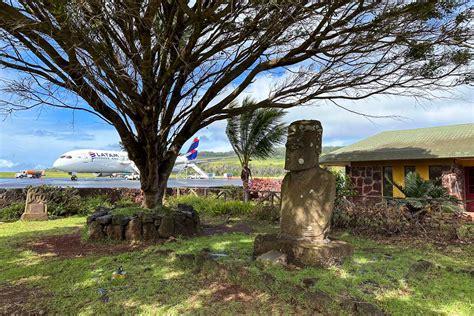
The vast emptiness of the South Pacific Ocean creates one of the greatest challenges in modern long-haul aviation. Between South America and Oceania lies thousands of miles of open water with almost no airports, no major islands, and virtually no emergency landing options. Even today’s most advanced aircraft, including the Airbus A350-900, cannot simply cross this region without careful planning, because aircraft safety depends not only on technology but also on having a reliable diversion airport when something goes wrong.
At the center of this extraordinary aviation challenge is Mataveri International Airport (IPC) on Easter Island. This small and isolated airport has become one of the most important pieces of infrastructure in the Pacific, despite serving a remote island with a population of only several thousand people. Its existence helps make some of the world’s longest ocean crossings possible by providing a critical emergency option for aircraft traveling between South America, Australia, and French Polynesia.

The importance of Mataveri Airport has grown alongside the evolution of modern long-range aircraft. New-generation widebody jets such as the Boeing 787 Dreamliner and the Airbus A350 are capable of flying farther than previous aircraft generations, but they still depend on strict operational rules when crossing remote oceans. The airport’s long runway and strategic location transform Easter Island from a remote tourist destination into a vital aviation safety point.
Easter Island: The Remote Pacific Island Supporting Global Aviation
Easter Island, also known by its indigenous name Rapa Nui, is among the most isolated inhabited places on Earth. Located roughly halfway between mainland Chile and French Polynesia, the island covers approximately 63.2 square miles (163.2 square kilometers). Its nearest neighboring landmass is the uninhabited Salas y Gómez island, located about 258 miles (415 kilometers) away, while the closest inhabited island, Pitcairn Island, is more than 1,200 miles (2,000 kilometers) away.
The island became internationally famous because of its mysterious moai statues, enormous stone figures created by the early Rapa Nui people. These statues represent one of the world’s most remarkable archaeological achievements and helped Easter Island become a UNESCO World Heritage Site. However, beyond its cultural significance, the island also plays an unexpected role in modern aviation.
European explorers first reached Easter Island in 1722 when Dutch explorer Jacob Roggeveen arrived on Easter Sunday, giving the island the name by which it is known today. Later expeditions, including those led by Spanish explorers and Captain James Cook, documented the island’s unique statues and culture. Over time, Easter Island became part of Chile, which annexed the territory in 1888.
Today, Easter Island remains a special territory of Chile. Its population is small, with a significant portion identifying as Rapa Nui. Despite its geographic isolation, the island maintains a unique connection to the wider world through tourism and aviation.
Mataveri International Airport: The World’s Most Isolated Commercial Airport

Mataveri International Airport is often described as the world’s most remote commercial airport. It is located more than 1,600 miles (2,600 kilometers) from the nearest major airport, making its position unlike almost any other airport on Earth. Regular passenger service is limited, with the main scheduled connection operated by LATAM Chile between Easter Island and Santiago, Chile.
Despite its small size and limited traffic, Mataveri has unusual capabilities. The airport features a runway measuring approximately 10,800 feet (3,300 meters), which is far longer than what would normally be required for an island airport of its size. The reason dates back to Cold War-era aviation planning.
During the development of the United States Space Shuttle program, Mataveri was considered as a potential emergency landing site for polar orbital missions launched from Vandenberg Air Force Base. Although the shuttle plans never required the airport in practice, the project resulted in a runway capable of handling large aircraft, including widebody jets.
This unusual history explains why a remote island airport can support aircraft such as the Boeing 787 Dreamliner and potentially future long-range aircraft like the Airbus A350-900 during emergency situations.
How Easter Island Makes South Pacific Crossings Possible
Long-distance flights across the South Pacific are among the most challenging operations in commercial aviation. Routes between Chile, Australia, and French Polynesia require aircraft to spend many hours flying over empty ocean, far away from traditional airports.
Modern aircraft rely on Extended-range Twin-engine Operational Performance Standards (ETOPS) regulations to safely operate long routes over remote areas. ETOPS certification allows twin-engine aircraft to fly farther from suitable diversion airports than older regulations permitted, based on factors including aircraft reliability, maintenance procedures, and emergency planning.
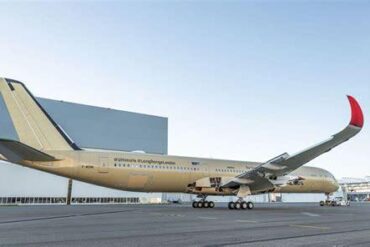
The Airbus A350-900 has achieved one of the highest ETOPS ratings in aviation history, with approval for up to 370 minutes of diversion time. This capability allows airlines to consider routes that would have been impossible for earlier aircraft generations.
However, even the most advanced aircraft still need carefully planned routes. Mataveri Airport provides a vital safety option because it sits in one of the few locations where a diversion airport exists between South America and the central Pacific.
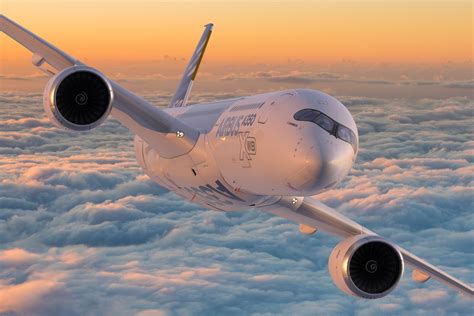
Without Easter Island, many South Pacific crossings would face much stricter operational limitations. Aircraft would need additional fuel, reduced payloads, or entirely different routing strategies. The presence of Mataveri effectively acts as a bridge between continents separated by one of the planet’s largest oceans.
The Qantas Sydney to Santiago Route and the Easter Island Connection
One of the best-known routes relying on this remote region is the Qantas Sydney to Santiago service. The route crosses some of the most isolated airspace on Earth, traveling across the Pacific before reaching South America.
Historically, Qantas operated this long-distance service using the Boeing 747-400, but the route was suspended in 2020 during the global aviation downturn. It returned in late 2022 using the more efficient Boeing 787-9 Dreamliner.
The revived service demonstrated how modern aircraft technology has changed long-haul aviation. The 787-9 combines lower fuel consumption with impressive range, allowing airlines to connect distant cities without relying on traditional hubs.
Passengers on the route benefited from premium cabins designed for long journeys, including business class seating and premium economy options. The aircraft’s efficiency made it economically viable while maintaining passenger comfort on flights lasting more than 13 hours.
Although Qantas currently operates the route with the Boeing 787, the development of aircraft such as the Airbus A350 highlights the future possibilities for ultra-long-distance Pacific services.
LATAM Chile: The Airline Linking Easter Island With The World
The only airline operating scheduled services to Mataveri International Airport is LATAM Chile. Its flights connect Easter Island with Santiago, creating the island’s primary aviation link to the outside world.
LATAM operates a fleet that includes Airbus A320-family aircraft, Boeing 767s, and Boeing 787 Dreamliners. Services to Easter Island are typically operated by Boeing 787-8 and 787-9 aircraft, which are among the largest passenger jets regularly serving such an isolated destination.
The operation is unusual because the airport’s remote location requires careful scheduling and contingency planning. A single aircraft disruption can create major logistical problems because there are few alternatives nearby.
Unlike major international airports with multiple maintenance facilities, spare aircraft, and extensive infrastructure, Mataveri must handle challenges with limited resources.
The Challenges Of Maintaining A Widebody Aircraft On Easter Island
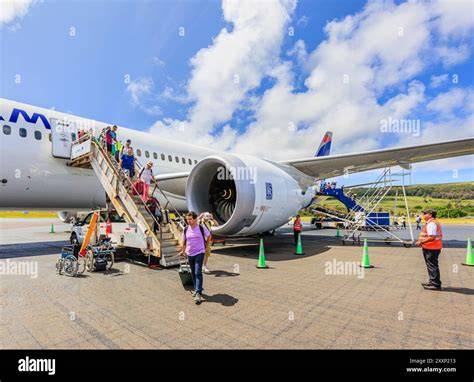
The vulnerability of relying on a single remote airport became clear when a LATAM Boeing 787 experienced damage while parked at Easter Island. The aircraft required significant repair work after an airport vehicle damaged one of its passenger doors.
A situation that would normally be straightforward at a major airport became a complex engineering challenge on Easter Island. Widebody aircraft require specialized tools, replacement parts, and controlled environments for many repairs. Mataveri does not have large maintenance hangars capable of sheltering aircraft such as the Boeing 787.
Engineers had to work in challenging conditions involving wind, humidity, dust, and ocean air. The objective was not necessarily to return the aircraft immediately to passenger service but to make it safe enough for a ferry flight back to a larger maintenance facility.
This incident demonstrated the importance and vulnerability of remote aviation infrastructure. Mataveri is essential, but it also highlights how dependent modern aviation can become on a single strategic location.
Other Remote Airports Around The World
Although Mataveri is among the most isolated airports on Earth, it is not the only airport where geography creates extraordinary aviation challenges.
Norway’s Svalbard Airport serves one of the world’s northernmost communities, operating in the harsh environment of the Arctic. Bhutan’s Paro International Airport is famous for its difficult mountain approach, where pilots must navigate steep terrain and limited visibility conditions.
In Tibet, airports such as Linzhi Milin Airport face weather challenges caused by extreme elevation and mountain geography. Meanwhile, Russia’s Far East relies on airports like Elizovo Airport to connect remote regions with larger cities.
Each of these airports demonstrates how aviation adapts to difficult environments. However, Easter Island remains unique because of its role in connecting continents separated by thousands of miles of empty ocean.
The Future Role Of Easter Island In Long-Haul Aviation
As aircraft manufacturers continue developing longer-range jets, the importance of remote airports may evolve. The Airbus A350 family represents a new era of efficient long-distance travel, allowing airlines to explore routes that were previously impossible.
However, technology alone cannot eliminate geography. Even the world’s most advanced aircraft require safety networks, emergency planning, and reliable infrastructure.
Mataveri International Airport may appear to be just a small runway on a tiny Pacific island, but its role in global aviation is much larger. It is a reminder that successful long-haul travel depends not only on aircraft performance but also on strategic locations that quietly support flights thousands of miles away.
For South Pacific crossings, Easter Island is more than a destination. It is the remote aviation lifeline that helps connect the world’s continents.