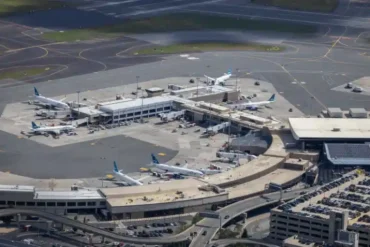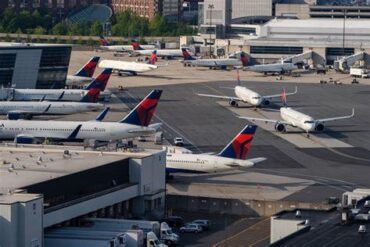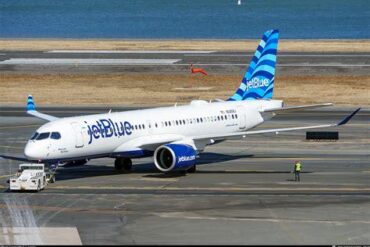
Boston Logan International Airport is facing a jet fuel supply shortage after severe weather prevented fuel vessels from reaching the airport, creating operational challenges for airlines and raising the prospect of continued delays and cancellations. The disruption has been particularly significant because Logan is one of the busiest airports in the United States, with a large concentration of operations by Delta Air Lines and JetBlue.
The problem developed as a rare nor’easter brought dangerous weather conditions to the northeastern United States. Fuel barges that normally help supply Boston were unable to make their planned journey from the New York area, leaving the airport dependent on existing reserves and more limited alternative deliveries. With fuel supplies reportedly reduced to roughly two days of reserves, airlines have been asked to reduce their reliance on Logan’s fuel infrastructure wherever possible.
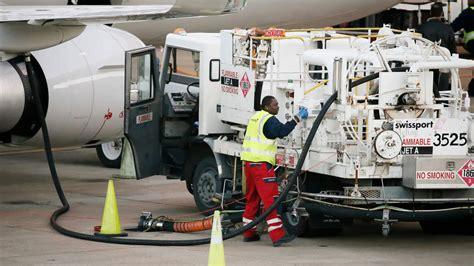
The unusual situation has prompted airlines to use a strategy known as fuel tankering, in which an aircraft carries more fuel than it would normally need for a particular flight. Incoming aircraft can arrive with additional fuel and then require a smaller uplift at Boston, helping preserve the airport’s remaining supply while normal deliveries are interrupted.
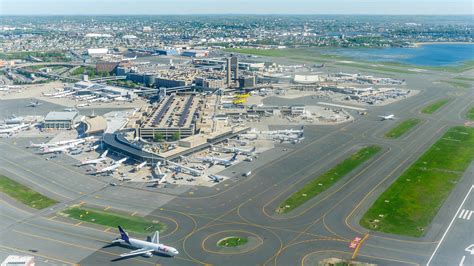
Boston Logan Jet Fuel Supplies Hit by Nor’easter
The immediate cause of the shortage was not an unexpected surge in passenger demand but the disruption of the fuel supply chain serving Boston Logan. Severe weather made marine transportation unsafe, preventing fuel ships and barges from traveling north toward Boston. Because the airport depends heavily on this transportation network, the interruption quickly became an operational concern.
Massport, which operates Logan, said the weather forecast had prevented fuel ships from reaching Boston and that the airport had enough fuel to get through the weekend. However, the airport’s fueling consortium asked airlines to bring additional fuel aboard incoming aircraft to reduce the amount they needed to take on at Logan.
That approach effectively shifts part of the airport’s fuel requirement onto the airline network. Rather than relying entirely on Boston to provide the fuel required for the next flight, an aircraft can arrive with extra fuel already onboard. The technique is particularly useful during temporary supply disruptions because it can stretch the fuel physically available at the airport without immediately reducing the number of flights.
Airlines Forced to Tanker Extra Fuel Into Boston
Fuel tankering is relatively straightforward on shorter routes, where an aircraft can carry additional fuel without approaching its maximum operating limits. An airline flying an aircraft into Boston from a nearby destination may therefore have an opportunity to carry enough additional fuel to reduce or even eliminate the amount required at Logan before its next departure.
The situation becomes considerably more complicated on long-haul and transcontinental flights. Those flights already require substantial fuel, while aircraft weight affects fuel consumption. Carrying additional fuel also means carrying additional weight, which itself requires more fuel to transport. Airlines therefore normally optimize fuel loads rather than simply filling aircraft to their maximum capacity.
For flights departing Boston, the shortage can consequently create a difficult balance between preserving the airport’s fuel supply and ensuring that aircraft have sufficient fuel for their scheduled missions. Some operations may require additional planning, while others could potentially need a fuel stop elsewhere if the aircraft cannot obtain an adequate uplift at Logan.
Aviation insider JonNYC reported that some flights may have been required to make fuel stops at other U.S. airports during the period of constrained supplies. Such stops can add significant time to a journey because they require an aircraft to divert from its planned operating pattern, land, refuel and then continue toward its destination.
Flight Delays and Cancellations Add to Boston Disruption
The fuel shortage arrived at an already difficult time for Boston aviation because the same weather system had affected flight operations throughout the region. According to FlightAware data cited in the reference material, around one-quarter of flights at Boston Logan on Saturday were delayed or canceled, although it was not immediately possible to determine how much of the disruption was caused directly by fuel constraints and how much resulted from the storm.
Both JetBlue and Delta Air Lines confirmed that their operations were affected. For passengers, the combination of weather disruption and fuel restrictions creates an especially complicated operating environment because airlines may have to make changes even after the original weather threat begins to weaken.
Passengers traveling through Logan during the disruption were advised to check their reservations and airline flight status before heading to the airport. Even after weather conditions improve, the effects of a delayed fuel delivery can continue because aircraft and crews may no longer be positioned according to the original schedule.
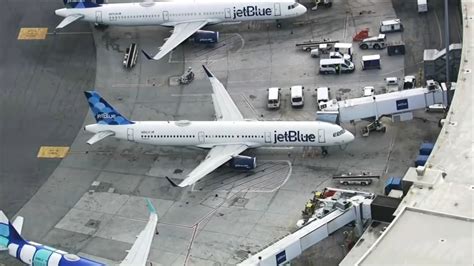
Fuel Shipments Expected to Restore Boston Airport Supply
The immediate solution is the return of normal marine fuel deliveries to Boston once weather conditions allow vessels to move safely. With the worst of the storm passing, fuel barges held up in the New York area are expected to resume their journeys and begin replenishing Logan’s supplies.
However, the interruption illustrates how closely a major airport’s flight schedule can depend on infrastructure outside the airport itself. Boston Logan may have extensive runways, terminals and airline operations, but its fuel supply ultimately depends on a wider transportation network that can be disrupted by severe weather.
Once fuel deliveries resume, airlines should gradually be able to reduce the amount of tankering required on incoming flights. Nevertheless, the operational effects may persist until the airport’s reserves return to more comfortable levels and aircraft rotations return to their normal fuel-planning patterns.
Why Boston Logan’s Scale Makes the Shortage Significant
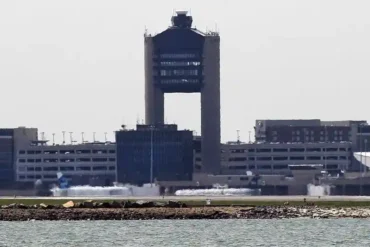
The potential impact is amplified by Logan’s enormous traffic volume. More than 42 million passengers traveled through the airport during 2025 across approximately 407,000 flight operations, according to the data cited in the reference material.
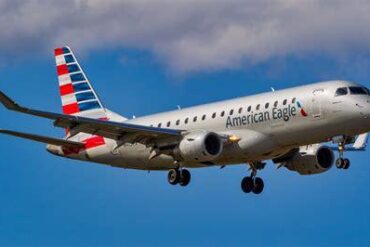
Delta was the airport’s largest airline between June 2025 and May 2026, accounting for approximately 27.2% of flights, followed closely by JetBlue at 25.4%. American Airlines represented 14.5%, United Airlines 8.9%, and Southwest Airlines 4.7%.
That concentration means fuel constraints can affect a substantial number of daily operations even when only a temporary interruption occurs. Logan serves major domestic markets including Chicago, Atlanta, Washington, Orlando and San Francisco, while important international connections include London Heathrow, Paris, Dublin, Amsterdam and Aruba.
For an airport operating at this scale, restoring fuel deliveries is therefore more than a routine logistics issue. It is essential to maintaining the aircraft rotations that connect Boston with destinations across the United States and around the world. The nor’easter has demonstrated how quickly a disruption to one part of that system can ripple through airline schedules, aircraft fuel planning and passenger operations.