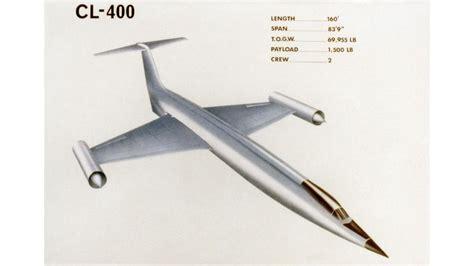
The Lockheed CL-400 Suntan was one of the most radical reconnaissance aircraft concepts of the Cold War, combining extreme altitude, Mach 2.5 speed, and liquid hydrogen propulsion in a design that seemed to belong decades ahead of its time. Conceived by Lockheed’s secretive Skunk Works in the 1950s as a potential successor to the U-2, the aircraft was intended to cruise at roughly 100,000 feet while carrying thousands of pounds of cryogenic fuel. It never flew, but its development pushed engineers into an unusual problem: producing and handling enormous quantities of liquid hydrogen.
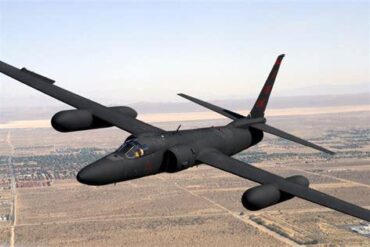
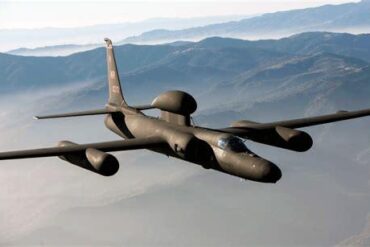
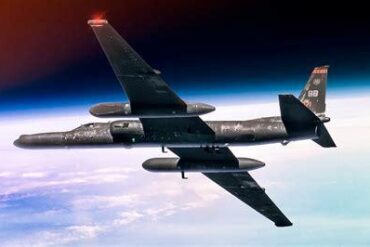
The concept emerged during a period when American intelligence planners were already concerned that the U-2’s remarkable altitude advantage would not last. The U-2 had entered development in 1953, made its first flight in 1955, and entered service in 1956. Its ability to operate above 70,000 feet offered unprecedented access to areas of the Soviet Union, but rapidly improving surface-to-air missile systems threatened to close that window.
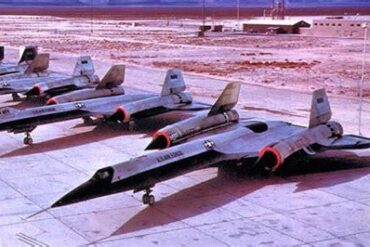
The urgency became undeniable after the Soviet Union shot down Francis Gary Powers’ U-2 in 1960. Although the CL-400 program had already been studied before the incident, the vulnerability of high-altitude reconnaissance aircraft reinforced the need for faster and higher alternatives. The eventual answer became the SR-71 Blackbird, but Lockheed’s hydrogen-powered proposal represented a very different technological path.
The Lockheed CL-400 Suntan Was Built Around Liquid Hydrogen
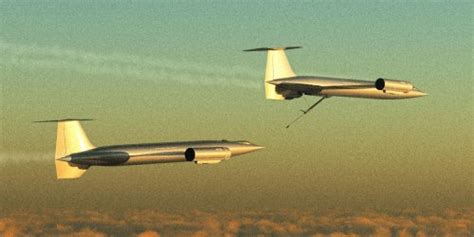
The CL-400 Suntan was designed around an unconventional fuel: liquid hydrogen. Kelly Johnson and his Skunk Works team envisioned an aircraft capable of reaching approximately Mach 2.5 and operating around 100,000 feet, substantially exceeding the U-2 in both speed and altitude.
The challenge was that hydrogen has excellent energy characteristics by weight but extremely poor energy density by volume compared with conventional jet fuel. Storing enough hydrogen therefore required enormous tanks. The problem became especially severe because liquid hydrogen must remain at cryogenic temperatures, creating demanding requirements for insulation, tank construction, plumbing, handling, and fuel production.
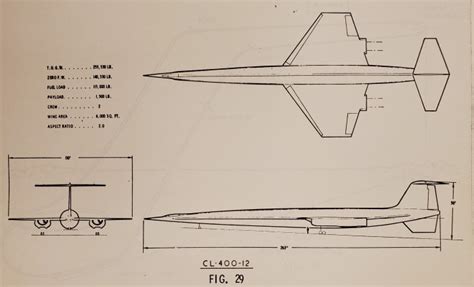
The original CL-400 design was already enormous by 1950s standards. Its proposed fuselage measured approximately 160 feet, while the wingspan was about 83 feet 9 inches. It was expected to carry around 21,500 pounds of liquid hydrogen, with two Pratt & Whitney Model 304-2 engines providing propulsion.
That fuel requirement was more than an aviation engineering problem. It created an industrial problem. The United States had to consider how to produce, transport, store, and load enough liquid hydrogen to support an operational aircraft. In effect, developing the airplane meant creating an entire hydrogen infrastructure around it.
A Spy Plane That Kept Getting Bigger
The original design quickly demonstrated how difficult the concept would be. Engineers initially imagined a relatively compact supersonic reconnaissance aircraft, but attempts to satisfy its range requirements caused the design to expand dramatically.
Later studies produced a CL-400 approaching 300 feet in length and a gross takeoff weight of approximately 358,500 pounds. That was nearly twice the length of a Boeing 747, despite the aircraft being conceived as a specialized reconnaissance platform rather than a large transport.
The central problem was range. The initial aircraft was expected to have a range of approximately 2,200 nautical miles, but its operational radius was only around 1,000 nautical miles. For a strategic reconnaissance aircraft expected to penetrate hostile airspace, that limitation was a major concern.
Adding more fuel appeared to be the obvious solution, but liquid hydrogen required so much volume that increasing fuel capacity rapidly increased the size and weight of the aircraft. That created a classic engineering spiral: more fuel required a larger aircraft, while the larger aircraft required still more fuel.
Why Liquid Hydrogen Created Such Extraordinary Problems
The CL-400’s difficulties extended far beyond its enormous dimensions. Engineers had to solve problems involving materials, manufacturing, cryogenic storage, fuel handling, propulsion integration, and aircraft structure simultaneously.
Liquid hydrogen is maintained at extremely low temperatures, making conventional aircraft fuel systems unsuitable without major modifications. Tanks had to prevent excessive heat transfer while also remaining light enough for an aircraft intended to fly at extreme altitude and supersonic speed.
The propulsion system presented another challenge. Pratt & Whitney was tasked with developing engines capable of using hydrogen while operating under demanding high-speed and high-altitude conditions. The engine, fuel system, airframe, and cryogenic tanks could not simply be developed independently. Every component affected the others.
The aircraft’s enormous fuel requirement also explains the remarkable connection between the CL-400 and America’s liquid hydrogen production. Supporting the program required a significant industrial effort to produce the cryogenic fuel, and at one point the project reportedly drove liquid hydrogen production to extraordinary levels for an aircraft that ultimately never left the ground.
The CL-400 Helped Reveal the Limits of 1950s Technology
Only about 25 people were reportedly cleared into the highly restricted SUNTAN program. Lockheed initially received a contract for two prototype aircraft, with an ambitious expectation that the first could fly within 18 months. The program was subsequently expanded to six aircraft.
Yet the technology required to make the aircraft practical was not mature enough. The combination of extreme altitude, Mach 2.5 flight, cryogenic fuel, enormous tanks, and useful operational range created problems that could not be solved simply by increasing the aircraft’s size.
The project also faced competition from alternative reconnaissance technologies. The eventual development of the SR-71 Blackbird demonstrated that conventional liquid fuels could support extraordinary speed and altitude when paired with advanced aerodynamics, materials, engines, and thermal management.
The Spy Plane That Never Flew
Development work on the CL-400 continued from roughly 1956 to 1958, but the escalating engineering requirements eventually overwhelmed the concept. The aircraft’s severe range limitations and the difficulties associated with hydrogen production and storage made the project increasingly impractical.
The program was ultimately canceled, leaving the CL-400 as one of the most ambitious aircraft concepts of the Cold War. Its significance, however, extends beyond the aircraft itself. The Suntan program demonstrated how a seemingly attractive propulsion technology could transform every other aspect of an aircraft.
The irony is that the Lockheed CL-400 Suntan never became an operational spy plane, yet its pursuit of hydrogen propulsion forced engineers to confront problems that stretched far beyond aviation. For a brief period, the aircraft helped create an extraordinary demand for liquid hydrogen, making the proposed spy plane indirectly responsible for an equally remarkable industrial achievement.
The Suntan therefore remains an unusual chapter in Lockheed history: an aircraft that never flew, never photographed an enemy installation, and never entered service, but nevertheless pushed American aerospace engineering toward the limits of what the technology of the 1950s could realistically accomplish.