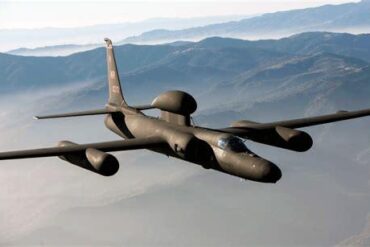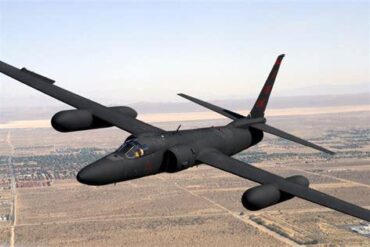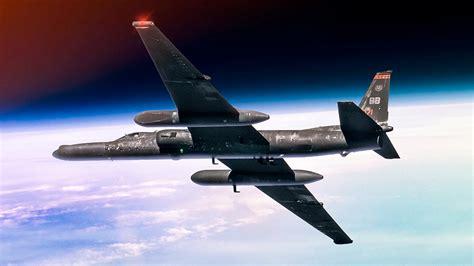
The Lockheed U-2 “Dragon Lady” remains one of the most extraordinary aircraft ever built. More than seven decades after its first flight, the high-altitude reconnaissance aircraft still patrols the edge of the atmosphere, gathering intelligence in ways few platforms can match. Despite the arrival of satellites, stealth drones, and advanced space-based surveillance systems, the U-2 continues to perform missions that modern technology still struggles to replace.
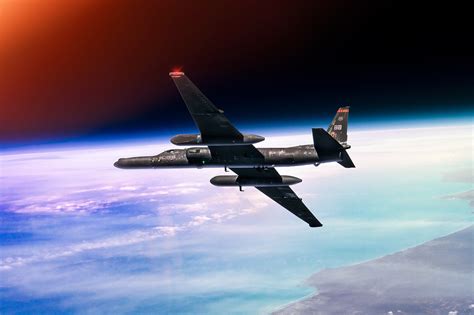
What makes the aircraft so fascinating is not simply its longevity. It is the mystery surrounding its true capabilities. Officially, the U-2 has a service ceiling of 70,000 feet. Unofficially, many aviation experts believe the aircraft can climb substantially higher. Some credible estimates place its maximum altitude beyond 80,000 feet, placing the Dragon Lady in a realm occupied by only a handful of aircraft in aviation history.
The aircraft’s extraordinary altitude capability was not designed for prestige. It was born from fear, urgency, and the dangerous realities of the Cold War. During the early 1950s, the United States desperately needed a way to see deep into Soviet territory without triggering open war. Satellites did not yet exist, Soviet borders were sealed, and American intelligence agencies had almost no reliable information about Soviet nuclear capabilities.
The answer became one of the most secretive aviation projects ever undertaken by Lockheed’s Skunk Works division.
The Cold War Mission That Created The U-2 Spy Plane
When the Cold War intensified after World War II, the United States faced a dangerous intelligence vacuum. Soviet military installations, missile development sites, and bomber bases remained largely hidden behind the Iron Curtain. American planners feared a surprise nuclear attack but lacked the tools to properly monitor Soviet activity.
The Lockheed U-2 emerged from this strategic panic. Developed under extreme secrecy during the mid-1950s, the aircraft was designed specifically to penetrate Soviet airspace while flying beyond the reach of enemy defenses. At the time, military strategists believed altitude alone could provide protection.
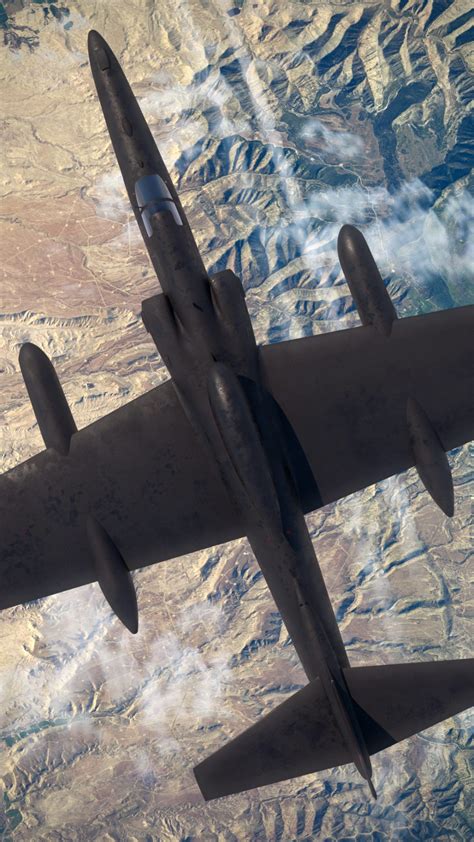
The aircraft’s design reflected this philosophy completely. The U-2 featured enormous glider-like wings optimized for thin air, an ultra-light airframe, and a single powerful engine capable of sustaining flight at extraordinary heights. Everything about the aircraft focused on one goal: climb higher than any interceptor could reach.
Its first flight took place in 1955, and the aircraft rapidly became one of the CIA’s most important intelligence assets. Early missions revealed Soviet bomber production numbers, missile sites, and military infrastructure that had previously existed only in speculation. In many ways, the U-2 helped prevent catastrophic miscalculations between the United States and the Soviet Union by providing hard intelligence instead of fear-driven assumptions.
Why Flying Above 70,000 Feet Changed Everything
The U-2’s altitude capability transformed aerial reconnaissance. At heights exceeding 70,000 feet, the aircraft operated in an environment radically different from conventional aviation. The air became extremely thin, temperatures plunged, and the margin between stall speed and overspeed narrowed dramatically.
For intelligence gathering, however, these altitudes offered enormous advantages.
The thin atmosphere reduced turbulence and atmospheric distortion, allowing onboard cameras to capture remarkably sharp images of the ground below. Surveillance equipment could monitor vast geographical areas during a single mission. The aircraft’s endurance also improved because thinner air generated less drag, allowing the U-2 to remain airborne for exceptionally long periods.
Most importantly, American planners initially believed these altitudes made the aircraft untouchable.
During the early 1950s, Soviet fighters struggled to approach the U-2’s operating ceiling. Even if enemy aircraft could climb near the Dragon Lady’s altitude, maintaining stability and conducting an attack at those heights proved extremely difficult. Traditional anti-aircraft artillery also became ineffective far below the aircraft’s flight path.
This led many American officials to believe the U-2 could operate with near impunity.
The Real Maximum Altitude Of The U-2 Remains Secret
One of the most remarkable aspects of the U-2 program is that its true performance numbers remain classified even after nearly 70 years of service. Officially, the aircraft’s service ceiling sits at 70,000 feet. Yet declassified CIA documents and aviation reports strongly suggest the aircraft routinely exceeded that number.
Some historical records indicate operational flights reaching approximately 74,500 feet. Other credible but unconfirmed reports suggest the aircraft may climb beyond 80,000 feet under specific conditions.
That altitude enters a realm where very few manned aircraft have ever operated.
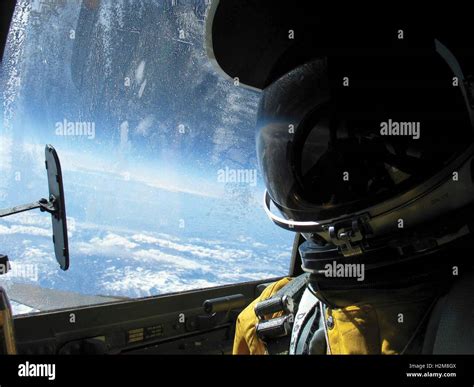
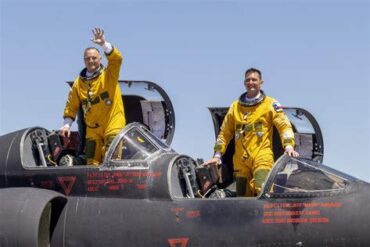
At such heights, pilots must wear full pressure suits similar to those used by astronauts. Cabin depressurization at those altitudes would be fatal within seconds. The atmosphere becomes so thin that aerodynamic flight itself approaches its limits.
The U-2 operates within what pilots often call the “coffin corner,” where the difference between stall speed and maximum safe speed becomes dangerously narrow. Flying too slowly risks an aerodynamic stall. Flying too quickly risks structural stress and loss of control. Maintaining stable flight at these altitudes requires extraordinary precision from both the aircraft and the pilot.
The Air Force’s continued secrecy surrounding the aircraft’s actual altitude limits likely reflects the value still attached to its operational capabilities. Even aging reconnaissance aircraft reveal important technological and performance insights to rival nations.
How The U-2 Outsmarted Radar Before Stealth Aircraft Existed
Long before stealth aircraft like the Lockheed F-117 Nighthawk or Northrop B-2 Spirit appeared, the U-2 incorporated early low-observable concepts to reduce detection.
Although not stealthy by modern standards, the aircraft minimized its radar signature through careful shaping and lightweight construction. Combined with its operating altitude, these features complicated Soviet detection efforts during the aircraft’s early years.
The aircraft’s altitude itself acted as a form of defense. Radar systems of the era struggled to track aircraft operating at such extreme heights. Interceptors frequently lacked the climb performance necessary to reach the Dragon Lady before it exited contested airspace.
This temporary advantage gave the United States several crucial years of intelligence collection inside Soviet territory.
Yet aviation technology evolves quickly during wartime competition.
The Gary Powers Incident Changed Spy Aviation Forever
Everything changed on May 1, 1960.
CIA pilot Francis Gary Powers was flying a U-2 reconnaissance mission deep over Soviet territory when his aircraft was struck by a Soviet SA-2 surface-to-air missile near Sverdlovsk.
The shootdown shattered the myth that altitude alone guaranteed survival.
Powers survived by parachuting from the aircraft but was captured by Soviet authorities. The incident exploded into a major international crisis. Soviet leader Nikita Khrushchev publicly exposed the American espionage program, humiliating the United States government after initial denials collapsed.
The downed aircraft also provided Soviet engineers with valuable access to American reconnaissance technology.
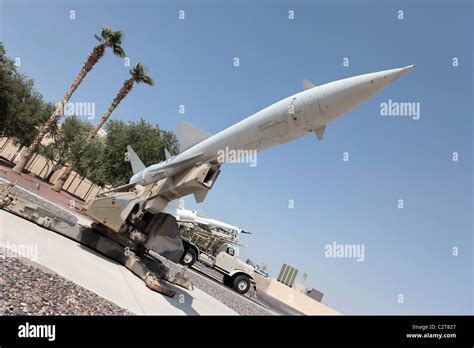
The implications extended far beyond one lost airplane. Military planners suddenly recognized that rapidly improving surface-to-air missile systems had fundamentally altered aerial warfare. Aircraft operating at extreme altitude were no longer invulnerable.
This lesson would echo throughout military aviation for decades.
Why Surface-To-Air Missiles Ended The “Higher Is Safer” Era
The rise of advanced Soviet missile systems forced a complete reevaluation of strategic aviation doctrine. Aircraft that depended primarily on speed or altitude suddenly faced severe vulnerabilities.
The U-2 was not alone in confronting this reality. The ambitious North American XB-70 Valkyrie bomber program also suffered because missile technology advanced faster than expected. Designed to cruise above 70,000 feet at Mach 3 speeds, the XB-70 ultimately proved too vulnerable in a world increasingly dominated by radar-guided missiles.
American strategy gradually shifted toward alternative survival methods.
Instead of relying solely on altitude, aircraft designers embraced low-level penetration tactics with platforms like the Rockwell B-1B Lancer. Eventually, stealth technology became the dominant solution with aircraft such as the Northrop B-2 Spirit and the upcoming Northrop Grumman B-21 Raider.
The U-2 itself survived because its mission profile evolved alongside changing threats.
The U-2 Still Performs Missions Satellites Cannot
Many assume spy satellites rendered aircraft like the U-2 obsolete decades ago. Reality is far more complicated.
Satellites operate in predictable orbital paths. Adversaries know when surveillance satellites will pass overhead and can temporarily conceal sensitive activity. Aircraft like the U-2 offer flexibility satellites cannot replicate. They can rapidly reposition, loiter for extended periods, and adapt to changing mission requirements in real time.
The Dragon Lady also carries highly advanced sensor packages far beyond traditional photography. Modern U-2 aircraft conduct signals intelligence, electronic surveillance, communications monitoring, radar mapping, and battlefield reconnaissance missions across multiple theaters.
Its endurance remains especially valuable. Recent missions have exceeded 14 continuous hours in the air, allowing the aircraft to monitor massive operational areas during a single sortie.
Even more remarkably, the U-2 often performs missions in relatively permissive airspace where enemy missile threats are minimal. Surveillance over maritime zones, border regions, insurgent territory, and low-threat environments still represents a major portion of intelligence work worldwide.
In those environments, the aircraft’s altitude, endurance, and sophisticated sensors remain highly effective.
The Aircraft’s Most Dangerous Flight Characteristic
Despite its graceful appearance, the U-2 is notoriously difficult to fly.
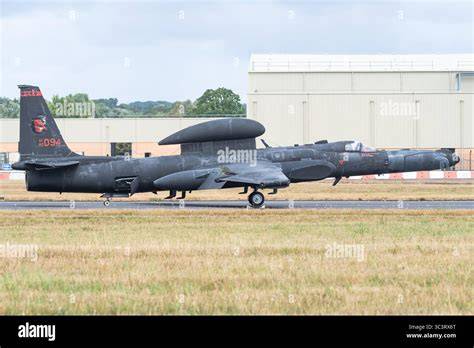
Pilots frequently describe the aircraft as one of the most demanding platforms in the American inventory. Landing the aircraft presents particular challenges because the glider-like wings generate enormous lift even at low speeds.
The aircraft also uses unusual bicycle-style landing gear, requiring detachable wing supports known as “pogos.” During landing, one wing eventually drops to the runway as speed decreases.
At operational altitude, the challenge intensifies dramatically.
The aircraft flies extremely close to aerodynamic limits. Minor speed deviations can create catastrophic consequences. The margin between stalling and exceeding safe operating speed may narrow to only a few knots. This razor-thin operating envelope demands extraordinary concentration during long-duration missions.
Combined with the pressure suit, oxygen systems, and isolation of high-altitude flight, U-2 operations place immense physical and psychological strain on pilots.
The U-2’s 2025 Endurance Record Proved The Aircraft Still Matters
Even approaching retirement, the Dragon Lady continues to demonstrate extraordinary performance.
In 2025, the Air Force flew a rare two-seat TU-2S trainer variant on a record-setting mission commemorating the aircraft’s 70th anniversary. The flight exceeded 14 hours and covered more than 6,000 nautical miles, making it the longest mission in U-2 history.
What remains especially intriguing is what the Air Force did not disclose.
Reports suggest the crew may also have broken the aircraft’s altitude record late in the mission after fuel burn significantly lightened the aircraft. Yet official statements confirmed only endurance and distance achievements, carefully avoiding any altitude specifics.
That silence speaks volumes.
The continued classification surrounding the aircraft’s true ceiling indicates the U-2 still possesses operational capabilities considered strategically sensitive. Even after decades of public exposure, the Dragon Lady retains secrets the Air Force prefers not to reveal.
Why The Lockheed U-2 Refuses To Disappear
Retirement plans for the U-2 have surfaced repeatedly over the last two decades, yet the aircraft somehow survives every attempt to replace it completely.
Part of the reason involves cost. Compared with more advanced surveillance platforms, the U-2 remains relatively economical to operate. The aircraft also benefits from decades of upgrades that continuously modernized its sensors, avionics, communications systems, and onboard processing capabilities.
Another factor is reliability. Military planners trust the platform because its strengths and weaknesses are thoroughly understood after decades of operational experience.
Most importantly, the aircraft still performs valuable missions effectively.
The U-2 may no longer penetrate heavily defended peer adversary airspace with impunity, but it continues to excel in strategic reconnaissance roles where endurance, altitude, and sensor flexibility matter more than stealth alone.
The aircraft’s remarkable survival also highlights a larger truth about military aviation. Revolutionary new technology rarely eliminates older systems overnight. Instead, successful aircraft adapt, evolve, and continue filling critical roles long after experts predict their retirement.
Few aircraft embody that reality better than the Lockheed U-2 Dragon Lady.
More than 70 years after it first climbed into the thin air above the Cold War battlefield, the U-2 still operates near the edge of space, carrying secrets the world may never fully know.