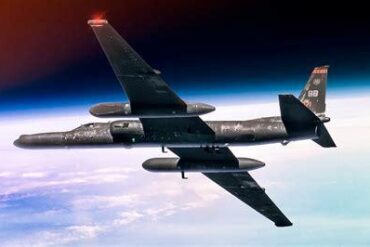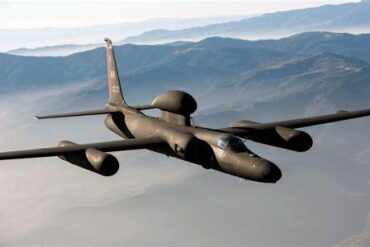
The U.S. Air Force is signaling a hard-edged reality to potential adversaries: even when forward bases are under attack, America’s highest-flying intelligence aircraft will still get airborne. A recent readiness drill at Beale Air Force Base demonstrated that the U-2 Dragon Lady—a platform often described as legacy but never obsolete—remains central to U.S. plans for intelligence dominance in a high-end conflict.
Conducted under Exercise DRAGON SHIELD, the drill forced maintainers and aircrew to operate as if the base were under active threat. Communications were constrained, timelines were compressed, and personnel worked in full Mission Oriented Protective Posture (MOPP) gear. The message was deliberate and unmistakable: intelligence collection is not a luxury reserved for permissive environments, but a capability that must persist when conditions are at their worst.
The exercise was led by the 9th Reconnaissance Wing, whose mission is to deliver continuous, high-altitude intelligence in support of national and joint commanders. By pushing U-2 launch operations into a simulated contested scenario, the Air Force tested not only equipment, but human discipline under stress—masked crews, restricted mobility, and procedural precision performed without error.
High-end warfare begins with information. The Air Force understands that adversaries will attempt to blind, disrupt, or paralyze U.S. intelligence networks in the opening hours of conflict. DRAGON SHIELD was designed to prove that even under attack, intelligence sorties can still be generated on demand.
Contested Base Operations Move From Theory to Practice
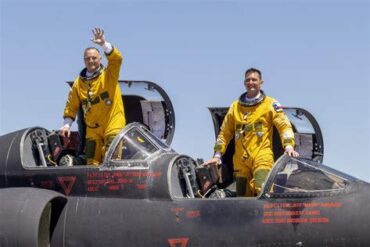
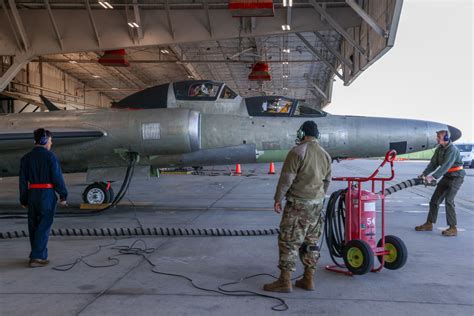
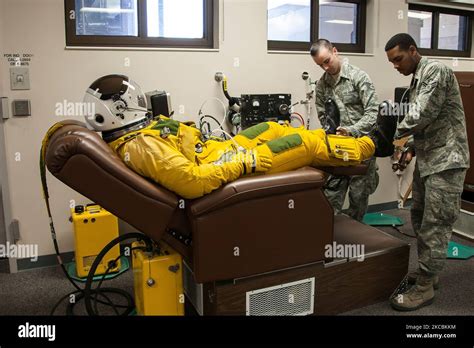
At the heart of the drill was the launch and recovery sequence, executed by maintainers wearing chemical-protective suits while performing expanded ground roles. With pilots sealed inside pressurized flight suits and normal voice communications degraded, crews relied on standardized hand signals and visual cues to guide taxi and final checks.
These details are more than procedural nuance. In a real-world conflict, chemical threats, missile strikes, or electronic warfare could force aircrews to operate under similar constraints. The ability to compress launch timelines while maintaining safety directly translates into faster intelligence delivery at moments when commanders need it most.
The Air Force framed the drill as a validation of sortie generation under attack. That framing matters. Modern adversaries are investing heavily in long-range missiles and precision strike capabilities specifically designed to disrupt air operations at forward bases. DRAGON SHIELD reflects an institutional recognition that resilience on the ground is just as critical as survivability in the air.
Why the U-2 Still Matters at 70,000 Feet
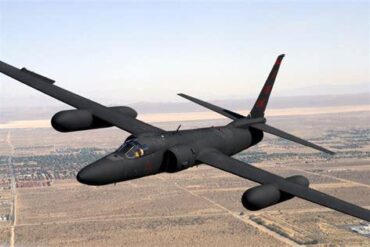
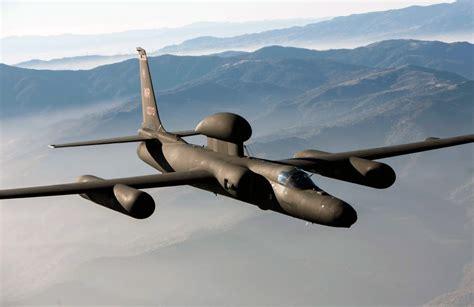
The U-2 Dragon Lady occupies a unique operational niche. Capable of flying above 70,000 feet, it operates higher than most air defenses, weather systems, and civil air traffic. From that altitude, its sensor horizon expands dramatically, enabling wide-area surveillance that few platforms can match.
The aircraft carries a mix of imagery intelligence (IMINT), signals intelligence (SIGINT), and measurement and signature intelligence (MASINT) sensors. Crucially, much of the data is transmitted in near real time, allowing analysts and commanders to act on information while it is still operationally relevant.
Despite decades of service, the U-2 has evolved into a modular intelligence platform rather than a static design. Sensor payloads can be tailored to mission requirements, allowing a single sortie to support strategic warning, maritime surveillance, or tactical targeting without reconfiguring an entire force package.
Aerodynamics, Endurance, and the Cost of Altitude
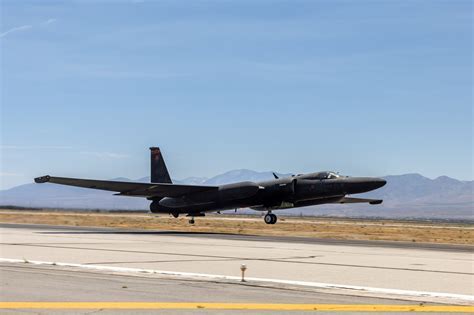
The U-2’s performance is inseparable from its unusual design. With a 105-foot wingspan, glider-like lift characteristics, and bicycle-style landing gear, the aircraft is optimized for thin air rather than forgiving runways. Its General Electric F118-101 engine, producing roughly 17,000 pounds of thrust, enables long-duration missions exceeding 7,000 miles in range.
These characteristics impose demanding ground-handling requirements. Forward visibility on landing is limited, control margins at altitude are narrow, and recovery often involves chase vehicles to guide the pilot during touchdown. None of this is accidental. The design trades convenience for altitude, endurance, and sensor reach—attributes that remain invaluable in contested environments.
The DRAGON SHIELD drill reinforced why maintainers are as critical as pilots. Launching a U-2 is a choreography of precision, made more complex when crews are masked, fatigued, and operating under simulated attack. The fact that the aircraft launched on time under these conditions is the true metric of success.
Intelligence Resilience in Multi-Domain Operations
U.S. military doctrine increasingly revolves around Multi-Domain Operations, where success depends on synchronizing effects across land, air, maritime, cyber, and space domains. Intelligence is the connective tissue that binds those domains together. Without persistent, credible ISR, long-range fires lose precision and tempo collapses.
The U-2 plays a bridging role in this ecosystem. Space-based sensors provide global coverage but follow predictable orbits. Tactical unmanned systems offer flexibility but face range and survivability limits. The U-2 fills the gap by delivering responsive, high-altitude collection with a pilot onboard who can adapt in real time.
That adaptability matters when adversaries employ decoys, electronic deception, or rapid force dispersal. A pilot with situational awareness can retask sensors mid-mission, shifting collection priorities as intelligence cues evolve. This human-in-the-loop capability remains difficult to replicate with fully autonomous systems.
Strategic Signaling Beyond the Flight Line
Exercises like DRAGON SHIELD are not conducted in a vacuum. They are observed, analyzed, and interpreted by allies and adversaries alike. Demonstrating the ability to launch high-value intelligence aircraft under attack sends a strategic signal about U.S. confidence in its force resilience.
The drill also reinforces alliance assurance. Partners who depend on U.S. intelligence for regional stability need confidence that those capabilities will endure under pressure. A resilient U-2 force reassures them that intelligence sharing and strategic warning will not vanish at the first sign of escalation.
For potential adversaries, the implication is less comforting. Attempts to suppress U.S. ISR by striking air bases may not achieve the intended effect. Intelligence aircraft that can still launch under fire complicate planning, reduce surprise, and compress decision-making timelines.
A Platform That Refuses to Become Obsolete
The U-2 has outlived multiple predictions of retirement because its core advantages remain stubbornly relevant. Altitude, endurance, payload flexibility, and real-time human judgment form a combination that modern conflict continues to reward.
DRAGON SHIELD was not about nostalgia. It was a rehearsal for a future where bases are contested, communications are degraded, and time is the most precious commodity. By proving that the U-2 can still get airborne under those conditions, the Air Force underscored a simple truth: information dominance begins before the first shot is fired, and it must persist long after the environment turns hostile.
In that context, keeping the U-2 Dragon Lady ready is not a hedge against the past. It is a calculated investment in clarity, speed, and resilience—qualities that define success in modern warfare.