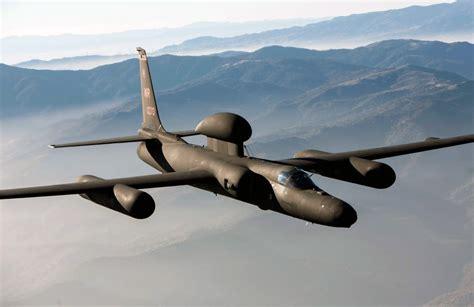
The decision to extend operational support for the U-2 Dragon Lady is not a symbolic gesture toward aviation heritage. It is a calculated move to preserve one of the most unique intelligence-gathering aircraft ever fielded. In early March 2026, the U.S. Air Force formally signaled its intent to continue sustaining the U-2’s pilot life support systems—an essential step for keeping the high-altitude reconnaissance platform mission-capable in contested airspace.
At the center of this effort is a Request for Information issued through the Air Force Life Cycle Management Center at Robins Air Force Base. The focus is narrow yet critical: sustaining and repairing the life support systems that allow pilots to operate above 70,000 feet. Without these systems, the aircraft’s extraordinary performance envelope becomes physiologically impossible to exploit. In the thin atmosphere of near-space altitudes, pressure suits and oxygen equipment are not enhancements. They are survival infrastructure.
Preserving a High-Altitude Intelligence Asset
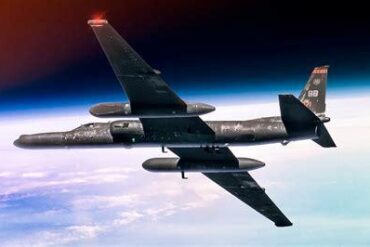
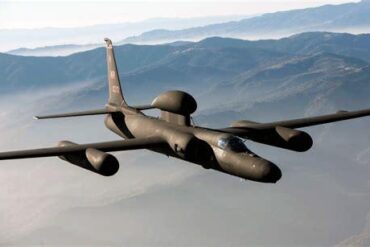
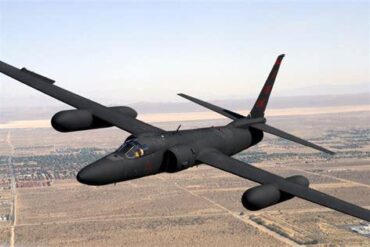
The aircraft in question, the U-2 Dragon Lady, remains one of the most specialized ISR platforms in service. Designed during the Cold War to peer deep into denied territory, the U-2 has evolved into a modern intelligence node capable of delivering multi-intelligence data streams in near real time.
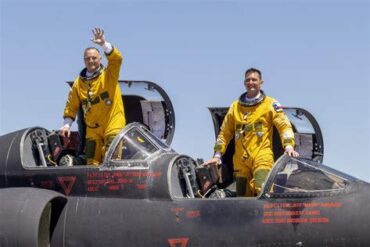
Its operational ceiling exceeds 70,000 feet, a regime where ambient pressure is so low that unprotected exposure would result in hypoxia and rapid loss of consciousness. To survive these conditions, pilots wear a full-pressure suit comparable in principle to those used in astronaut training. The Air Force’s sustainment effort focuses on the S1034 Pilot’s Protective Assembly and associated equipment, including oxygen regulators, pressure garments, and helmet systems.
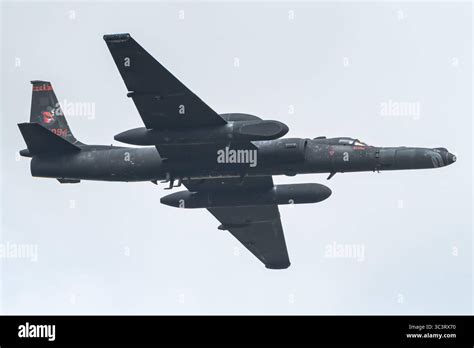
The RFI explicitly calls for depot-level repair, engineering services, total material management, and asset visibility. In plain terms, the Air Force wants a contractor capable of ensuring that every component of the U-2 life support ecosystem—from helmet seals to oxygen delivery hardware—remains reliable, traceable, and rapidly repairable across operating locations worldwide.
Life Support at the Edge of Space
Flying at 70,000 feet places the U-2 in an environment where the margin for error is razor thin. Atmospheric pressure at that altitude is roughly a tenth of sea-level conditions. Even minor degradation in suit integrity or oxygen flow can escalate into a life-threatening emergency within seconds.
The life support architecture therefore becomes an operational gatekeeper. Pilots must prebreathe 100 percent oxygen before flight to purge nitrogen from their bloodstream and prevent decompression sickness. The pressure suit must maintain structural integrity for hours during long-endurance sorties. Oxygen systems must regulate flow with extreme precision to match physiological demands at altitude.
This is not gear that can tolerate improvisation. The Air Force’s documentation indicates that it does not possess full technical data rights for many components, identifying the David Clark Company as the original equipment manufacturer and sole source for oxygen-related systems. That detail matters. Without technical data rights, competition in sustainment becomes constrained, and supply chain resilience depends on carefully structured repair and inventory management strategies rather than reverse engineering.
Engineering Continuity in a Specialized Fleet
The sustainment requirement also reflects the reality of operating a small, highly specialized fleet. The U-2S variant, powered by a General Electric F118-101 engine producing approximately 17,000 pounds of thrust, combines a 105-foot wingspan with payload flexibility and long endurance. Its ability to carry up to 5,000 pounds of sensors and operate for extended durations gives it a unique operational niche.
Modernization efforts have kept the platform relevant. Electrical upgrades introduced fiber-optic architectures to reduce electronic interference and support advanced sensors. Cockpit redesigns replaced analog gauges with digital multifunction displays to improve reliability and pilot workload management.
Yet none of these improvements matter if pilots cannot safely reach and sustain operational altitude. Life support sustainment therefore becomes a structural pillar of readiness, equal in importance to avionics, engines, or radar systems.
Multi-INT Collection and Real-Time Dissemination
The U-2’s strategic value lies in its ability to conduct multi-intelligence collection. Its sensor suite integrates electro-optical/infrared imaging, synthetic aperture radar, and signals intelligence systems into a modular payload architecture. Radar systems such as ASARS-2 can detect and track stationary or moving ground targets in all weather conditions. The SYERS electro-optical platform captures high-resolution imagery across multiple spectral bands.
Signals intelligence packages gather communications and electronic emissions, encrypting and transmitting data via satellite links to ground stations. The near-real-time dissemination capability transforms the U-2 from a passive collector into an active participant in operational decision-making cycles.
In modern conflict environments where targeting timelines compress from hours to minutes, altitude confers both survivability and perspective. Operating above most air defense systems, the U-2 maintains a vantage point that complements space-based assets and unmanned platforms.
Historical Proof of Operational Impact
The aircraft’s operational pedigree reinforces its continued relevance. During Operations Desert Shield and Desert Storm, U-2 missions contributed substantially to imagery intelligence production. The aircraft transitioned rapidly from monitoring Iraqi troop movements to locating mobile SCUD missile launchers threatening coalition forces.
Near-real-time radar data fed into ground-based exploitation centers, supporting strike missions and defensive planning. Post-conflict assessments indicated that U-2-derived intelligence accounted for a significant portion of imagery and overall intelligence during the campaign.
That legacy is not merely historical trivia. It illustrates how high-altitude ISR platforms can influence both tactical engagements and strategic planning. Sustaining the U-2 today preserves an intelligence capability that has repeatedly demonstrated operational impact across multiple theaters.
Supply Chain Risk and Competition Constraints
One of the most revealing aspects of the Air Force’s RFI is its emphasis on overcoming barriers to competition. The service acknowledges limited access to proprietary technical data and states that acquiring full data rights or reverse engineering certain components is considered uneconomical.
This creates a structural challenge. Sustainment must balance reliance on the original equipment manufacturer with the need for resilience and redundancy. By seeking contractors capable of functioning as an Air Force Materiel Command-certified Contractor Inventory Control Point, the service aims to centralize accountability while maintaining configuration control.
In a platform where altering form, fit, or function without authorization could introduce safety risks, configuration discipline becomes non-negotiable. Life support systems cannot be casually modified; even minor deviations require formal approval as Class I design changes.
Strategic Implications for Contested Environments
Extending U-2 operations signals more than a maintenance decision. It reflects a strategic calculation about the future of intelligence, surveillance, and reconnaissance. While unmanned systems and satellites have expanded dramatically, manned high-altitude platforms still offer adaptability, payload flexibility, and human-in-the-loop decision-making advantages.
In contested environments where satellite access may be degraded or unmanned systems face electronic warfare threats, a high-altitude, rapidly retaskable aircraft retains significant value. The U-2’s ability to shift sensor configurations and provide immediate data feeds to joint commanders ensures continued relevance in multi-domain operations.
For ground forces, particularly those dependent on precision fires and air defense cueing, reliable ISR pipelines are not luxuries. They are prerequisites for operational success. Sustaining the U-2’s life support ecosystem safeguards a critical node in that intelligence architecture.
A Calculated Commitment to High-Altitude Capability
The extension of life support sustainment efforts confirms that the Air Force is not yet ready to retire its iconic reconnaissance aircraft. Instead, it is reinforcing the infrastructure that keeps the platform viable in demanding operational contexts.
In the rarefied air above 70,000 feet, technology and human physiology intersect in unforgiving ways. Pressure suits, oxygen regulators, and helmet assemblies may seem mundane compared to radar arrays or satellite links, yet they form the biological bridge between pilot and platform.
By investing in sustainment now, the Air Force ensures that this bridge remains intact. The U-2 Dragon Lady, conceived in an earlier era of strategic rivalry, continues to demonstrate that altitude, endurance, and sensor integration still matter. Extending its operational life is not nostalgia. It is a recognition that in modern warfare, seeing clearly—and surviving long enough to do so—remains a decisive advantage.