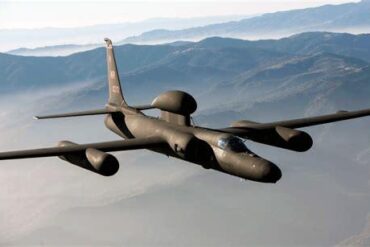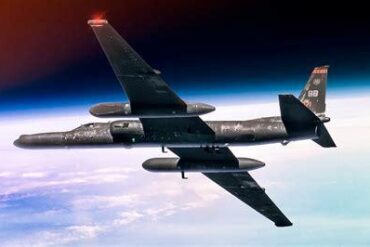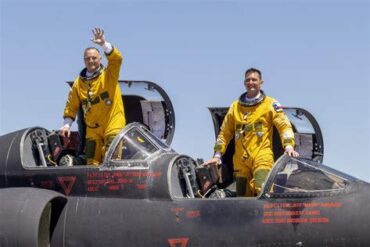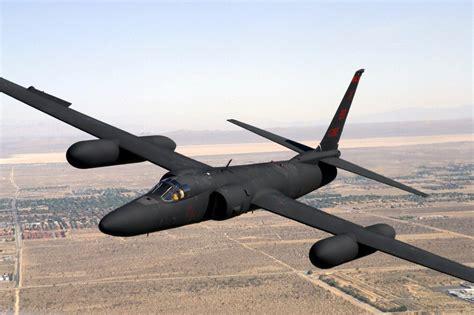
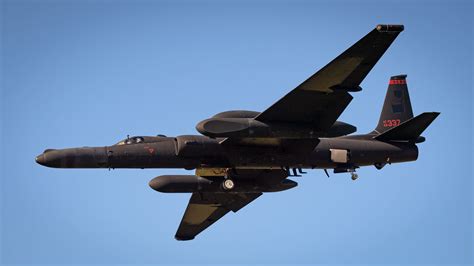
For nearly seven decades, the Lockheed U-2 Dragon Lady spy plane has remained one of the most remarkable examples of aviation longevity in military history. First flown in 1955 and entering service in 1956, the aircraft was originally designed during the Cold War to provide the United States with high-altitude intelligence on adversaries that could not easily be reached by conventional aircraft. Today, despite the rapid expansion of advanced reconnaissance satellites, unmanned aircraft, and artificial intelligence-powered intelligence systems, the U-2 continues flying critical missions for the United States Air Force.
The survival of the U-2 is not simply a result of nostalgia or historical importance. The aircraft continues to perform missions that many sophisticated reconnaissance satellites cannot fully replicate. Its unique combination of extreme altitude, long endurance, flexible sensor packages, and real-time intelligence sharing gives commanders a capability that remains highly valuable in modern conflicts.
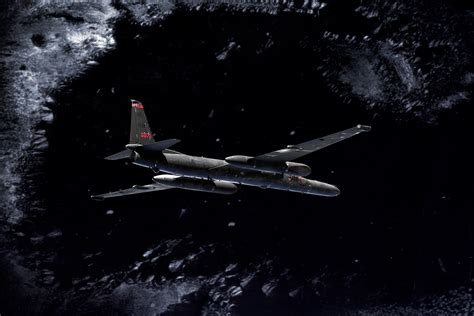
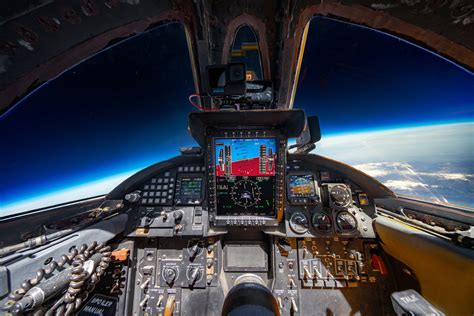
The U-2 operates at altitudes above 70,000 feet (21,336 meters), near the boundary between the atmosphere and space. From this position, it can observe vast areas while remaining outside the reach of most traditional air defenses. More importantly, unlike satellites that follow predictable orbital paths, the Dragon Lady can be deployed whenever and wherever intelligence is required.
This difference between airborne and space-based reconnaissance is the central reason the U-2 has survived into the 21st century. Satellites provide enormous strategic value, but their movements can often be predicted. The U-2 brings unpredictability, persistence, and adaptability that remain difficult to replace.
Why the U-2 Spy Plane Still Matters in the Age of Reconnaissance Satellites
Modern military intelligence depends on multiple layers of surveillance. Reconnaissance satellites provide global coverage, unmanned aircraft offer endurance, and ground-based systems provide specialized information. However, each system has limitations.
Low Earth orbit reconnaissance satellites travel around Earth at speeds approaching 17,000 miles per hour, allowing them to cover enormous distances quickly. However, this orbital speed also means they only remain over a specific target area for a limited period. After passing over a location, a satellite may not return for many hours or even longer depending on its orbit.
For military planners, this creates a significant challenge. An adversary can monitor satellite schedules and adjust activities accordingly. A mobile missile launcher, supply convoy, or military unit can temporarily hide operations during a satellite pass and resume movement once the spacecraft has moved away.
The U-2 operates under completely different principles. Instead of briefly passing over a target, the aircraft can remain focused on an area for hours. It does not simply capture a snapshot of a battlefield; it creates a continuous intelligence picture.
A U-2 mission can reveal patterns that a satellite image might miss. Intelligence operators can observe vehicles arriving at a facility, personnel movements, equipment changes, and operational routines. This persistent observation provides context, turning individual images into a complete understanding of what is happening on the ground.
This capability is particularly valuable during rapidly changing military situations, where commanders need immediate updates rather than information collected hours earlier.
The U-2 Dragon Lady’s Unique Advantage: Persistent Intelligence Collection
One of the greatest strengths of the U-2 is its ability to dwell over a target area. In intelligence operations, time spent observing a target can be just as important as image quality.
A satellite might capture a highly detailed image of a military installation, but that image only represents a single moment. The U-2 can watch the same location continuously and identify changes as they happen.
For example, if an adversary begins preparing a mobile missile system, a satellite may only capture the launcher during one stage of movement. A U-2 can observe the entire sequence, from the opening of a storage facility to vehicle departure, road movement, deployment, and final positioning.
This persistent surveillance ability gives military leaders a significant advantage because decisions can be based on current events rather than historical information.
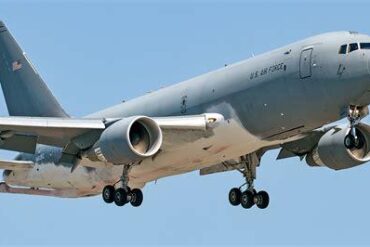
The aircraft’s endurance also contributes to this capability. A typical U-2 mission can last approximately 12 to 14 hours, allowing it to remain airborne for extended operations. In particularly important missions, aerial refueling can further increase its operational flexibility.
The aircraft’s endurance was demonstrated when a U-2 from the 1st Reconnaissance Squadron completed a historic mission flying across all 48 contiguous United States states in a single flight. The mission highlighted the platform’s continuing ability to provide long-range intelligence support.
Flying Outside the Limits of Satellite Reconnaissance
Satellites usually collect information from directly above the Earth, but the U-2 has the ability to approach intelligence collection from different angles.
Because the aircraft operates within controlled airspace near the edge of the atmosphere, it can observe targets from outside national borders while using specialized sensors designed for long-distance collection. This flexibility allows it to gather information that may be difficult for overhead satellites to obtain.
The U-2 can also detect and locate weak electromagnetic signals from communications equipment, including tactical radios and other battlefield emitters. These signals may be difficult for satellites to intercept because of distance, power limitations, or environmental conditions.
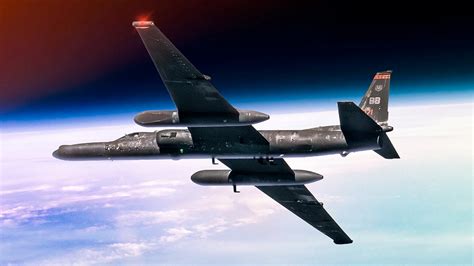
The aircraft’s ability to combine multiple intelligence disciplines makes it especially powerful. It can collect imagery intelligence, signals intelligence, electronic intelligence, and radar-based information during the same mission.
This creates a more complete battlefield picture. Instead of simply showing where something is located, the U-2 can help determine what is happening, how forces are communicating, and what actions may occur next.
The Modular Sensor Architecture That Keeps the U-2 Relevant
A major reason the U-2 has remained operational for so long is its ability to evolve.
Unlike reconnaissance satellites, whose hardware is locked in place after launch, the U-2 can return to a runway, receive upgrades, and fly again with new technology. This gives engineers and military planners the ability to quickly adapt the aircraft for emerging threats.
The Dragon Lady uses a modular open systems architecture that allows different sensor packages to be installed depending on mission requirements. The aircraft can carry advanced electro-optical cameras, infrared sensors, synthetic aperture radar systems, and electronic warfare equipment.
If weather conditions change, the aircraft can replace optical sensors with radar systems capable of operating through clouds and poor visibility. If a new communications threat appears, electronic intelligence equipment can be installed to identify and analyze enemy signals.
This flexibility represents a major advantage over space-based platforms. A satellite launched with outdated technology may remain in orbit for years with limited ability to receive major hardware improvements. The U-2, however, can continuously evolve.
The U-2 as an Airborne Intelligence Network
The modern battlefield depends not only on collecting information but also on delivering it quickly to decision-makers.
The U-2 has been transformed from a traditional spy aircraft into a powerful airborne communication platform. Equipped with advanced tactical data links such as Link 16 and the Common Data Link, the aircraft can distribute intelligence directly to military forces.
Its high-altitude position allows it to act as a communication bridge between different battlefield systems. It can collect sensor data and transmit information rapidly to commanders, aircraft, ships, and ground units.
This speed is especially important during modern conflicts where situations can change within minutes. A delayed intelligence report may no longer be useful by the time it reaches commanders. The U-2’s direct communication capability helps provide near real-time awareness.
The aircraft also benefits from having a powerful onboard electrical system. Its General Electric F118-GE-101 engine provides sufficient power for advanced sensors, including synthetic aperture radar systems that require significant energy.
Satellites must carefully manage power using solar panels and batteries, which can limit sensor operation and communication bandwidth. The U-2 does not face the same constraints because it generates electricity continuously during flight.
Why the Cold War-Era Dragon Lady Remains a Modern Military Asset
The continued service of the U-2 demonstrates that advanced technology does not always replace older systems completely. Sometimes, a well-designed platform can remain relevant because its fundamental advantages cannot easily be duplicated.
The U-2 was created during the Cold War to solve a specific intelligence challenge: seeing farther, higher, and more clearly than possible with conventional aircraft. Decades later, the mission has changed, but the requirement remains.
Modern conflicts increasingly involve mobile weapons systems, electronic warfare, rapid troop movements, and information competition. These challenges require intelligence platforms that can respond quickly and remain flexible.
The Dragon Lady’s ability to launch from nearby bases, change sensors, remain over targets, and provide live intelligence gives it a unique role within the broader reconnaissance network.
The Future of the U-2 Spy Plane After Seven Decades of Service
The U-2’s future has often been questioned, especially as newer platforms such as advanced drones and next-generation satellites enter service. However, replacing the aircraft has proven difficult because no single system combines all of its capabilities.
Satellites offer global reach but lack flexibility. Drones provide endurance but may not match the U-2’s altitude and sensor capacity. Other aircraft may offer speed or stealth but cannot replicate its unique intelligence collection role.
As long as military commanders require persistent, adaptable, high-quality intelligence, the U-2 will continue to provide value.
The aircraft that first flew during the 1950s has become one of the longest-serving reconnaissance platforms in history. Far from being an outdated relic, the Lockheed U-2 Dragon Lady remains a symbol of engineering adaptability and strategic innovation.
Even in an era dominated by satellites and artificial intelligence, the U-2 proves that sometimes the most effective technology is not the newest one, but the one that can continue evolving to meet new challenges.