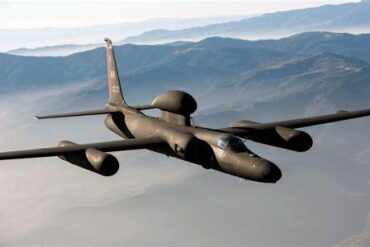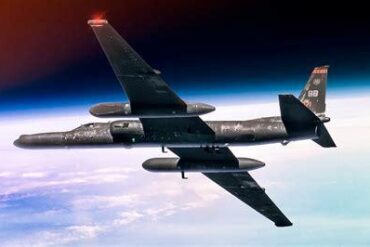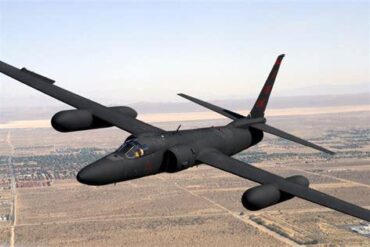
The Lockheed U-2 Dragon Lady is one of the most remarkable aircraft ever created. For more than seven decades, this unusual-looking spy plane has operated at altitudes where ordinary aircraft simply cannot survive. However, the aircraft itself was only part of the challenge. The pilots who flew the U-2 had to prepare for missions in ways that resembled astronaut training more than traditional military aviation.
Before every high-altitude reconnaissance flight, U-2 pilots performed medical procedures, wore specialized pressure suits, and completed life-support checks that most pilots in history have never experienced. These preparations were not optional routines; they were essential steps that allowed humans to operate safely near the edge of space.
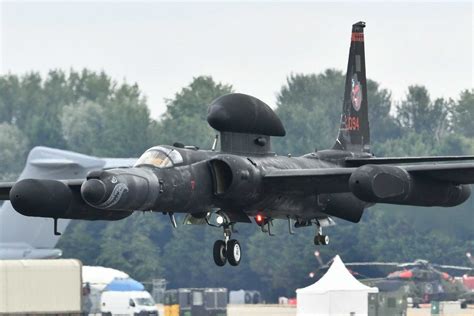
The Lockheed U-2 Dragon Lady Was Built for the Edge of Space
When the Lockheed U-2 first entered development during the 1950s, the world was entering one of the most dangerous periods of the Cold War. The United States and the Soviet Union were locked in a struggle for intelligence superiority, yet American planners had limited information about activities deep inside Soviet territory.
At the time, reconnaissance aircraft faced serious limitations. Conventional aircraft could be detected and intercepted, while early spy satellites did not yet exist. Military leaders needed an aircraft that could fly higher than enemy fighters and beyond the effective range of many air defense systems.
The answer was the U-2, designed by the legendary Lockheed Skunk Works team under engineer Clarence “Kelly” Johnson. Its enormous wings, lightweight structure, and efficient design allowed it to climb beyond 70,000 feet, an altitude previously considered almost unreachable for operational aircraft.
The mission was simple but extremely dangerous: collect intelligence from the skies above hostile territory. The aircraft carried advanced cameras and sensors capable of photographing military installations, missile sites, and strategic facilities from an altitude where few weapons could reach.
During the early years of operation, the U-2 appeared almost untouchable. Soviet fighters could not easily reach it, and traditional anti-aircraft artillery was ineffective at such extreme heights. However, improvements in missile technology eventually changed that advantage.
The danger became clear in 1960 when CIA pilot Francis Gary Powers was shot down over Soviet territory by a surface-to-air missile. The incident proved that even an aircraft operating at extreme altitude was not invulnerable.
The U-2 continued flying because its intelligence value was enormous. In 1962, U-2 reconnaissance photographs played a crucial role during the Cuban Missile Crisis, revealing Soviet missile installations in Cuba and helping shape one of the most important moments of Cold War history.
Flying Above 70,000 Feet Created a Completely Different Environment
The greatest challenge facing U-2 pilots was not simply flying a difficult aircraft. It was surviving an environment closer to space than normal aviation.
At operational altitudes above 70,000 feet (21,300 meters), atmospheric pressure is dramatically lower than at typical airline cruising levels. If cabin pressure was suddenly lost, a pilot without protection could lose consciousness within seconds because the human body cannot function normally in such conditions.
The U-2 cockpit was only partially pressurized, providing an environment roughly equivalent to an altitude of about 28,000 to 30,000 feet. That meant pilots needed additional protection beyond a normal flight suit.
Unlike fighter pilots flying at lower altitudes, U-2 pilots were effectively operating inside a personal spacecraft. Their preparation routines borrowed heavily from aerospace medicine and astronaut procedures.
The aircraft’s extraordinary altitude capability created a unique problem: the pilot was flying an airplane while wearing equipment designed to keep a human alive in near-space conditions.
U-2 Pilots Had to Breathe Pure Oxygen Before Every Mission
One of the most unusual steps in the U-2 pre-flight process was pre-breathing pure oxygen.
Before takeoff, pilots had to breathe 100% oxygen for an extended period, often lasting an hour or more. This procedure, known as denitrogenation or preoxygenation, removed nitrogen from the body’s tissues and bloodstream.
This preparation was necessary because nitrogen could become dangerous during rapid pressure changes. At extreme altitude, dissolved nitrogen could form bubbles inside the body, creating a condition similar to decompression sickness experienced by deep-sea divers.
For most military pilots, this was completely unfamiliar. Fighter pilots, bomber crews, and transport pilots generally did not need this level of physiological preparation before routine missions. Their aircraft operated within an atmospheric range where standard oxygen systems and pressurization were sufficient.
U-2 pilots faced a different reality. Their aircraft operated so high that a normal human body required careful preparation before even leaving the runway.
The process transformed a simple flight briefing into something closer to a space mission countdown. Before the aircraft moved, the pilot’s body itself had to be prepared for the environment ahead.
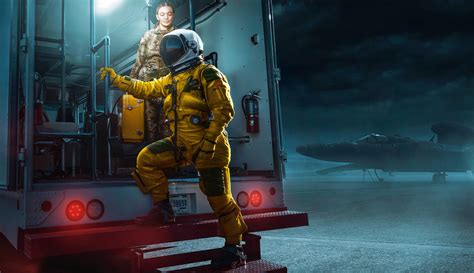
The U-2 Space Suit Was a Personal Survival System
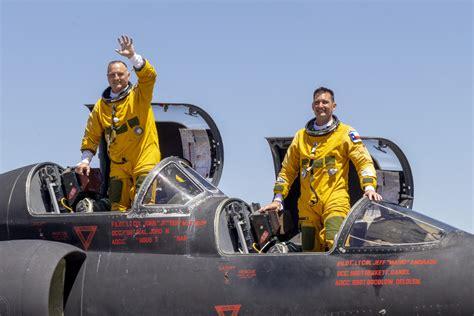
The most recognizable part of U-2 pilot preparation was the use of a full pressure suit.
At extreme altitude, a traditional flight suit could not protect a pilot from sudden cabin depressurization. Instead, U-2 crews wore specialized suits similar to those used by astronauts.
These suits were not ordinary equipment. They required careful inspection, fitting, and maintenance before every mission. Technicians helped pilots connect life-support equipment, inspect seals, and confirm that communication systems were working properly.
The suit had to perform multiple functions simultaneously. It needed to provide pressure protection, supply breathing oxygen, regulate the pilot’s survival environment, and allow enough mobility for cockpit operations.
Modern U-2 pilots use the David Clark S1034 Pilot Protective Assembly, a pressure suit designed specifically for high-altitude aviation. Earlier versions of the suit were developed during the aircraft’s early operational years when engineers were still learning how humans could survive at the edge of space.
Wearing the suit also created physical challenges. Pilots had limited movement, increased workload, and additional weight during already demanding missions. Every action inside the cockpit required more planning and precision.
A U-2 mission was therefore not just a test of flying skill. It was a test of endurance, discipline, and the ability to operate complex equipment while wearing a personal spacecraft.
Pre-Flight Checks Looked More Like an Astronaut Launch Sequence
For many aircraft, pre-flight preparation involves checking fuel levels, navigation systems, engines, and mission equipment. For U-2 pilots, the checklist went much further.
Before departure, pilots and ground crews verified that the aircraft’s life-support systems were functioning correctly. The pressure suit, oxygen supply, communication equipment, and cockpit systems all had to work together perfectly.
A failure at 70,000 feet could become immediately life-threatening. There was no nearby runway, no quick return to normal atmospheric conditions, and little margin for error.
The relationship between pilot and support crew was therefore extremely important. Unlike conventional aviation operations, where a pilot could often manage many issues independently, U-2 missions required close coordination between the aircrew, technicians, and medical specialists.
The preparation process reflected the reality of high-altitude reconnaissance: the aircraft was advanced, but the human body remained the limiting factor.
Why Most Pilots Never Experienced Anything Similar
The majority of military pilots throughout aviation history have faced dangerous missions, but very few have dealt with the physiological challenges encountered by U-2 crews.
A fighter pilot may experience extreme acceleration, a bomber pilot may fly long-range missions under stressful conditions, and a carrier pilot may operate from one of the most demanding environments in aviation. However, most still operate inside an atmosphere where normal flight equipment is enough.
U-2 pilots belonged to a rare group of aviators who crossed the boundary between aviation and spaceflight.
Their missions required procedures normally associated with astronauts: breathing pure oxygen before launch, wearing pressure suits, managing life-support systems, and preparing for an environment where survival depended on specialized equipment.
This made the U-2 program a bridge between traditional aircraft operations and human space exploration.
The Dragon Lady Remains Relevant After More Than 70 Years
Despite being designed in the 1950s, the U-2 Dragon Lady remains active today because of its unique capabilities.
Modern aircraft and satellites have replaced many of its original missions. Advanced drones, electronic intelligence aircraft, and space-based systems now perform many surveillance tasks once handled exclusively by the U-2.
However, the aircraft still provides capabilities that are difficult to replace. Its ability to remain airborne for long periods at extreme altitude allows it to collect intelligence, support communications, monitor disaster areas, and provide surveillance over important regions.
The current U-2 fleet is significantly different from the original aircraft. Modern versions feature upgraded engines, improved sensors, and advanced mission equipment. The aircraft has evolved from a Cold War spy plane into a highly specialized intelligence platform.
Its continued service demonstrates how exceptional design can remain valuable decades after introduction.
The Legacy of U-2 Pilots Who Flew Near Space
The story of the U-2 is often told through its aircraft design, intelligence missions, and Cold War history. However, the pilots who operated the Dragon Lady deserve equal recognition.
Before every mission, they accepted preparation requirements unlike almost any other aviator. They transformed themselves into part pilot, part astronaut, and part survival specialist.
The procedures they followed became foundations for later high-altitude aircraft programs, including the SR-71 Blackbird, whose pilots also required advanced pressure suits and astronaut-like preparation.
The U-2 proved that humans could operate at the edge of space long before commercial spaceflight became reality. Every mission began not only with an aircraft inspection but with a carefully controlled process that prepared the pilot’s body for one of the harshest environments ever encountered in aviation.
For generations of aviators, the U-2 Dragon Lady pilot represented something unique: a person who did not simply fly higher than others, but who prepared to survive where almost no other pilot had ever gone before.