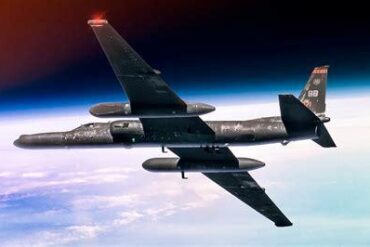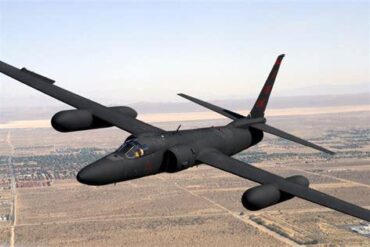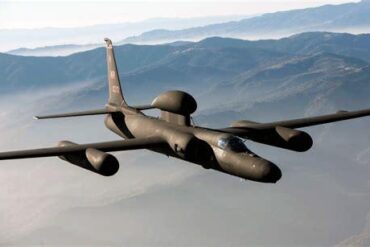
For nearly seven decades, the Lockheed U-2 Dragon Lady has occupied a unique place in military aviation history. No other reconnaissance aircraft has remained so relevant across so many geopolitical eras, from the Cold War and the Cuban Missile Crisis to modern surveillance operations over contested regions. Yet after years of debate, budget battles, and delayed retirement plans, the United States Air Force is once again preparing to finally phase out the iconic high-altitude spy plane.
The planned retirement of the U-2 is not merely the end of an aging aircraft platform. It symbolizes a major transition in how the United States gathers intelligence, conducts surveillance, and prepares for future warfare dominated by stealth networks, satellites, autonomous systems, and artificial intelligence-driven battlefield awareness. The Dragon Lady once represented the absolute cutting edge of strategic reconnaissance. Today, the Air Force increasingly sees it as a costly legacy system operating in an era where modern air defense missiles can reach the very altitudes that once made the U-2 untouchable.
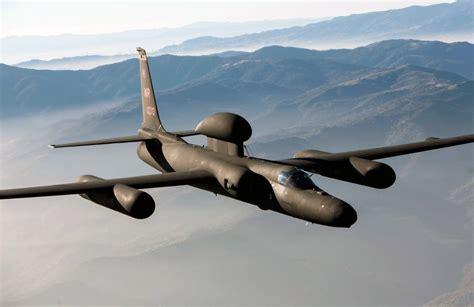
Despite that harsh reality, the U-2’s legacy remains extraordinary. Few aircraft have shaped global strategy so profoundly while remaining largely hidden from public attention. Its silhouette — enormous glider-like wings stretching across the sky at more than 70,000 feet — became synonymous with secret intelligence gathering and Cold War tension.
The aircraft’s upcoming retirement closes one of the most remarkable chapters in aerospace history.
The U-2 first entered operational service in 1956 after being rapidly developed by Lockheed’s legendary Skunk Works division under immense pressure from Washington. American leaders feared the Soviet Union was advancing its nuclear and missile capabilities faster than Western intelligence could track. Traditional reconnaissance aircraft could not penetrate Soviet airspace safely, and satellite technology was still in its infancy. The answer was a revolutionary aircraft capable of flying higher than any operational fighter or missile system of the era.
The result was the U-2.
Built with lightweight construction, oversized wings, and a design philosophy closer to a sailplane than a conventional jet, the aircraft could soar above 70,000 feet for hours at a time. At those altitudes, pilots could photograph military installations, missile sites, bomber bases, and industrial complexes with unprecedented clarity.
Its first overflights of the Soviet Union on July 4, 1956 immediately transformed American intelligence capabilities. The aircraft delivered detailed information that shattered exaggerated fears regarding Soviet bomber production and missile stockpiles. In many ways, the U-2 helped stabilize Cold War planning by replacing speculation with hard evidence.
However, the aircraft’s invincibility proved temporary.
In 1960, Soviet air defenses successfully shot down a U-2 piloted by Francis Gary Powers using an S-75 Dvina surface-to-air missile. The incident triggered an international diplomatic crisis and exposed the risks associated with manned strategic reconnaissance. Even so, the U-2 remained operational because its intelligence value outweighed the dangers.
Over the decades, the aircraft evolved continuously. New sensors, upgraded avionics, improved engines, advanced synthetic aperture radar systems, and electronic intelligence packages transformed the aging spy plane into a surprisingly modern intelligence platform. Long after many expected it to disappear, the U-2 continued conducting missions across the Middle East, Asia, Europe, and other strategic regions.
Its endurance became legendary within the Air Force.
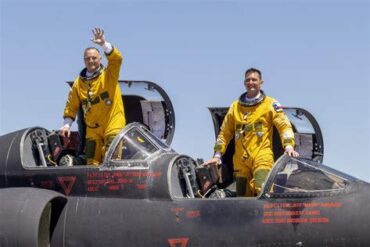
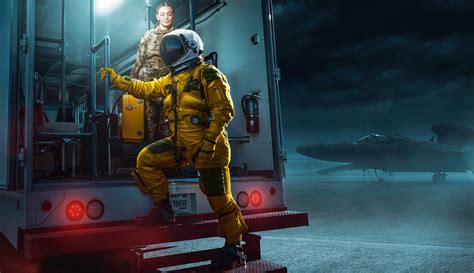
Flying the Dragon Lady is notoriously difficult. Pilots wear full pressure suits similar to astronaut gear because of the extreme altitudes involved. Missions frequently exceed ten hours, demanding immense physical and mental endurance. Landing the aircraft is so challenging that chase cars follow the jet down the runway while another pilot provides radio guidance to help estimate altitude during touchdown.
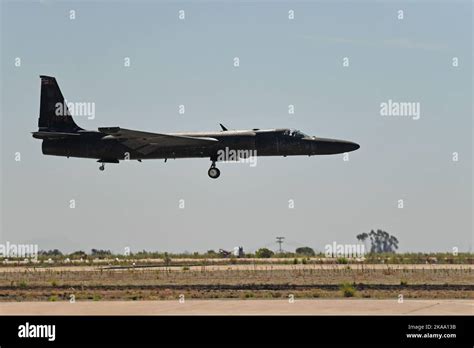
The aircraft’s unusual bicycle-style landing gear and sensitive flight envelope make it one of the most unforgiving aircraft in military service. Pilots often describe flying the U-2 as balancing on the edge of a stall throughout much of the mission profile.
That demanding operational environment only deepened the aircraft’s mystique.
Today, however, the Air Force sees mounting reasons to retire the platform permanently.
The most important factor is survivability. Modern integrated air defense systems have dramatically changed the strategic landscape. During the early Cold War, the U-2’s altitude provided effective protection against interception. Modern missile systems no longer respect those limits.
Russian-designed systems such as the S-300 and S-400 Triumf, along with China’s HQ-9, can engage aircraft operating at altitudes previously considered unreachable. That reality fundamentally undermines the U-2’s traditional operational advantage.
The aircraft’s large wingspan also creates a significant radar signature. In modern contested airspace, stealth matters more than altitude alone. Against advanced radar networks supported by data fusion and long-range missile batteries, the Dragon Lady becomes increasingly vulnerable.
Why The Air Force Wants To Retire The U-2 Fleet
The Air Force’s modernization strategy revolves around reallocating resources toward aircraft and systems considered essential for future conflicts, particularly in the Indo-Pacific region. Retiring older airframes allows funding to shift toward stealth fighters, next-generation bombers, tankers, drones, and training platforms.
The U-2 has become part of that larger restructuring effort.
Currently, the Air Force intends to remove all remaining U-2 aircraft from operational service by 2027. The retirement plan aligns with broader procurement goals involving the acquisition of advanced aircraft including the F-35A Lightning II, F-15EX Eagle II, T-7A Red Hawk trainer, KC-46 Pegasus tanker, and the highly secretive B-21 Raider stealth bomber.
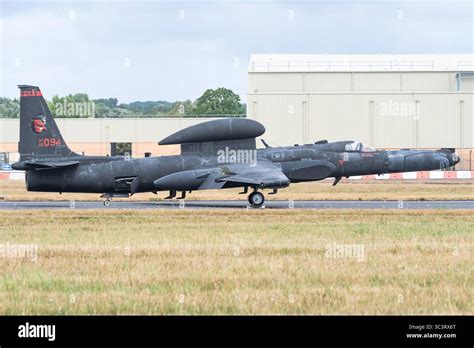
The numbers involved are substantial. Billions of dollars are being redirected toward next-generation airpower initiatives focused on great power competition with China. Military planners increasingly prioritize survivable stealth platforms capable of operating inside heavily defended environments while integrating into vast sensor-sharing combat networks.
The Dragon Lady simply does not fit that long-term vision anymore.
Another major issue involves sustainment.
The U-2S production line ended decades ago, with the final aircraft completed in 1989. Maintaining the fleet has become progressively more difficult as spare parts grow scarce and specialized maintenance requirements increase. Some components require extensive refurbishment because replacement production no longer exists.
Each aircraft periodically undergoes Programmed Depot Maintenance, a comprehensive overhaul process involving structural inspections, corrosion analysis, disassembly, and rebuilding. While this keeps the aircraft airworthy, it also consumes considerable resources.
The Air Force increasingly questions whether maintaining a shrinking fleet of aging reconnaissance aircraft makes financial sense when drones and satellites can perform many of the same tasks more efficiently.
Unmanned systems provide major advantages. Drones do not suffer fatigue, require pressure suits, or place pilots at risk during dangerous missions. Remote operators can rotate shifts without interrupting surveillance coverage, enabling far longer operational endurance.
Most importantly, losing a drone does not create the political or human consequences associated with losing a pilot.
This reality matters enormously in an era where reconnaissance operations increasingly occur near heavily defended adversaries.
The Strategic Shift Toward Satellites And Autonomous Surveillance
The retirement of the U-2 reflects a broader transformation in intelligence gathering philosophy. Modern ISR — intelligence, surveillance, and reconnaissance — now relies on interconnected systems operating across multiple domains simultaneously.
Satellites provide global persistence and increasingly sophisticated imaging capabilities. High-altitude drones can remain airborne for extraordinary durations while gathering real-time intelligence. Advanced networking allows collected data to move instantly between commanders, aircraft, naval assets, and ground forces.
The Air Force believes these technologies collectively reduce the need for vulnerable manned reconnaissance aircraft.
Still, the U-2 maintains some advantages even today.
Its sensor payload flexibility remains exceptional. The aircraft can rapidly integrate new technologies and fly directly into operational theaters without depending on orbital schedules. Unlike satellites, which follow predictable paths, the U-2 can reposition dynamically based on changing intelligence priorities.
Many defense analysts have argued that the aircraft still offers unique capabilities difficult to replicate fully with current alternatives. That debate partly explains why retirement efforts have repeatedly stalled over the years.
Yet budget realities and strategic priorities appear to have finally tipped the balance.
The Boneyard Awaits America’s Legendary Spy Plane
When retired, most U-2 aircraft will likely head to Davis-Monthan Air Force Base in Arizona, home to the famous 309th Aerospace Maintenance and Regeneration Group, commonly known as the “Boneyard.”
The facility contains thousands of retired military aircraft stored under the dry desert climate, which helps preserve airframes for potential future use. Aircraft designated for Type 1000 storage remain maintained in a condition suitable for possible reactivation.
That means retirement does not necessarily equal destruction.
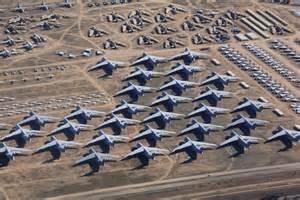
Some Dragon Ladies may eventually provide spare parts for remaining test aircraft or support specialized research projects. Others could potentially return temporarily for niche operational requirements if circumstances demand.
The Boneyard itself represents a strange second life for military aircraft. Rows of bombers, fighters, cargo planes, and reconnaissance aircraft stretch across the Arizona desert like a museum of American airpower evolution.
The U-2’s arrival there will carry symbolic weight few other retirements can match.
One recently retired example, tail number 80-1085, completed nearly 18,000 flight hours across four decades of service before leaving operational duty in April 2024. Its retirement quietly underscored the end of an era that once defined strategic intelligence collection.
Lockheed Martin May Already Be Planning The U-2’s Next Mission
Although operational retirement appears increasingly certain, the U-2 may still retain an important future beyond traditional reconnaissance missions.
Reports surrounding Lockheed Martin’s Advanced Projects Division — the legendary Skunk Works organization responsible for the aircraft’s original development — suggest ongoing interest in keeping select U-2 aircraft active for advanced testing roles.
A recent pilot recruitment effort tied to U-2 operations in Palmdale, California raised significant attention within defense aviation circles. The qualifications sought were highly specialized: experienced U-2 pilots with test pilot school backgrounds, advanced systems expertise, and active Top Secret clearances.
That combination strongly suggests the aircraft may transition into an experimental platform supporting future aerospace development programs.
The U-2’s enormous payload capacity, high operating altitude, and adaptable internal systems make it ideal for testing advanced sensors, communications systems, electronic warfare technologies, and networking concepts.
In many respects, the aircraft could become a bridge between Cold War reconnaissance and the future architecture of sixth-generation warfare.
Modern military doctrine increasingly centers around data dominance. Winning future conflicts may depend less on raw firepower and more on rapidly collecting, processing, distributing, and acting upon battlefield information faster than opponents can respond.
The U-2 remains uniquely suited to supporting that experimentation.
The Dragon Lady’s Legacy Will Outlive Its Service Life
Few aircraft in history have influenced geopolitics as profoundly as the U-2 Dragon Lady. It gathered intelligence during some of humanity’s most dangerous moments and helped shape decisions that affected global stability for generations.
Its missions over Soviet territory altered Cold War strategy. Its surveillance capabilities supported military operations across multiple continents. Its pilots operated at the edge of human endurance in one of the most demanding aircraft ever created.
Even its vulnerabilities became historic milestones. The 1960 shootdown of Francis Gary Powers revealed the dangerous realities of espionage during the nuclear age and demonstrated how rapidly military technology evolves.
The aircraft survived because it adapted.
Again and again, new sensors, upgraded systems, and changing mission profiles extended the relevance of a platform originally conceived in the early 1950s. Few military aircraft achieve that kind of operational longevity.
Now the strategic environment is changing once more.
Stealth technology, autonomous drones, artificial intelligence, space-based surveillance, and integrated battle networks increasingly define the future of military reconnaissance. The Dragon Lady belongs to an earlier era — one shaped by altitude, endurance, and daring human pilots peering down from the edge of space.
Yet retirement does not erase significance.
The U-2 remains one of the most recognizable symbols of American intelligence power and aerospace innovation. Its sleek silhouette still evokes the secretive world of Cold War espionage, classified missions, and technological competition between superpowers.
As the Air Force prepares to finally retire the fleet, the aircraft leaves behind a legacy unmatched by almost any reconnaissance platform in aviation history. The Dragon Lady may soon disappear from operational runways, but its impact on military aviation, intelligence gathering, and strategic warfare will continue to echo long after its final mission ends.