For nearly three decades, United Airlines’ Boeing 777-200 fleet has been woven into the fabric of global aviation, carrying millions of passengers across oceans, continents, and time zones. These aircraft were once the backbone of United’s long-haul strategy, symbolizing a shift toward efficient, high-capacity twin-engine operations at a time when three- and four-engine jets still dominated intercontinental travel. Today, as United prepares to retire its aging 777-200s, the decision represents far more than a routine fleet update. It marks the closing of a chapter defined by technological progress, operational reliability, and a generation of aircraft that helped reshape how airlines think about long-distance flying.
The retirement plan for United’s Boeing 777-200s reflects the realities of modern aviation economics. Rising maintenance costs, fuel efficiency gaps, and evolving passenger expectations have gradually pushed older widebodies toward obsolescence. While the 777-200 remains a capable aircraft, its design belongs to a different era, one before composite airframes, ultra-high bypass engines, and digitally optimized cabins became the industry standard. United’s move underscores how rapidly aviation technology advances, even for aircraft that once defined the cutting edge.
What makes this transition particularly significant is the deep historical connection between United Airlines and the Boeing 777 program itself. As the launch customer, United did not simply operate the aircraft; it helped shape it. From cockpit ergonomics to range requirements, United’s operational insights were embedded into the DNA of the 777-200. The upcoming retirement therefore carries a sense of symmetry, closing a loop that began in the early 1990s when the aircraft was still a concept on engineers’ drawing boards.
The Boeing 777-200 entered service at a time when airlines were rethinking how to balance capacity, efficiency, and range. For United, the aircraft enabled network expansion without the cost penalties associated with older widebodies. Over the years, it proved adaptable enough to handle both dense domestic sectors and demanding international routes, earning a reputation as a dependable workhorse. Its gradual phase-out now highlights how fleet planning is as much about future readiness as it is about honoring past success.

The Origins of the Boeing 777-200 and United’s Pivotal Role
The Boeing 777 program was born out of a strategic gap in Boeing’s lineup during the late 1980s and early 1990s. Airlines needed an aircraft larger than the 767 but more economical than the 747, capable of flying long distances with fewer engines and lower operating costs. The result was a clean-sheet design that would become the world’s largest twin-engine airliner at the time of its debut. United Airlines emerged as a crucial partner in this process, working closely with Boeing through an unprecedented collaborative design approach.
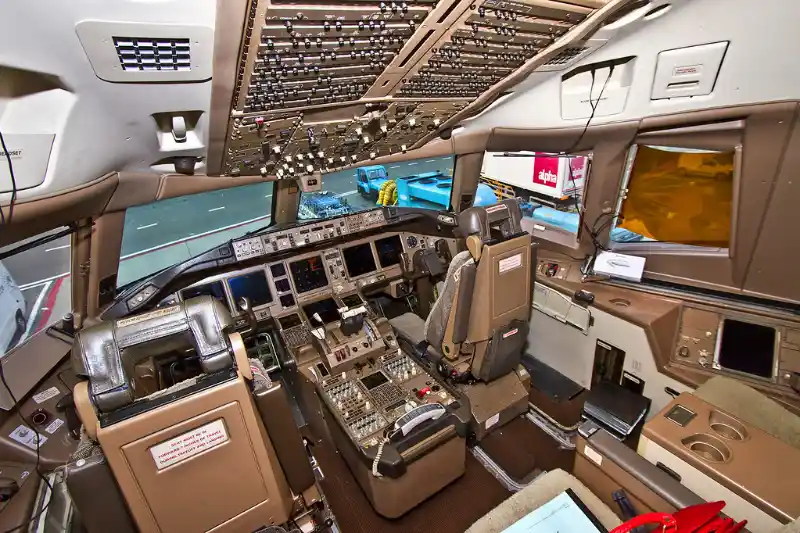
Unlike earlier aircraft programs, the 777 was designed entirely using computer-aided design, eliminating the need for full-scale physical mockups. This innovation allowed engineers to achieve tighter tolerances and greater precision, reducing manufacturing errors and improving overall reliability. United’s pilots, engineers, and maintenance teams contributed extensive feedback, influencing everything from cockpit layout to maintenance accessibility. When the 777-200 made its first flight in June 1994 and entered commercial service in June 1995, it did so with United’s operational philosophy deeply embedded.
At entry into service, the 777-200 set new benchmarks for ETOPS reliability, proving that twin-engine aircraft could safely and efficiently handle routes once reserved for trijets and quadjets. This certification unlocked new routing possibilities, enabling airlines to fly more direct paths over oceans and remote regions. For United, it meant greater flexibility in scheduling and route planning, strengthening its competitive position in international markets.
Engineering, Performance, and the Numbers Behind the Aircraft
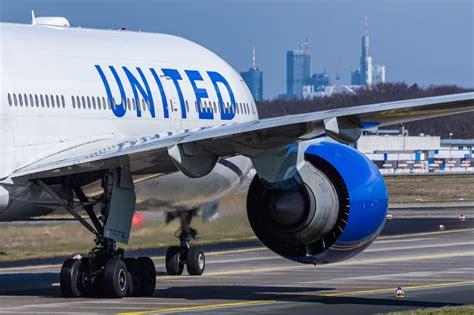
From a technical standpoint, the Boeing 777-200 was engineered to balance power, range, and passenger comfort. Powered by high-thrust turbofan engines from Pratt & Whitney, General Electric, or Rolls-Royce, the aircraft delivered approximately 77,000 pounds of thrust per engine, allowing it to cruise comfortably at Mach 0.84. Its maximum takeoff weight of roughly 545,000 pounds positioned it firmly in the widebody category, capable of carrying significant payloads over long distances.
The aircraft’s range of around 5,200 nautical miles with a full payload made it ideal for transcontinental US routes, Hawaii services, and select transatlantic flights. Its service ceiling of over 43,000 feet gave flight crews the ability to optimize fuel burn by climbing above weather systems and congested airspace. While later variants like the 777-200ER extended these capabilities even further, the original 777-200 laid the groundwork for an entire family of aircraft that would dominate long-haul markets for decades.
Operationally, the 777-200 struck a balance between performance and airport compatibility. Despite its size, it did not require excessively long runways compared to older widebodies, expanding the range of airports it could serve. This versatility was a key factor in United’s decision to deploy the aircraft across a diverse network, from high-density domestic corridors to intercontinental routes linking major global hubs.
How the 777-200 Shaped United Airlines’ Global Network
United Airlines integrated the Boeing 777-200 into its fleet at a time of strategic transformation. As older aircraft like the DC-10 and early 747 variants approached retirement, the 777-200 offered a modern replacement that aligned with United’s efficiency goals. Its twin-engine design reduced fuel consumption and maintenance complexity, while its spacious cabin supported premium travel experiences on long-haul routes.
Over the years, the aircraft became a familiar presence at United’s hubs, connecting cities across Europe, Asia, and the Pacific. Its adaptability allowed United to reconfigure cabins to match market demand, offering three-class layouts on international services and higher-density configurations on domestic or leisure-focused routes. This flexibility maximized revenue potential while maintaining consistent service standards.
Reliability was another defining trait. The 777-200 developed a reputation for operational dependability, an essential quality for an airline managing complex global schedules. For passengers, the aircraft represented a step forward in comfort, with wider cabins, larger windows, and improved pressurization compared to earlier widebodies. These features helped reinforce United’s brand during a period of intense competition in the international market.
When United Airlines Will Retire Its Boeing 777-200 Fleet
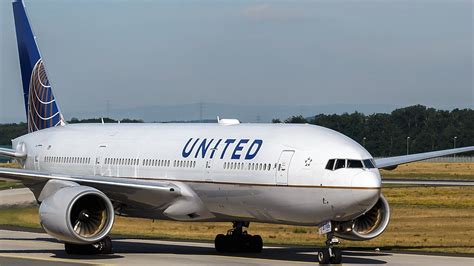
Today, United’s Boeing 777-200 fleet is firmly in the twilight of its service life. Most of the aircraft are between 25 and 31 years old, making them some of the oldest active widebodies in the airline’s operation. While several remain listed as active, others are stored or undergoing maintenance, reflecting the increasing downtime associated with aging airframes and engines.
What stands out is the apparent coordination of the retirement timeline. Data indicates that nearly all remaining 777-200s share a projected retirement date of December 2027, suggesting a deliberate, fleet-wide exit rather than a piecemeal approach. This strategy allows United to manage capacity transitions smoothly, aligning aircraft retirements with the delivery of new widebodies and minimizing network disruption.
The presence of stored aircraft within the fleet hints at a careful balancing act. Rather than operating all airframes at full utilization, United appears to be selectively deploying its 777-200s while preserving others as operational reserves. This approach provides flexibility during peak travel periods while avoiding unnecessary wear on aircraft nearing the end of their economic life.
Fleet Modernization and the Aircraft Replacing the 777-200
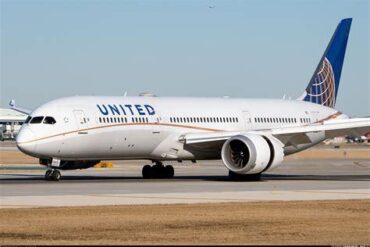
As the Boeing 777-200 exits the stage, United Airlines is ushering in a new generation of widebody aircraft designed for efficiency, sustainability, and passenger comfort. The Boeing 787 Dreamliner has become the primary successor on many routes once served by the 777-200. With its composite airframe, advanced aerodynamics, and next-generation engines, the 787 delivers substantial fuel savings and lower maintenance costs.
The Dreamliner’s smaller capacity compared to the 777-200 allows United to match supply more precisely to demand, improving route profitability. Passengers benefit from a quieter cabin, larger windows, and enhanced humidity levels that reduce fatigue on long flights. These improvements reflect how modern aircraft design prioritizes both economics and the passenger experience.
On ultra-long-haul and high-capacity routes, the Airbus A350 complements the 787, offering extended range and efficient performance on demanding sectors. Together, these aircraft represent a comprehensive modernization of United’s long-haul fleet, replacing the aging 777-200 with platforms better suited to current and future market conditions.
The Enduring Legacy of United’s Boeing 777-200
The retirement of United Airlines’ Boeing 777-200 fleet does not diminish its legacy. For nearly thirty years, these aircraft carried the airline through periods of growth, consolidation, and transformation. They enabled United to expand its global footprint, standardize operations, and compete effectively in long-haul markets dominated by larger and more complex aircraft.
Beyond operational metrics, the 777-200 holds a symbolic place in aviation history. It demonstrated that twin-engine aircraft could safely and reliably handle the world’s longest routes, reshaping regulatory frameworks and airline strategies alike. For United, being the launch customer cemented a partnership with Boeing that influenced fleet decisions for decades.
As the final 777-200s approach retirement, they leave behind more than just empty gate positions. They leave a blueprint for how innovation, collaboration, and strategic foresight can redefine an airline’s future. The aircraft’s influence lives on in the widebodies that replace it, carrying forward the lessons learned from one of the most important chapters in United Airlines’ history.