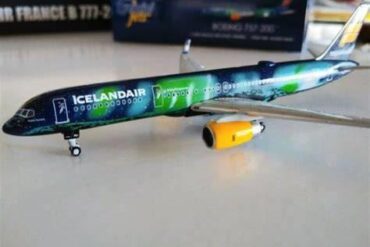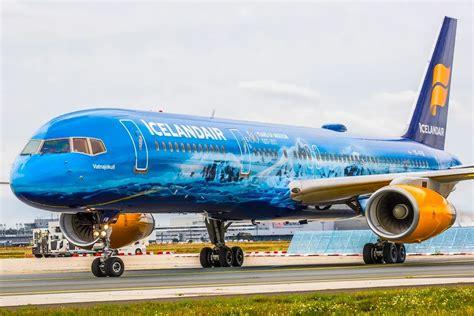
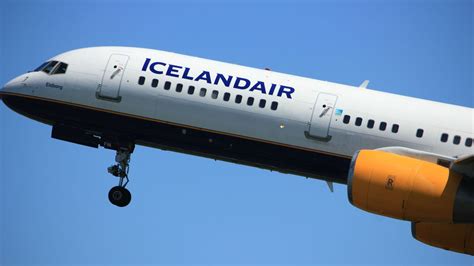
Icelandair is preparing to close one of the most significant chapters in its history by accelerating the retirement of its remaining Boeing 757 fleet. The Icelandic flag carrier had previously expected to keep the aircraft in service until the end of the 2027 summer season, but mounting economic pressures have prompted a much earlier exit. The final Icelandair passenger Boeing 757s are now expected to leave the fleet during the coming winter, bringing an end to an aircraft partnership that helped transform both the airline and transatlantic aviation.
For decades, the Boeing 757 was far more than just another aircraft type in Icelandair’s fleet. It became the foundation of a unique business strategy that connected Europe and North America through Keflavik International Airport (KEF). Operating from a country with a population of fewer than 400,000 people, Icelandair successfully built a global network by using the 757’s exceptional range and efficiency to serve markets that were often too small for traditional widebody aircraft.
The retirement marks the conclusion of an era that fundamentally shaped the airline’s identity. Few carriers became as closely associated with a single aircraft type as Icelandair did with the Boeing 757. While newer aircraft will continue to support the airline’s connecting hub model, the aircraft that made that strategy famous is now approaching its final months of passenger service.
Why Icelandair Is Accelerating The Boeing 757 Retirement
The decision to move forward the retirement schedule is largely driven by economics. Speaking during Routes Europe 2026 in Rimini, Italy, Icelandair Director of Network Planning and Scheduling Snorri Tomasson explained that elevated fuel prices have significantly altered the airline’s fleet planning assumptions.
Although the Boeing 757 remains a capable aircraft, its operating economics no longer match those of modern narrowbody jets. Fuel consumption has become a particularly important factor as airlines face continued pressure to manage costs in an unpredictable operating environment. Aircraft that once delivered a competitive advantage can eventually become liabilities when fuel prices rise and newer technology enters the market.
Tomasson acknowledged that the aircraft had served Icelandair exceptionally well over many years. However, he also noted that the type now sits high on the airline’s variable cost structure. As fuel burn increases relative to modern alternatives, maintaining profitability on certain routes becomes increasingly difficult.
The issue extends beyond fuel alone. Aging aircraft typically require more maintenance, more frequent inspections, and greater investment in spare parts support. Fleet complexity also creates additional operational challenges. Simplifying aircraft types often allows airlines to improve scheduling flexibility, reduce training requirements, and lower long-term operating expenses.
For Icelandair, accelerating retirement is not simply a cost-cutting exercise. It is part of a broader strategic transition designed to strengthen the airline’s future network and improve its ability to compete across the North Atlantic market.
The Aircraft That Built Icelandair’s Modern Network
The Boeing 757 played a unique role in commercial aviation history, and nowhere was that role more evident than at Icelandair.
Unlike large international airlines that relied on massive domestic markets, Icelandair built a successful hub-and-spoke operation around connecting passengers through Iceland. Travelers flying between secondary cities in Europe and North America could connect through Keflavik, often benefiting from shorter travel times and convenient schedules.
The Boeing 757 was almost perfectly suited to this mission. Its combination of range, payload capability, and relatively low operating costs allowed the airline to serve routes that would have been difficult to sustain with larger aircraft.
Over the years, Icelandair operated a total of 36 Boeing 757s, including 34 Boeing 757-200s and two Boeing 757-300s. Today, only eight remain active within the fleet, with an average age of approximately 26.5 years.
That longevity speaks volumes about the aircraft’s value. The Boeing 757 consistently delivered performance that few competitors could match, particularly on challenging North Atlantic sectors where runway performance, weather conditions, and route economics all played critical roles.
Where The Boeing 757 Still Flies For Icelandair
Even in its final year of service, the Boeing 757 continues to occupy a visible position across Icelandair’s network.
According to scheduled flight data covering June 2026 through March 2027, the airline still relies heavily on the aircraft for several important destinations. The largest Boeing 757 operation is currently found on services to Denver International Airport, reflecting the aircraft’s long-standing ability to efficiently connect North America with Iceland.
Other major destinations include Oslo, London Heathrow, and Copenhagen, demonstrating the flexibility that made the aircraft so valuable. The 757 can perform demanding transatlantic missions while also handling high-demand European routes with equal effectiveness.
Additional destinations scheduled to receive Boeing 757 service include Rome, Zurich, Barcelona, Dublin, Amsterdam, and Milan. This broad geographical spread highlights the aircraft’s versatility and explains why airlines valued it for so many years.
Unlike aircraft designed primarily for short-haul or long-haul operations, the Boeing 757 occupied a unique middle ground. It could cross oceans while remaining efficient enough for shorter regional sectors. That flexibility helped Icelandair maximize aircraft utilization and maintain a highly adaptable route network.
The New Generation Fleet Taking Over
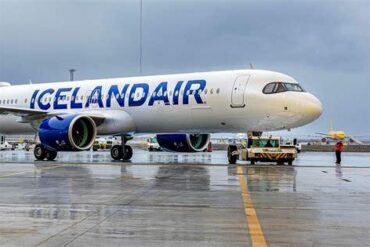
As the Boeing 757 exits, Icelandair’s future increasingly revolves around a combination of Boeing 737 MAX and Airbus A321 family aircraft.
The airline currently operates 17 Boeing 737 MAX 8s and four Boeing 737 MAX 9s, which have become central components of its fleet modernization strategy. These aircraft offer substantially improved fuel efficiency compared with older-generation narrowbodies while maintaining operational flexibility across much of the airline’s network.
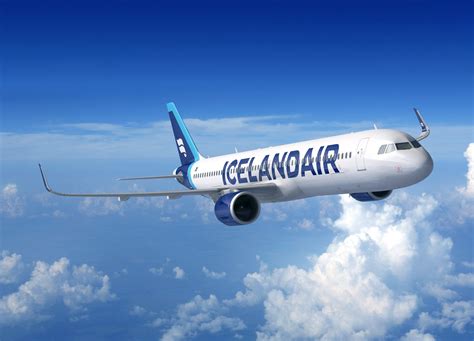
Alongside the MAX fleet, Icelandair has introduced the Airbus A321LR, with six aircraft already in operation and additional units on order. The A321LR provides the range necessary to operate some of the airline’s longest routes, including services to destinations on the US West Coast.
Looking further ahead, Icelandair has also committed to 13 Airbus A321XLRs, aircraft specifically designed to push narrowbody range capabilities even further. The A321XLR is expected to become one of the most important aircraft in the airline’s long-term strategy, allowing it to sustain thin long-haul routes that would otherwise struggle economically.
The transition represents a generational leap in efficiency. Modern engines, advanced aerodynamics, and improved operational performance allow these aircraft to achieve significantly lower fuel burn while maintaining comparable route capabilities.
Better Economics Are Reshaping Route Planning
One of the most important consequences of fleet modernization is the ability to maintain routes that might otherwise become financially unsustainable.
Tomasson highlighted Portland International Airport (PDX) as an example of how newer aircraft can transform route economics. Historically, some long-distance markets were more seasonal because operating costs made year-round service difficult to justify.
With aircraft such as the Airbus A321LR, the equation changes considerably. Lower unit costs improve profitability and create opportunities to sustain service during periods of weaker demand. This gives Icelandair greater network resilience and helps preserve connectivity across its route system.
The shift illustrates how aircraft technology increasingly shapes airline strategy. Route viability is no longer determined solely by passenger demand. The economics of the aircraft operating those routes can be equally important.
For Icelandair, replacing the Boeing 757 is therefore not simply about retiring old airplanes. It is about creating a network that remains competitive and profitable for the next decade.
The Boeing 757 Passenger Fleet Is Rapidly Disappearing
Icelandair’s decision reflects a much broader trend across the aviation industry. While the Boeing 757 remains popular in cargo operations, its presence in passenger service continues to decline.
Today, the largest remaining passenger operators are overwhelmingly concentrated in the United States. Delta Air Lines remains the world’s biggest Boeing 757 passenger operator, with a fleet approaching 90 aircraft. United Airlines follows with more than 60 examples still in service.
Outside those carriers, the list of operators has become remarkably small. A handful of airlines in Russia, Kazakhstan, Mongolia, Uzbekistan, and other markets continue to fly the type, but global passenger numbers have steadily contracted.
The reasons are straightforward. Modern aircraft such as the Airbus A321neo family offer similar capabilities with substantially lower fuel consumption and reduced maintenance requirements. As these aircraft enter service in larger numbers, the economic case for retaining aging Boeing 757s becomes increasingly difficult to justify.
The End Of An Aircraft That Changed Transatlantic Travel
When Icelandair’s final Boeing 757 leaves passenger service this winter, the moment will carry significance far beyond a routine fleet update.
The aircraft helped demonstrate that a relatively small airline could build a successful transatlantic network by linking secondary markets through a strategically positioned hub. It proved that long-range narrowbody aircraft could unlock opportunities that larger aircraft often could not serve efficiently.
Many of the concepts pioneered through Icelandair’s extensive Boeing 757 operations continue to influence airline network planning today. The Airbus A321LR and A321XLR are, in many ways, modern successors to the role the 757 once performed so effectively.
Yet while new aircraft will inherit the mission, they cannot replicate the historical significance of the Boeing 757 itself. For Icelandair, the aircraft represented growth, innovation, and a distinctive approach to international aviation that allowed a small nation to become an important bridge between continents.
This winter’s retirement therefore represents more than the departure of an aging fleet type. It marks the closing chapter of an aircraft that defined Icelandair’s modern identity and helped reshape how airlines connect travelers across the North Atlantic.