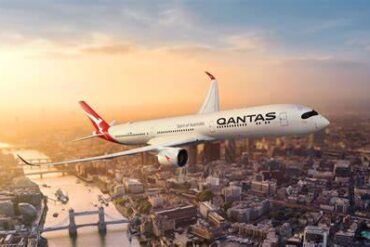
Qantas has finally answered one of the biggest questions surrounding its long-haul fleet. After years of uncertainty, Australia’s flag carrier has confirmed that the retirement of its Airbus A380 fleet will begin during the 2032 financial year, placing an official countdown on one of aviation’s most recognizable aircraft. While six years may appear comfortably distant, the announcement fundamentally changes how travelers should view the airline’s flagship aircraft. Instead of an indefinite opportunity, every remaining flight aboard a Qantas A380 now belongs to a limited chapter that is steadily drawing to a close.
The decision is far bigger than simply replacing an aging aircraft. It represents the next phase of the largest fleet modernization program in Qantas history, one that will introduce more than 200 new aircraft across the airline group while gradually reshaping almost every international route. Modern Airbus A350s and Boeing 787 Dreamliners will deliver better efficiency, lower operating costs, and greater flexibility, but they also signal the gradual disappearance of one of the airline’s defining premium products. For many travelers, the real story is not the retirement of the world’s largest passenger aircraft—it is the beginning of the end for Qantas First Class as most passengers know it today.
Although the airline has invested heavily in refurbishing every remaining superjumbo following the pandemic, those upgrades were never intended to keep the aircraft flying forever. Instead, they extended the A380’s competitive life long enough for a carefully managed transition toward a new generation of widebody aircraft. That strategy gives aviation enthusiasts and premium travelers a rare luxury in today’s airline industry: certainty. Rather than seeing the fleet disappear overnight, passengers now know approximately when the curtain will begin to fall.
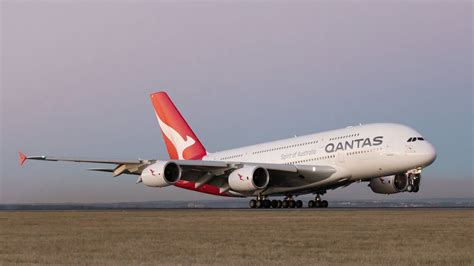
Qantas Finally Gives the Airbus A380 an Official Retirement Date
For much of the past decade, speculation surrounded the future of the Airbus A380 within the Qantas fleet. Following the COVID-19 pandemic, several global airlines permanently retired their superjumbos, leading many observers to question whether Australia’s flagship carrier would eventually follow the same path. Instead, Qantas surprised the industry by investing millions of dollars refurbishing its fleet, refreshing cabins, updating premium seating, modernizing entertainment systems, and improving onboard social spaces. Those investments naturally created expectations that the aircraft would remain in service well into the 2030s.
That uncertainty has now ended.
Qantas has confirmed that the 2032 financial year will mark the beginning of the retirement process for its fleet of 10 refurbished Airbus A380s. Rather than an abrupt withdrawal, the airline expects a gradual phase-out as replacement aircraft enter service. This approach allows Qantas to maximize the value of aircraft that still perform exceptionally well on high-demand international routes while avoiding the operational disruption that accompanies large-scale fleet changes.
For passengers, the announcement provides something increasingly uncommon in commercial aviation—a predictable farewell. Travelers who have dreamed of flying aboard the Qantas A380, particularly in its celebrated First Class cabin, now have a realistic timeframe for planning that experience before opportunities begin shrinking.
Why the Airbus A380 Still Matters to Qantas
Despite its age, the Airbus A380 continues to occupy a unique position within the Qantas network. Few aircraft can match its combination of passenger capacity, comfort, and prestige. On routes linking Australia with destinations such as London, Los Angeles, and Singapore, demand frequently remains high enough to justify deploying the world’s largest passenger aircraft.
The A380 also offers something modern twin-engine aircraft struggle to replicate: space. Its enormous double-deck design allows Qantas to create spacious premium cabins while accommodating hundreds of economy passengers without making the aircraft feel excessively crowded. Wide aisles, generous cabin dimensions, quieter interiors, and an unmistakable sense of scale have made the superjumbo one of the most admired aircraft ever built.
These characteristics transformed the aircraft into much more than a transportation tool. The Airbus A380 became a symbol of long-haul luxury, representing Qantas’ premium international identity for nearly two decades.
The Largest Fleet Renewal Program in Qantas History
The retirement of the Airbus A380 is only one component of an ambitious modernization strategy that touches nearly every part of the airline’s operations.
Qantas currently has more than 200 aircraft on firm order or scheduled for delivery across the Qantas Group. Rather than replacing aircraft one model at a time, the airline is simultaneously introducing multiple new aircraft families designed to improve efficiency across domestic, regional, and international operations.
Among the most significant additions are:
- Airbus A350-1000 aircraft for ultra-long-haul Project Sunrise routes.
- Additional Boeing 787 Dreamliners for international expansion.
- Boeing 787-10 aircraft for higher-capacity long-haul services.
- Airbus A321XLR narrowbodies.
- Airbus A220 regional aircraft.
- New aircraft destined for Jetstar’s expanding network.
The pace of deliveries is remarkable. Qantas executives have indicated that new aircraft are expected to arrive roughly every three weeks during the peak delivery period, requiring extensive coordination involving pilots, engineers, maintenance teams, airports, and operational planning.
Rather than focusing solely on replacing aging airplanes, the airline is rebuilding its future fleet around lower fuel consumption, reduced maintenance costs, quieter cabins, and significantly lower emissions.
The Airbus A330 Is Quietly Entering Retirement First
While headlines naturally focus on the Airbus A380, the first major long-haul fleet replacement is actually centered on another aircraft.
Qantas has already begun preparations to replace its Airbus A330 fleet, with deliveries of replacement aircraft beginning in 2027. These aircraft have served the airline exceptionally well across both domestic trunk routes and medium-haul international destinations throughout Asia and the Pacific.
Many A330s are now more than two decades old, making replacement economically attractive.
The airline has committed to introducing:
- 12 Airbus A350-1000s
- 4 Boeing 787-9 Dreamliners
- 8 Boeing 787-10 Dreamliners
Together, these 24 aircraft will gradually assume many responsibilities currently performed by the A330.
This staggered retirement strategy allows Qantas to realize efficiency gains earlier while preserving the relatively small fleet of refurbished A380s for routes where their enormous capacity continues making financial sense.
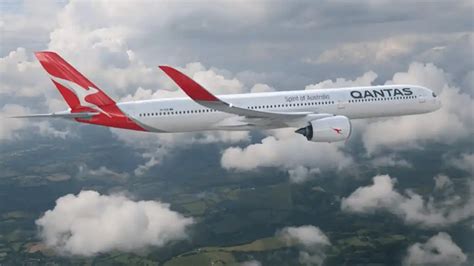
Why Airbus A350s Are Replacing the Superjumbo
The Airbus A350 represents almost the complete opposite philosophy of the Airbus A380.
Instead of relying on extraordinary passenger capacity, the A350 emphasizes operational efficiency. Advanced composite materials reduce weight, next-generation Rolls-Royce Trent XWB engines consume considerably less fuel, and aerodynamic improvements enable ultra-long-range flights with lower operating costs.
These advantages have fundamentally changed airline economics.
Modern twin-engine aircraft allow airlines to operate thinner routes profitably while avoiding the financial burden associated with filling more than 500 seats on every flight. They also require fewer crew members, lower maintenance expenditures, and substantially less fuel than four-engine aircraft like the Airbus A380.
For airlines facing volatile fuel prices and increasing environmental pressure, these benefits are impossible to ignore.
Qantas therefore views the Airbus A350 not merely as a replacement aircraft but as the foundation of its future international strategy.
Could the Airbus A380 Leave Earlier Than 2032?
Although Qantas has nominated FY2032 as the beginning of A380 retirement, aviation history demonstrates that fleet plans frequently evolve.
Aircraft manufacturers face production delays. Airlines modify growth strategies. Passenger demand fluctuates. Fuel prices change dramatically.
Adding further uncertainty is speculation that Qantas may eventually place another significant order for approximately 20 additional widebody aircraft. Should those aircraft arrive earlier than expected, the airline would possess greater flexibility to retire older aircraft ahead of schedule.
From a financial perspective, the incentive is obvious.
Twin-engine aircraft consume substantially less fuel, require fewer maintenance hours, generate lower emissions, and generally offer lower operating costs than four-engine superjumbos.
If replacement capacity becomes available sooner, accelerating A380 retirement could become an increasingly attractive business decision.
While no official change has been announced, travelers hoping to experience the aircraft would be wise not to assume every remaining year is guaranteed.
The Real Countdown Is for Qantas First Class
The retirement announcement carries consequences extending far beyond the aircraft itself.
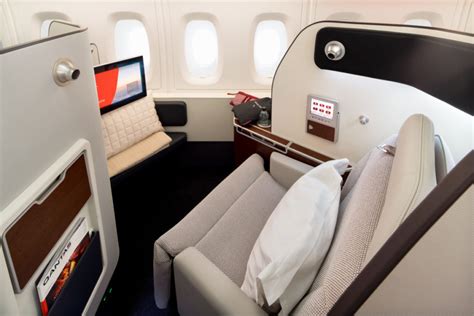
Today, every Qantas Airbus A380 features the airline’s flagship four-class cabin, including one of the world’s most exclusive international First Class products.
Recent refurbishments transformed these aircraft into some of the airline’s finest cabins by introducing:
- Refreshed First Class suites.
- Updated Business Class seating.
- New Premium Economy cabins.
- Improved inflight entertainment.
- Redesigned lounge areas.
- Modernized cabin interiors.
Ironically, these investments make the aircraft more attractive today than they were before the pandemic.
However, their successors tell a different story.
Most future Qantas long-haul aircraft are expected to feature Business Class, Premium Economy, and Economy, eliminating traditional First Class except on specially configured Project Sunrise Airbus A350-1000 aircraft.
That represents one of the most significant changes to Qantas’ premium strategy in decades.
For years, First Class served not only as a revenue product but also as a statement of prestige, helping position Qantas alongside the world’s leading premium airlines. Yet evolving passenger preferences increasingly favor larger Business Class cabins and expanded Premium Economy seating, making traditional First Class progressively harder to justify economically.
The A380 retirement therefore signals the gradual disappearance of an entire travel experience—not merely an aircraft.

Why Travelers Should Not Wait Too Long
Many travelers naturally postpone special aviation experiences, assuming another opportunity will always exist.
The Airbus A380 retirement changes that calculation.
Although the official timeline begins in 2032, fleet withdrawals almost certainly will occur gradually. As aircraft leave service one by one, fewer routes will continue operating the superjumbo. Aircraft substitutions may become increasingly common, making it more difficult to specifically book the A380.
Passengers hoping to experience the refurbished First Class suites, spacious premium cabins, or simply enjoy flying aboard the world’s largest passenger aircraft may find that availability steadily declines during the aircraft’s final years.
The announcement effectively starts a countdown that extends beyond aviation enthusiasts. Luxury travelers, frequent flyers, and collectors of unique travel experiences now have a clearly defined window before one of commercial aviation’s most iconic journeys begins disappearing.
What the Airbus A380 Legacy Means for Global Aviation
When the Airbus A380 entered commercial service, it represented the industry’s belief that larger aircraft connecting major international hubs would define the future of long-haul travel.
Instead, the market evolved in a different direction.
Aircraft such as the Airbus A350 and Boeing 787 demonstrated that efficiency, flexibility, and lower operating costs mattered more than maximum passenger capacity. Airlines increasingly shifted toward serving more destinations with smaller aircraft rather than concentrating passengers through giant hub airports.
Yet that evolution does not diminish the A380’s achievements.
The aircraft redefined passenger comfort, dramatically reduced cabin noise, introduced extraordinary premium spaces, and became an unmistakable symbol of international aviation. Even airlines that ultimately retired the type acknowledged its remarkable passenger appeal.
Qantas’ carefully managed retirement strategy recognizes that reality. Rather than discarding the aircraft prematurely, the airline is extracting maximum value while allowing travelers a final opportunity to experience one of aviation’s greatest engineering accomplishments.
The Clock Is Officially Ticking
The confirmation that Qantas will begin retiring its Airbus A380 fleet in 2032 transforms what was once speculation into a clear timeline. While the aircraft will remain a central part of the airline’s long-haul operations for several more years, its future is no longer open-ended.
Behind the announcement lies a sweeping transformation that will reshape Qantas for decades. New Airbus A350s, Boeing 787 Dreamliners, Airbus A220s, and A321XLRs will deliver greater efficiency, lower emissions, and improved economics across the airline’s network. They will become the backbone of Australia’s flagship carrier as it enters a new era of international aviation.
For passengers, however, the emotional significance lies elsewhere. Every remaining Airbus A380 flight now represents part of a finite chapter. Every First Class journey aboard the superjumbo becomes a little more special knowing that the experience is approaching its conclusion.
The Airbus A380 will always remain one of the most ambitious commercial aircraft ever built, but for Qantas, its legacy is becoming something even more meaningful. It is the aircraft that defined an era of Australian long-haul luxury, elevated First Class into an unforgettable experience, and carried millions of travelers across oceans in unmatched comfort. With retirement finally scheduled, the countdown has officially begun—and every remaining flight has become part of aviation history.