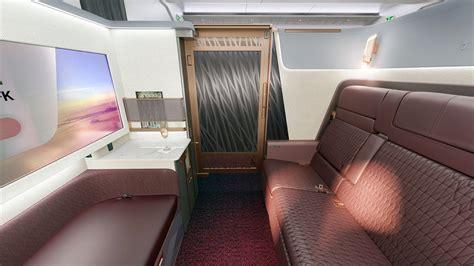
The modern first class cabin is no longer defined by width alone. It is defined by relevance. Over the past two decades, business class has undergone a quiet arms race, transforming from angled recliners into private suites with doors, lie-flat beds, fine dining, and lounge-style service. That escalation has compressed the traditional hierarchy of premium travel, forcing airlines and manufacturers to confront an uncomfortable question: what, exactly, is first class for anymore?
Airbus has decided not to answer that question with incrementalism. Instead, it is using the A350-1000 as a laboratory for reinvention, proposing a radically different vision of first class that blurs the line between commercial aviation and private jet travel. This shift is not cosmetic. It is strategic, architectural, and deeply tied to how Airbus wants airlines to perceive the A350-1000 itself.
The result is not a seat, or even a suite, but a redefinition of cabin purpose. Airbus is signaling that first class must justify its existence through experiences that business class, no matter how polished, simply cannot replicate.
The Shrinking Gap That Forced a Rethink
When British Airways introduced the first fully lie-flat business class seat in 2000, it unintentionally set off a chain reaction. Airlines discovered that premium travelers were willing to pay significantly more for sleep, privacy, and dignity at 35,000 feet. Over time, business class absorbed features once reserved for first class, including direct aisle access, Michelin-level catering, and personalized service rituals.
This evolution created a paradox. First class remained expensive to install and operate, yet its differentiation eroded. Some airlines responded by removing it entirely, concluding that a strong business class generated better returns. Others chose a different path, doubling down on ultra-premium exclusivity rather than surrendering the top tier.
Airbus is firmly aligned with the latter camp. The company recognizes that first class cannot survive as a slightly better business seat. It must become something else entirely, and the A350-1000 provides the physical canvas to attempt that transformation.
Airbus Airspace and the Marketing Power of Vision
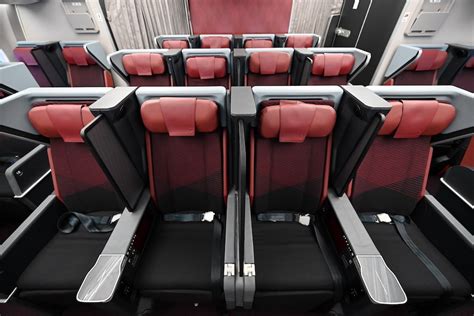
The new first class concept revealed at the Aircraft Interiors Expo 2025 is officially a design study, not a certified product. That distinction matters. Airbus is not selling a finished cabin; it is selling an idea. This approach allows the manufacturer to gather airline feedback, test passenger reactions, and refine the narrative around what the A350-1000 can represent.
This concept sits squarely within Airbus’ broader Airspace philosophy, which treats the cabin as an emotional environment rather than a seating chart. Airspace emphasizes openness, quietness, intuitive lighting, and visual calm, pushing back against the density-driven logic that dominated earlier widebody designs.
From a strategic standpoint, the message is clear. Airbus wants airlines to see the A350-1000 not merely as a long-range workhorse, but as a flagship platform capable of hosting the most exclusive cabins in commercial aviation. The first class concept is proof of capability, not obligation, giving airlines a flexible blueprint they can adapt to their own brand identities.
Inside the First Class Master Suite Concept
At the center of Airbus’ proposal is the First Class Master Suite, a cabin design that leverages the A350-1000’s wide fuselage in unconventional ways. The layout uses a 1-1-1 configuration, with the most dramatic feature placed between the two aisles: a Double Suite designed for two passengers traveling together.
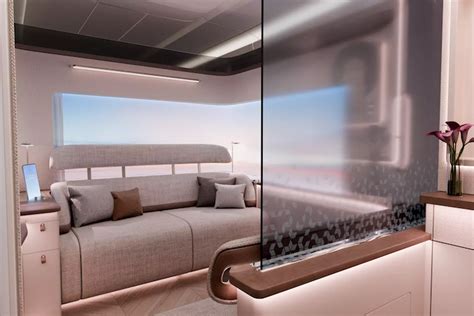
This is not a seat with privacy walls. It is a private living space. The Master Suite is conceived as a zone where passengers can lounge, dine, work, change clothes, and sleep without ever leaving their personal environment. The centerpiece is a full-size double bed, paired with face-to-face dining, a mini-bar, and a dedicated changing area.
Because the central suite has no windows, Airbus compensates with a large curved digital display that simulates outside conditions. Ambient lighting shifts to mimic daylight, sunset, and night, supporting circadian rhythms and reducing jet lag. This is environmental design applied with almost theatrical intent, replacing the view outside with a carefully curated sense of time and space.
Reengineering the Cabin to Create Space
One of the most radical aspects of the concept is not visible at first glance. To enable such expansive suites, Airbus proposes relocating lavatories, storage areas, and crew rest access stairs into a separate central module outside the main passenger cabin. This architectural move frees up premium real estate while increasing privacy and reducing foot traffic through first class.
This approach reflects a deeper shift in cabin thinking. Instead of squeezing luxury into predefined zones, Airbus is reshaping the internal geography of the aircraft. The cabin becomes less about rows and more about rooms, each with a specific emotional and functional purpose.
It also reinforces the Airspace ethos. By isolating service functions, the passenger environment feels quieter, calmer, and more intentional. For airlines chasing high-yield travelers who expect discretion above all else, this spatial separation is not a luxury; it is a requirement.
Why Airbus Believes First Class Still Matters
The persistence of first class is not driven by nostalgia. It is driven by yield. Ultra-premium travelers, including corporate executives, heads of state, and high-net-worth individuals, are less price-sensitive and more experience-driven. For airlines, a small number of first class seats can generate disproportionate revenue on flagship routes.
Airbus understands that airlines need a compelling story to justify reinstating or upgrading first class. The Master Suite concept provides that story. It positions first class as an experience that business class cannot replicate, no matter how advanced it becomes.
This strategy also counters a perception problem. Many airlines still view the A350-1000 as slightly less prestigious than aircraft like the Airbus A380 or the forthcoming Boeing 777X. By showcasing a first class environment that rivals private aviation, Airbus is reframing the A350-1000 as a legitimate flagship in its own right.
Which Airlines Are Likely to Embrace the Concept
As of now, only Japan Airlines and STARLUX Airlines operate the A350-1000 with a first class cabin. Japan Airlines, in particular, has demonstrated a willingness to sacrifice seat count for premium density, operating the aircraft with just 239 seats across four classes. This philosophy aligns closely with Airbus’ vision.
STARLUX, a newcomer with a strong luxury identity, is another natural candidate. Its brand narrative already leans heavily toward refined design and curated experiences, making the Master Suite concept a logical extension rather than a departure.
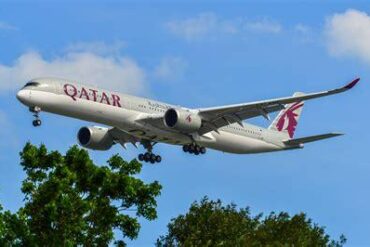
Other airlines are watching closely. Cathay Pacific has openly discussed the importance of a world-leading first class, though its future product is expected on the Boeing 777X rather than the A350-1000. Qatar Airways, under new leadership, has also signaled renewed interest in first class, even as it continues to emphasize its industry-leading business class.
The common thread is differentiation. Airlines that see first class as a strategic brand asset, rather than a nostalgic holdover, are the ones most likely to explore Airbus’ concept seriously.
The A350-1000 as a Physical Enabler of Luxury
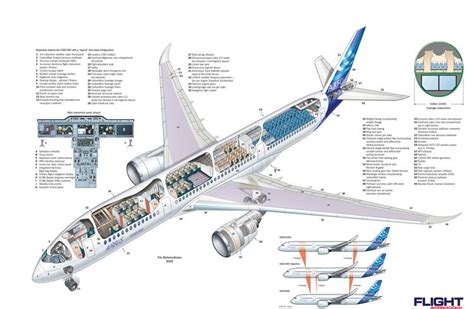
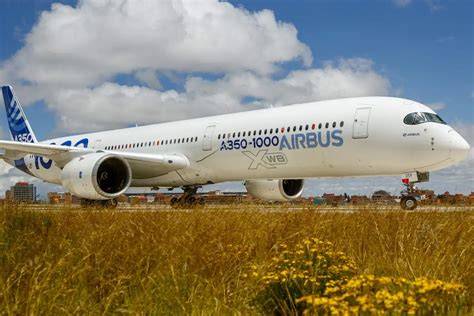
None of this would be plausible without the underlying aircraft. The A350-1000 is the largest aircraft Airbus currently produces, with a typical three-class capacity of 375 to 400 passengers and an exit limit of 480. Its cabin width of 18 feet 5 inches provides the lateral space needed for unconventional layouts, while its 190-foot cabin length offers flexibility in zoning.
With a range of 9,000 nautical miles and a cruise speed of Mach 0.85, the aircraft is optimized for ultra-long-haul missions where premium comfort matters most. Its advanced materials and aerodynamics also contribute to a quieter cabin, reinforcing the sensory calm Airbus wants to associate with Airspace interiors.
These physical characteristics make the A350-1000 uniquely suited to hosting a new generation of first class. Airbus is not forcing luxury into a reluctant platform. It is revealing what the platform was capable of all along.
A Signal to the Industry, Not a Finished Product
It is important to understand what Airbus is actually selling here. The Master Suite is not a catalog item awaiting orders. It is a signal. Airbus is telling airlines that the future of first class lies in boldness, not refinement, and that the A350-1000 can support that ambition without compromise.
This matters because aircraft manufacturers shape airline thinking as much as airlines shape cabins. By presenting a credible, emotionally resonant vision of first class, Airbus is nudging the industry toward a renewed belief in the category’s value.
The subtext is equally important. If airlines continue to reserve their most ambitious first class products for competing aircraft, the A350-1000 risks being perceived as merely efficient rather than aspirational. The new concept challenges that narrative head-on.
Redefining What First Class Is Supposed to Be
At its core, Airbus’ decision to rethink first class is about meaning. In an era where business class already offers privacy, comfort, and excellent service, first class must deliver something rarer: a sense of occasion. It must feel unmistakably different, even transformative.
The Master Suite does this by shifting the frame of reference. Instead of comparing first class to business class, it invites comparison with private aviation, luxury hotels, and exclusive residences. That is a much higher bar, but it is also the only bar that makes first class defensible in the modern market.
Airbus is not claiming that every airline should install such a cabin. It is asserting that the A350-1000 can host it, and that possibility alone changes how the aircraft is perceived. In a competitive widebody market, perception is power.
The first class experience is changing because it has to. Airbus has simply chosen to lead that change rather than react to it.