Argentina has a way of bending rules without breaking the spirit behind them. This is true in its politics, its art, its street life, and—perhaps most surprisingly—its aviation sector. To an outsider, especially one accustomed to the rigid predictability of US airlines, Flybondi can feel like an unsolved riddle at 35,000 feet. Yet to understand Flybondi purely through the lens of punctuality metrics or customer service benchmarks is to miss the point entirely. This airline is not an operational experiment gone wrong. It is a cultural artifact with wings, a flying expression of a country where time is elastic, improvisation is survival, and access matters more than polish.
A New Title for an Old Idea: Flybondi and the Radical Meaning of Cheap Flights
Flybondi did not invent low fares, but it radically redefined what those fares mean in Argentina. In mature aviation markets like the United States, low-cost carriers exist to compete within an already saturated ecosystem. They shave costs, add fees, and promise efficiency through scale. In Argentina, Flybondi emerged into a fundamentally different reality: a country where flying was long perceived as a privilege reserved for the affluent, the corporate, or the foreign.
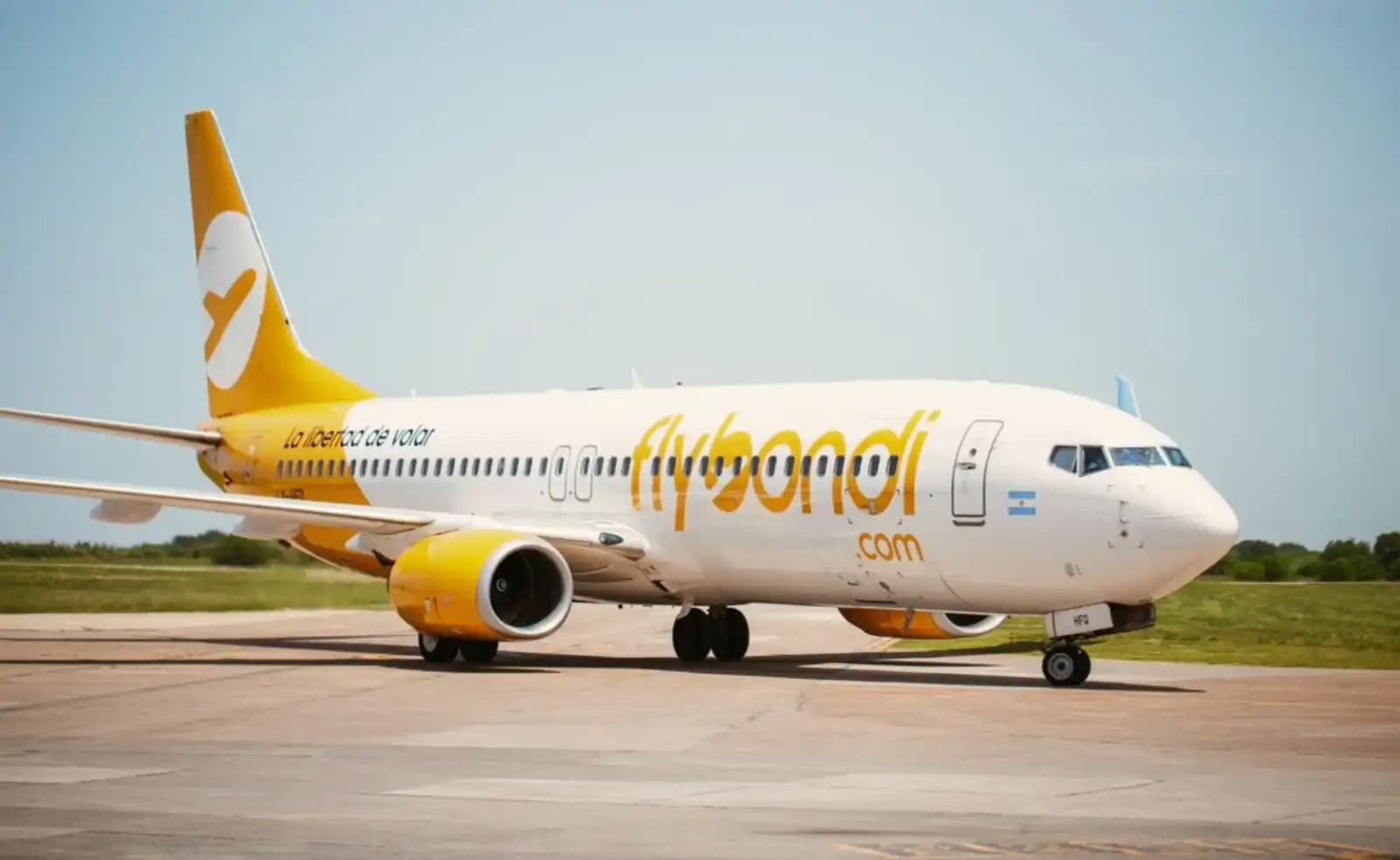
The airline’s core promise—“la libertad de volar,” the freedom to fly—was not marketing fluff. It was a social proposition. For millions of Argentines, Flybondi represented their first realistic chance to board an aircraft at all. That context changes everything about how the airline operates, how it is perceived, and why its many flaws are often tolerated, laughed at, or even embraced.
An Aviation Market That Never Learned to Crawl
Argentina’s commercial aviation industry skipped several evolutionary steps. While Europe and the US spent decades refining low-cost models, deregulating markets, and training consumers to accept trade-offs, Argentina arrived late to the game. Until the mid-2010s, the domestic market was dominated by Aerolíneas Argentinas, a flag carrier shaped more by national identity than competitive pressure.
When Flybondi launched in 2016 and began flying in early 2018, it entered a market that lacked not only low fares but also low-cost expectations. The rules—both formal and informal—were still being written. Infrastructure was uneven. Labor relations were tense. Regulatory frameworks shifted with political winds. Into this volatility stepped an airline that embraced uncertainty rather than fighting it.
Flybondi’s Business Model: Simple on Paper, Chaotic in Practice
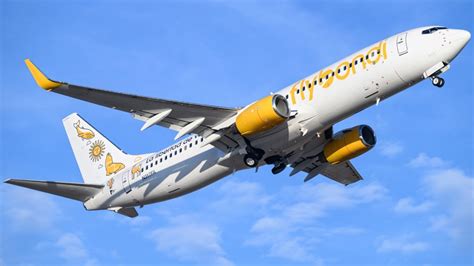
On paper, Flybondi looks familiar. High-density Boeing 737-800 aircraft. All-economy seating. Aggressive aircraft utilization. Direct online sales. Ancillary revenue. Point-to-point domestic routes focused on leisure demand. These are standard ingredients in the global ultra-low-cost recipe.
In reality, the execution is far messier. Aircraft utilization targets often collide with maintenance bottlenecks. Tight schedules unravel under airport congestion and staffing shortages. Digital systems struggle with foreign passports and irregular operations. What emerges is not efficiency, but improvisation.
Yet this improvisation is not accidental. It is tolerated internally and externally because the airline’s mission is not precision—it is access.
A Reputation Built on Jokes, Not Complaints
Ask an Argentine about Flybondi and you are unlikely to receive a formal review. You will get a joke. The airline “flies when it wants.” Flights “exist in theory.” Arrival times are “philosophical.” These remarks are not expressions of rage; they are coping mechanisms wrapped in humor.
The laughter matters. It signals an understanding between airline and passenger. Flybondi does not pretend to be reliable. Passengers do not pretend to be surprised. This unspoken contract is deeply cultural. In a society accustomed to economic instability, inflation shocks, and bureaucratic absurdities, uncertainty is not a dealbreaker. It is the baseline.
Price as the Ultimate Equalizer
Flybondi’s fares routinely undercut Jetsmart by around 30% and Aerolíneas Argentinas by as much as 50%. For middle- and working-class Argentines, these differences are not marginal—they are decisive. A family trip that once required days on a long-distance bus can suddenly be completed in hours. A domestic vacation becomes plausible. A first flight becomes possible.
This is why criticism rarely translates into abandonment. Flybondi’s market share has fluctuated and even declined, but its social relevance remains intact. The airline is not competing for loyalty in the traditional sense. It is competing against the idea that flying is unattainable.
When a Ticket Is Not a Seat
One of Flybondi’s most bewildering quirks is the separation between purchasing a ticket and being guaranteed a seat. Standby allocations, last-minute boarding passes without seat numbers, and gate-level decision-making via WhatsApp are not rumors—they are operational realities.
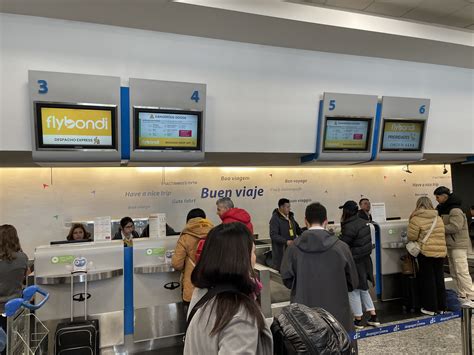
To an American traveler, this borders on the unthinkable. In Argentina, it is inconvenient but survivable. The airline’s internal logic prioritizes moving as many people as possible, even if the process defies international norms. It is not elegant. It is functional—most of the time.
Communication as an Afterthought
Delays, reprogrammed flights, and outright cancellations often arrive with minimal explanation. Emails may appear hours late or not at all. Customer service channels are notoriously difficult to navigate. Refunds can feel mythical.
And yet, outrage remains muted. Why? Because expectations are calibrated differently. Many passengers plan with buffers. They travel with flexibility. January, peak summer season, is not about rigid schedules—it is about being somewhere else, eventually.
First-Time Flyers and the Democratization of the Sky
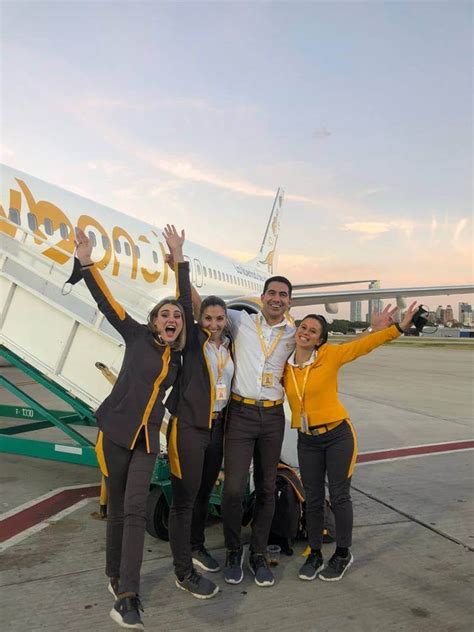
Perhaps the most revealing detail of Flybondi’s operation is not found in its on-time performance data but in its cabins. On certain routes, a striking proportion of passengers are flying for the first time. Cabin crew announcements asking first-time flyers to raise their hands are not ceremonial; they are necessary.
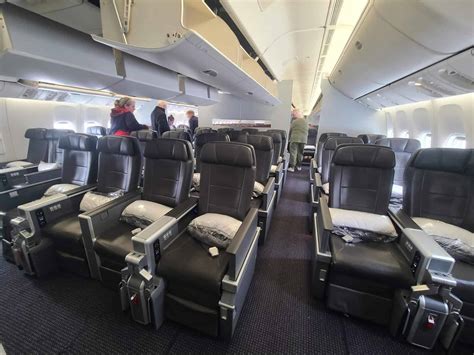
This is the airline’s quiet triumph. Every delayed departure still departs with people who would not otherwise be there at all. For them, inconvenience is secondary to opportunity.
Foreign Expectations vs Local Realities
For international travelers, especially those accustomed to US or EU consumer protections, Flybondi can be a shock. The lack of predictability, the casual attitude toward schedules, and the difficulty securing refunds clash sharply with familiar norms.
This does not make Flybondi deceptive. It makes it misaligned with foreign expectations. The airline is not designed for tourists optimizing tight itineraries. It is designed for locals maximizing possibility.
Why Flybondi Is Not Spirit, Ryanair, or Any US Analog
Comparisons to Spirit Airlines or Ryanair miss the deeper truth. Those carriers operate within stable regulatory environments, robust infrastructure, and consumer bases trained to navigate fine print. Flybondi operates in a country where volatility is constant and improvisation is cultural currency.
Spirit and Ryanair sell inconvenience in exchange for reliability. Flybondi sells access in exchange for certainty. These are fundamentally different value propositions.
Operational Chaos as a Feature, Not a Bug
From a traditional aviation perspective, Flybondi’s model looks broken. From a sociological perspective, it looks inevitable. The airline mirrors the rhythms of Argentina itself: adaptive, resilient, occasionally exasperating, and stubbornly alive.
This does not excuse poor communication or unpaid refunds. It explains why the airline persists despite them.
The Real Purpose of Flybondi
Flybondi exists to expand the definition of who gets to fly. It is not here to impress analysts or satisfy foreign standards. It is here to lower the psychological and financial barrier to air travel in a country where both have historically been high.
For Argentines, Flybondi is not an airline you trust—it is an airline you use. That distinction is everything.
A Cautionary Tale for Visitors
Foreign travelers can absolutely use Flybondi, but only with clear eyes. Flexible schedules, backup plans, and emotional detachment are essential. The savings can be substantial. The stress can be real.
The airline’s greatest mistake is not unreliability; it is failing to clearly communicate its own nature to outsiders. Locals already understand the rules of the game.
Freedom, Redefined at Altitude
In the end, Flybondi’s freedom is not about smooth operations or punctual arrivals. It is about possibility. About breaking a long-standing association between flying and privilege. About accepting that sometimes the journey includes delays, detours, and unexpected hotel nights—and that this, too, is part of travel.
Flybondi does not ask passengers to believe in perfection. It asks them to believe that getting there at all is worth the mess along the way. In Argentina, that is not a flaw. It is a philosophy.