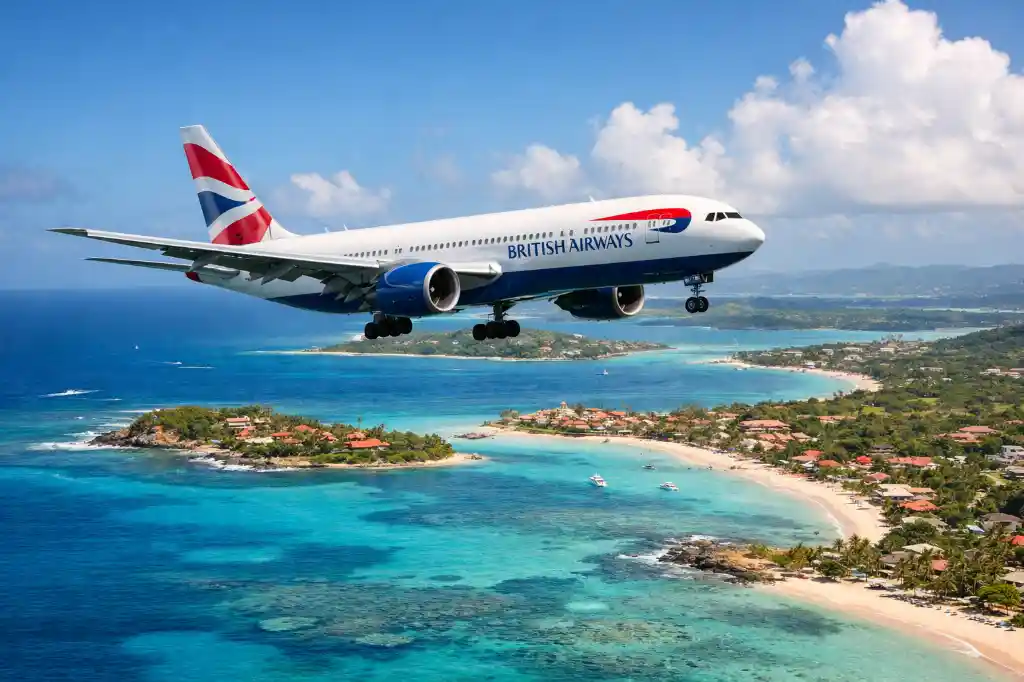
British Airways is instinctively associated with London, red tails lifting off from Heathrow or Gatwick toward every corner of the globe. Yet hidden inside its vast network is a small but fascinating collection of nonstop flights that never touch British soil at all. These routes exist because of fifth freedom rights, allowing the airline to sell tickets between two foreign countries as part of a longer UK-linked service. The result is a group of flights that are operationally practical, commercially opportunistic, and occasionally downright surprising.
What makes these services compelling is not just their legal nuance but their sheer contrast. Some are among the shortest flights British Airways operates anywhere, while others connect major global cities on opposite sides of the planet. Together, they reveal how a legacy carrier quietly stretches its network without launching fully standalone bases abroad.
British Airways’ Fifth-Freedom Network Explained
In airline economics, fifth freedom routes are strategic tools. They allow carriers to improve aircraft utilization, tap into niche demand, and add resilience to long-haul services that might otherwise struggle with seasonality. For British Airways, these flights always remain tied to a UK-originating service, but passengers can book the foreign leg independently.
Unlike standalone foreign routes operated by some European rivals, British Airways’ fifth-freedom flights remain unmistakably British in flavor. Aircraft, crews, onboard service, and scheduling all align with BA’s long-haul structure, even when the journey itself is a brief regional hop.
Antigua to St. Kitts: British Airways’ Shortest Flight
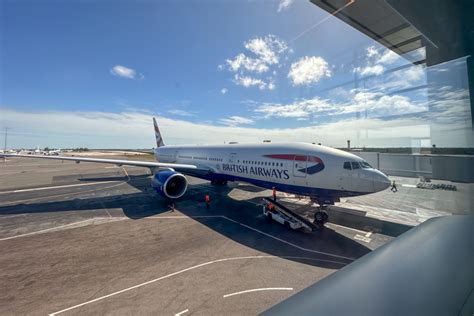
This route barely lasts long enough to finish a cup of tea. Operating between Antigua (ANU) and St. Kitts (SKB), the flight spans just 54 nautical miles, making it the shortest commercial service in British Airways’ entire global network. Typically flown by a Boeing 777-200ER, the journey often takes around 15 minutes from wheels-up to touchdown.
The flight has operated since 2009 as part of a Gatwick-based Caribbean rotation, offering local passengers a widebody experience on a segment shorter than many airport taxi rides. It is aviation absurdity in the best possible way, and a perfect example of how network logic can create unexpected outcomes.
Nassau’s Twin Connections: Grand Cayman and Providenciales
From the Bahamas, British Airways operates two distinct fifth-freedom links that quietly serve high-end leisure demand. Nassau to Grand Cayman runs up to five times weekly, while Nassau to Providenciales operates twice weekly, both using Boeing 777-200ER aircraft routed through Heathrow.
These segments cater to a blend of premium leisure travelers and regional connections within the Caribbean basin. While demand to the UK remains the backbone, the ability to sell seats locally improves yields and strengthens BA’s presence in a region dominated by North American carriers.
South America’s Strategic Link: Rio de Janeiro to Buenos Aires
Among British Airways’ non-UK nonstop routes, none feels more conventional than Rio de Janeiro to Buenos Aires, yet it remains strategically important. Operated daily by a 777-200ER, this sector links two of South America’s most influential cities while forming part of BA’s Heathrow service.
The route attracts business travelers, connecting traffic, and premium leisure passengers, all benefiting from BA’s long-haul product on a high-demand regional corridor. It is a reminder that fifth freedom routes are not always exotic curiosities; sometimes they are simply smart network glue.
St. Lucia as a Caribbean Hub-in-Miniature
St. Lucia plays an outsized role in British Airways’ Caribbean strategy. From this island, BA operates multiple fifth-freedom flights to Georgetown (Guyana), Grenada, and Tobago, all tied to Gatwick-based services.
The St. Lucia–Georgetown route, launched in 2023, covers 461 nautical miles and uses a 336-seat Gatwick-configured 777-200ER. Guyana’s booming oil sector has driven international interest, and London remains its most important European market due to historical ties as a former British colony. Roughly 40% of European traffic to Guyana flows through the UK, making BA’s presence particularly relevant.
Meanwhile, services from St. Lucia to Grenada and Tobago reinforce regional connectivity while maximizing aircraft utilization during Caribbean rotations.
Singapore to Sydney: A Long-Haul Outlier
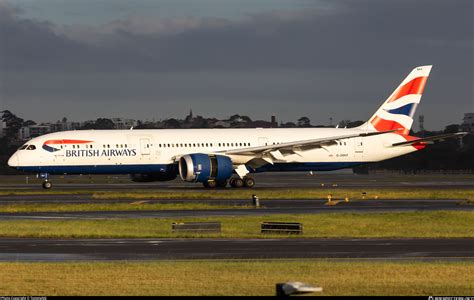
The most geographically dramatic of British Airways’ non-UK nonstop flights is Singapore to Sydney. Operating daily, this route uses either the Boeing 777-300ER or the 787-9 Dreamliner, depending on season, as part of BA’s flagship Heathrow–Singapore–Sydney service.
Unlike the Caribbean hops, this sector is a full-scale long-haul flight competing directly with Asia-Pacific heavyweights. It showcases BA’s confidence in its premium product and highlights how fifth freedom rights can place a European carrier deep inside one of the world’s most competitive aviation corridors.
Routes That Have Quietly Disappeared
Not every experiment endures. British Airways previously operated a fifth-freedom service between Antigua and Aruba, covering 552 nautical miles, from 2023 to 2025. Despite relatively low operational risk, demand proved insufficient, particularly given Aruba’s stronger ties to the Netherlands than the UK. The route’s quiet cancellation underscores how even well-structured fifth-freedom flights remain vulnerable to local market realities.
Why These Routes Matter
Taken together, these eight nonstop routes reveal British Airways at its most tactical. They show an airline willing to exploit regulatory freedoms, historical ties, and geographic logic to fine-tune its long-haul network. Some flights are astonishingly short, others intensely competitive, but all serve a purpose beyond novelty.
For aviation enthusiasts and industry watchers, these services offer a rare glimpse into the subtle mechanics of global airline strategy, where even a 15-minute hop can play a meaningful role in keeping a long-haul giant efficiently connected.