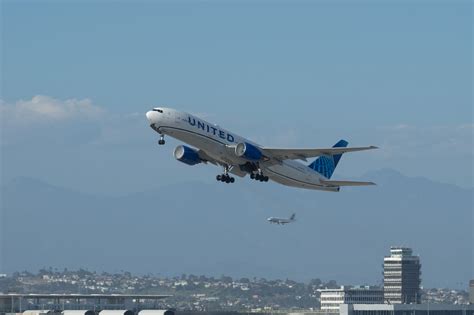
United Airlines, the Chicago-based legacy carrier and founding member of the Star Alliance, has continued its aggressive domestic and international expansion in 2025, underpinned by a sprawling network of hub-and-spoke operations across key U.S. airports. With more than 1,000 aircraft in active service and an unrivaled widebody fleet among American carriers, United is maximizing capacity and frequency on routes that underpin both its business travel segment and leisure markets. But it’s not just the airline’s sheer scale that surprises aviation watchers — it’s also where this capacity is being deployed. The #9 most popular route in United’s entire 2025 portfolio is a standout surprise, and it speaks volumes about shifting passenger demand.
Chicago To New York LaGuardia: United’s Crown Jewel In 2025
The single busiest route for United Airlines in 2025 is the well-trodden corridor between Chicago O’Hare International Airport (ORD) and New York LaGuardia Airport (LGA). Clocking in at 9,431 flights annually and offering over 1.53 million seats, this short-haul yet high-volume route continues to dominate due to its centrality for corporate travel, government connections, and financial services.
At just 733 miles, the route averages 13 flights daily, offering travelers unmatched flexibility. LaGuardia’s proximity to Midtown Manhattan (a mere 8 miles from Times Square) makes it an ideal airport for business travelers, while O’Hare’s massive operational footprint supports seamless connections across the Midwest and beyond.
United faces stiff competition here, with Delta Air Lines, American Airlines, and Spirit operating flights on this highly congested air corridor. Notably, this route sees a mixture of mainline narrowbody aircraft and United Express regional jets, catering to both high-frequency commuter traffic and premium business travelers.
Second Place: Chicago O’Hare To Newark Liberty — A Gateway Feeder
United’s second most popular route in 2025 is, interestingly, another Chicago–New York corridor: this time from ORD to Newark Liberty International Airport (EWR). While slightly shorter at 719 miles, the route is practically on par in terms of capacity — 8,500 annual flights and 1.52 million seats.
This route serves a dual purpose: it connects the Midwestern economic powerhouse with the New York metro area, and it also funnels passengers into United’s transatlantic network based at Newark. The airport acts as United’s key launchpad for European destinations like London, Rome, Geneva, and even less conventional ones such as Ponta Delgada and Marrakesh.
Despite stiff airspace congestion and competitive pressure, United continues to own this corridor by leveraging its well-oiled schedule and feeder traffic.
Orlando To Newark: Sun, Fun, And High Demand
Third on the list is the Orlando International Airport (MCO) to Newark Liberty International Airport (EWR) route — a testament to the enduring draw of Florida’s theme parks and beaches. United operates nearly 7,774 flights annually on this city pair, with over 1.36 million seats on offer.
Spanning 938 miles, this route caters to families, vacationers, and business conference attendees alike. Orlando’s proximity to Disney World, Universal Studios, and Daytona Beach ensures high year-round demand. What’s more, Newark’s strategic position makes it a valuable feeder hub for inbound international tourists heading to Florida’s attractions.
JetBlue, Spirit, American, and Delta all offer competing service on this corridor — but United’s high frequency and seat inventory make it a clear leader.
Houston To Denver: A High-Capacity Workhorse
Coming in at number four is the Houston George Bush Intercontinental Airport (IAH) to Denver International Airport (DEN) route. With 7,670 annual flights and nearly 1.6 million seats, this link between United hubs plays a crucial operational role.
The route spans 861 miles, averaging 10 daily flights, and operates primarily with narrowbody workhorses like the 737-800 and A320. Frontier is the only other carrier on this corridor, highlighting United’s near-monopoly on this particular pair.
Houston has grown into a vital United fortress since its Continental Airlines merger, and this route showcases its importance as a cross-regional connector feeding both domestic and international flights via Denver’s Western gateway.
Fifth Place: Houston To Chicago — A Strategic Southern Connector
The route between IAH and ORD is another power corridor in United’s domestic structure. Offering 7,668 flights annually and more than 1.45 million seats, this 925-mile route is a popular choice for both corporate travelers and hub connectors. Flight times hover around 2 hours and 50 minutes, operated largely on 737 family aircraft.
American, Frontier, and Spirit provide direct competition, while Southwest Airlines remains a wildcard with flights from Houston Hobby to Chicago Midway, offering a secondary airport alternative.
Newark To San Francisco: Coast-To-Coast Prestige
United’s sixth most popular route in 2025 is one of its longest: Newark Liberty to San Francisco International Airport (SFO). The 2,565-mile transcontinental flight operates 7,441 times annually, with more than 1.76 million seats deployed — the largest seat count of any route on this list.
Served by both widebody and narrowbody aircraft, this route is a premium battleground. With Alaska Airlines as the only direct competitor, United has established dominance through frequency, schedule reliability, and Polaris business class offerings.
The importance of this route also lies in its ability to connect Silicon Valley tech executives, finance professionals, and international passengers transiting through either coast.
San Francisco To Chicago: Midcontinent Super Route
With 7,205 annual flights and 1.63 million seats, the SFO to ORD route is United’s seventh busiest in 2025. Covering 1,846 miles, it serves as a coast-to-heartland corridor, linking two of United’s most important hubs. The route caters to a balanced mix of business traffic, intra-hub transfers, and point-to-point demand.
This corridor also benefits from United’s dual hub strength, enabling optimal timed connections for travelers heading to Asia via San Francisco or the East Coast and Europe via Chicago.
Eighth: Chicago To Denver — Rock-Solid Network Core
The ORD to DEN route is United’s eighth busiest, operated 7,158 times a year with over 1.56 million seats. At 888 miles, the route is a key backbone of United’s domestic framework, connecting passengers from the Midwest to the Rockies.
American, Frontier, and Southwest challenge United’s hold on this route, but the carrier’s hub dominance in both cities ensures a competitive advantage. Denver remains a strategic node for West Coast flows, ski tourism, and regional connections.
Number Nine: Chicago To Washington Reagan — The Surprise Outlier
Here’s the twist: United’s ninth most popular route in 2025 is not to its D.C. stronghold at Washington Dulles (IAD), but rather to Ronald Reagan Washington National Airport (DCA). With 7,112 annual flights and over 1 million seats, the ORD–DCA route stands out as a politically-charged corridor with sky-high demand.
At just 612 miles, this short hop has become a vital link between two politically and economically influential cities. Surprisingly, despite United’s heavy investment at IAD, it’s this smaller, more centrally located airport that takes the lion’s share of its D.C.-bound capacity from Chicago.
This is also a fiercely competitive space: American Airlines runs an aggressive schedule here due to its own hub at DCA. The route’s popularity underscores how proximity to downtown D.C., rather than operational ease, drives premium demand.
Tenth Place: Los Angeles To Newark — The Bicoastal Behemoth
Rounding out the list is the bicoastal route between Los Angeles International Airport (LAX) and Newark (EWR). Clocking in at 6,989 flights annually and nearly 1.6 million seats, this 2,454-mile corridor is a high-revenue staple in United’s portfolio.
This market is a vital connector for entertainment industry professionals, biotech execs, and international travelers heading in and out of the U.S. via Newark. United faces stiff competition from Delta (via JFK) and American (via LAX), but its frequent flights, high-capacity aircraft, and coast-to-coast reliability make it a go-to choice.
Final Thoughts: A Hub-and-Spoke Giant’s Network Strategy
United’s 2025 route map is a masterclass in leveraging hub power, regional dominance, and strategic positioning. With nearly all of its top ten routes flowing through ORD, EWR, IAH, SFO, and DEN, United reinforces the strength of its network architecture.
While routes like Chicago to LaGuardia and Newark to Orlando were expected, it’s the inclusion of ORD–DCA that turns heads. In a network built for scale, that particular corridor highlights how geo-political demand can trump even United’s own hub strategy. It’s a reminder that in aviation, proximity to power matters just as much as operational efficiency.