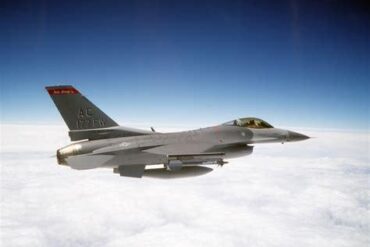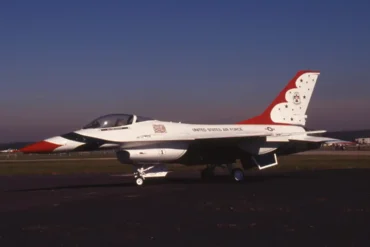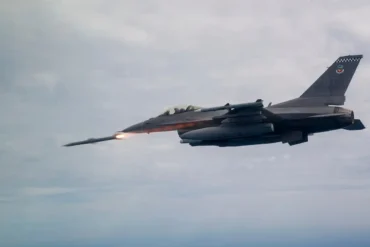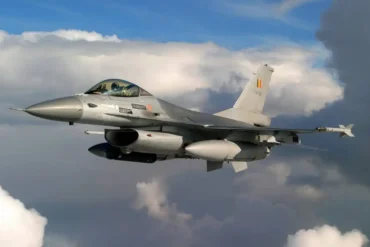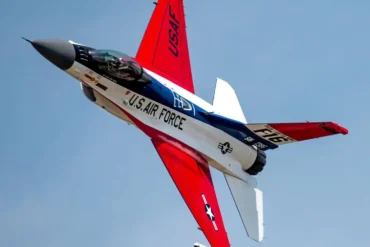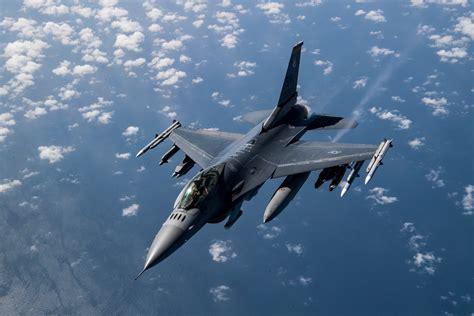
The history of modern air combat cannot be told without discussing the F-16 Fighting Falcon, a fighter aircraft that fundamentally reshaped how the United States Air Force approaches aerial warfare. Since its introduction in the late 1970s, the aircraft has evolved from a lightweight air-to-air platform into one of the most versatile multirole combat aircraft ever built. Its combination of agility, affordability, technological adaptability, and massive production numbers has allowed it to dominate the Air Force’s fighter fleet for decades.
Unlike many combat aircraft that excel in only one specialized mission, the F-16 achieved popularity because it could do nearly everything. It can intercept enemy fighters, strike ground targets with precision weapons, suppress enemy air defenses, and provide close air support to troops on the battlefield. This flexibility made the aircraft indispensable to U.S. military planners, who required a fighter that could be deployed quickly, maintained efficiently, and adapted continuously as warfare evolved.
More than 4,600 F-16 aircraft have been produced, making it one of the most widely built fighter jets in aviation history. Hundreds remain in service with the U.S. Air Force today, while thousands more operate with allied air forces around the world. The aircraft’s longevity is not simply the result of inertia or legacy status. Instead, it reflects a design that was fundamentally ahead of its time—an aircraft that blended performance, simplicity, and technological growth potential.
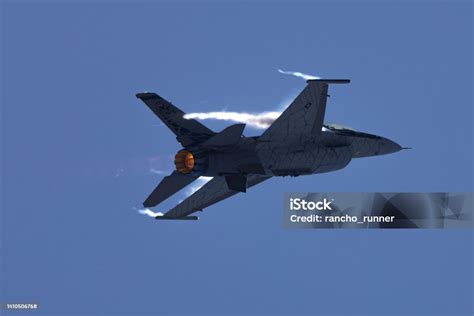
The Origins of the F-16 Fighting Falcon
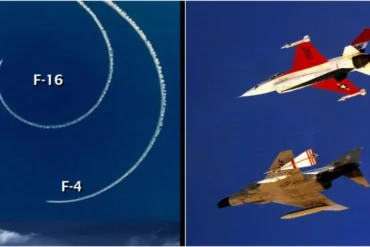
The F-16 Fighting Falcon emerged from the U.S. Air Force’s Lightweight Fighter Program in the early 1970s. At the time, American military strategists were reevaluating fighter design philosophies. Heavy, complex aircraft like the F-4 Phantom II had proven powerful but sometimes lacked the maneuverability required for close-range dogfights.
Military analysts studying combat experiences in the Vietnam War concluded that a lighter, more agile fighter could dramatically improve aerial combat effectiveness. The Lightweight Fighter Program aimed to produce an aircraft that emphasized maneuverability, acceleration, and pilot visibility, rather than sheer size or payload.
General Dynamics ultimately won the program with the prototype that would become the F-16 Fighting Falcon. The aircraft made its first flight in 1974 and officially entered service with the U.S. Air Force in 1978.
From the beginning, the aircraft embodied radical engineering ideas. Designers used relaxed static stability, meaning the aircraft was intentionally designed to be slightly aerodynamically unstable. This allowed it to maneuver more aggressively than traditional fighters. A sophisticated fly-by-wire control system constantly adjusted the aircraft’s flight surfaces to maintain stability.
These innovations allowed the fighter to perform high-energy maneuvers up to 9G, giving pilots a decisive advantage in dogfights.
Why the F-16 Became the Most Popular Fighter in the U.S. Air Force
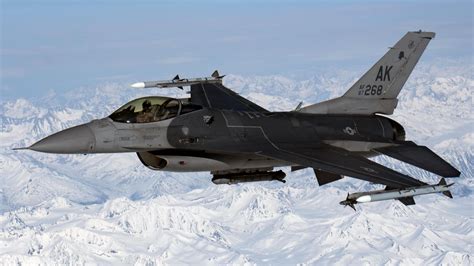
The primary reason the F-16 became the most popular fighter jet in the U.S. Air Force is simple: scale combined with versatility. At its peak, the Air Force operated more than 1,000 F-16 aircraft, a number unmatched by most modern fighter programs.
The aircraft’s operational cost played a major role in this widespread adoption. Compared with larger twin-engine fighters, the F-16 is less expensive to acquire and maintain, allowing the Air Force to purchase large numbers without overwhelming defense budgets. Lower maintenance requirements also enable higher sortie rates, meaning aircraft can fly more missions within a shorter timeframe.
Performance also contributes significantly to the aircraft’s popularity. Powered by either the Pratt & Whitney F100 or General Electric F110 turbofan engines, the F-16 can reach Mach 2.0, roughly 1,500 miles per hour (2,414 km/h). Despite its lightweight design, it possesses the speed and power required for modern air combat.
Yet performance alone does not explain its dominance. The aircraft’s greatest advantage lies in its multirole capability. Instead of specializing in a single mission, the F-16 can shift between multiple combat roles depending on mission requirements.
The aircraft routinely performs missions such as:
- Air superiority and air defense
- Ground attack and precision strike operations
- Close air support for ground forces
- Suppression of enemy air defenses (SEAD)
- Reconnaissance and battlefield surveillance
This operational flexibility allows commanders to deploy the same aircraft type across multiple missions, simplifying logistics and increasing overall combat effectiveness.
Pilot-Centered Design That Revolutionized Fighter Cockpits
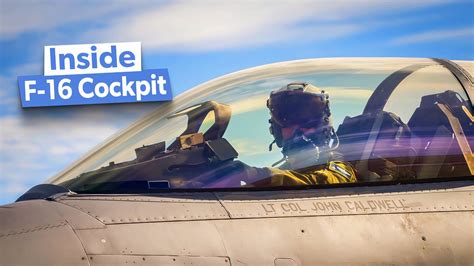
Another reason for the F-16’s enduring success lies in its pilot-focused cockpit design, which was revolutionary at the time of its development. Engineers recognized that human performance was just as important as raw aircraft capability.
The aircraft features a frameless bubble canopy, providing pilots with exceptional visibility in all directions. This unobstructed field of view dramatically improves situational awareness during dogfights and complex combat environments.
Equally innovative was the introduction of a side-mounted control stick instead of the traditional center stick used in earlier fighters. This design allowed pilots to maintain a more relaxed posture while maneuvering the aircraft during high-G turns.
Perhaps the most distinctive feature is the 30-degree reclined seat, which helps pilots tolerate sustained G-forces. During aggressive maneuvers, the human body experiences immense pressure as blood is forced away from the brain. The reclined seating position reduces this strain, allowing pilots to maintain consciousness and control even during intense aerial engagements.
The cockpit layout also integrates modern avionics and digital displays that simplify complex combat tasks. Over time, upgrades have added helmet-mounted targeting systems, enabling pilots to designate targets simply by looking at them.
Continuous Upgrades That Kept the F-16 Competitive
Many military aircraft fade into obsolescence after a few decades. The F-16 avoided this fate through continuous modernization programs that kept the aircraft technologically relevant.
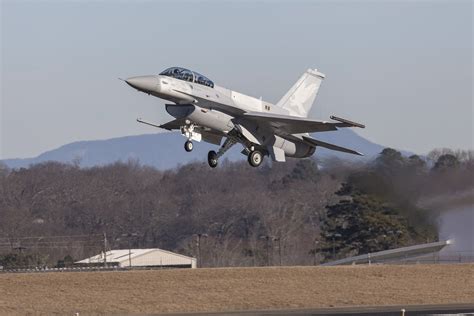
Over the years, successive upgrades introduced advanced sensors, avionics, and weapons integration. These improvements transformed early variants into sophisticated combat platforms capable of operating in modern digital battle networks.
One of the most significant technological upgrades is the AN/APG-83 Active Electronically Scanned Array (AESA) radar, installed on the newest F-16 Block 70/72 variants. AESA radar dramatically improves the aircraft’s ability to detect, track, and engage multiple targets simultaneously while resisting electronic interference.
Modernized F-16s can deploy an extensive arsenal of weapons, including:
- AIM-120 AMRAAM air-to-air missiles
- AIM-9X Sidewinder missiles
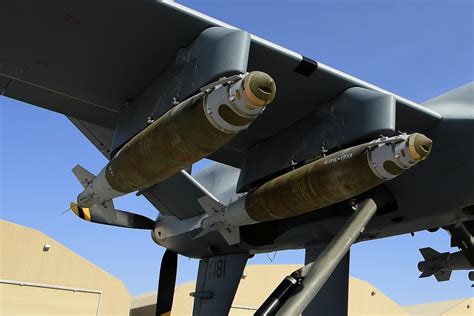
- JDAM GPS-guided bombs
- AGM-65 Maverick air-to-ground missiles
- AGM-88 HARM anti-radiation missiles
These weapons allow the aircraft to conduct precision strikes against both aerial and ground targets.
Global Adoption Strengthened the F-16’s Popularity
While the aircraft’s success in the United States is remarkable, its international adoption helped solidify its status as one of the most popular fighter jets in the world.
More than 25 countries operate the F-16, including Israel, Turkey, Greece, Poland, South Korea, and the Netherlands. Many of these nations rely on the aircraft as the backbone of their air defense forces.
This widespread adoption created significant strategic advantages. When allied nations operate the same aircraft type, joint military exercises and coalition operations become easier to coordinate. Pilots from different countries can train together using similar tactics, weapons, and operational procedures.
The aircraft’s export success also ensured continuous production lines and upgrade programs. As new technologies were introduced for international customers, those advancements often benefited the U.S. Air Force fleet as well.
Combat History Across Multiple Conflicts
The F-16’s popularity is also reinforced by an extensive combat record spanning several decades. Since the 1980s, the aircraft has participated in numerous military operations around the world.
During the Balkans conflicts of the 1990s, F-16 fighters played a key role in enforcing NATO no-fly zones and conducting precision strikes against military infrastructure. The aircraft’s ability to carry advanced targeting pods and precision munitions allowed it to strike targets with exceptional accuracy.
In Iraq and Afghanistan, F-16s performed a wide range of missions, including close air support for ground forces and suppression of enemy air defenses. Their ability to loiter near battlefields and deliver precision weapons made them valuable assets during counterinsurgency operations.
The aircraft also participated in Operation Odyssey Dawn in Libya in 2011, where it helped enforce a United Nations-mandated no-fly zone and conducted strikes against government forces.
These missions demonstrated the aircraft’s ability to adapt to both high-intensity warfare and complex asymmetric conflicts.
How the F-16 Compares With Other U.S. Fighter Jets
Although the F-16 Fighting Falcon is the most widely used fighter in the U.S. Air Force, it operates alongside several other powerful aircraft that serve different strategic roles.
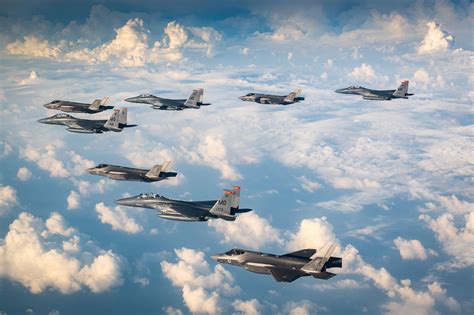
The F-15 Eagle, for example, was designed primarily as an air superiority fighter. With twin engines and a larger airframe, it offers greater range and payload capacity than the F-16. However, it is also significantly more expensive to operate, limiting how many units could be deployed.
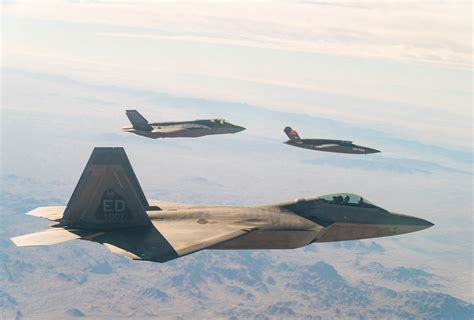
The F-22 Raptor represents the United States’ premier stealth air superiority fighter. Equipped with advanced stealth technology and powerful sensors, it excels at defeating enemy aircraft before being detected. Yet the aircraft’s extremely high cost means the fleet remains relatively small.
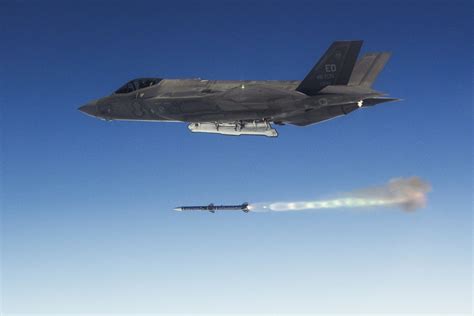
Similarly, the F-35 Lightning II is a fifth-generation multirole stealth fighter designed for network-centric warfare. While it offers cutting-edge capabilities, it is far more expensive than the F-16 in both acquisition and maintenance.
In this context, the F-16 occupies a crucial niche. It delivers strong combat capability at a fraction of the cost of newer stealth fighters, allowing the Air Force to maintain large operational fleets without sacrificing performance.
The F-16’s Role in Modern Geopolitical Tensions
Despite being introduced nearly five decades ago, the F-16 continues to play a vital role in modern military operations. In regions such as the Middle East, the aircraft remains one of the most widely used combat platforms.
During the 2026 Iran crisis, F-16 fighters have been deployed by both the United States and allied nations to conduct strike missions and defensive patrols. Their ability to carry precision weapons while maintaining high sortie rates makes them ideal for sustained air campaigns.
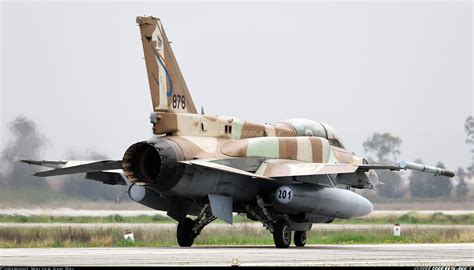
The Israeli Air Force’s F-16I “Sufa” variant represents one of the most advanced versions of the aircraft. This heavily modified model incorporates advanced avionics, extended range fuel tanks, and specialized electronic warfare systems designed for long-range strike missions.
Armed with weapons such as RAMPAGE stand-off missiles and AIM-120 AMRAAM air-to-air missiles, the aircraft can conduct deep strikes against strategic targets while defending itself against enemy aircraft.
Meanwhile, specialized F-16CJ “Wild Weasel” aircraft in the U.S. Air Force are dedicated to suppression of enemy air defenses. Equipped with the AGM-88 HARM anti-radiation missile and the AN/ASQ-213 HARM Targeting System, these aircraft detect and destroy enemy radar installations that guide surface-to-air missile systems.
Why the F-16 Remains Relevant in Modern Air Warfare
Few military aircraft remain operationally relevant for half a century. The F-16 Fighting Falcon continues to thrive because its design allows constant evolution.
Modern upgrade programs have extended the aircraft’s structural lifespan to 12,000 flight hours, enabling many airframes to remain operational well into the 2030s and potentially beyond. Meanwhile, new production variants continue to roll off assembly lines for international customers.
The aircraft’s balance of agility, affordability, and technological adaptability ensures that it complements newer fighters rather than being replaced entirely by them. While stealth aircraft like the F-35 handle high-threat missions against advanced air defenses, the F-16 continues to perform a wide range of tasks that require flexibility and reliability.
Its story illustrates a rare achievement in military aviation: a fighter jet that not only transformed aerial combat when it was introduced but also continued evolving to meet the demands of modern warfare.
More than forty years after its first operational flight, the F-16 Fighting Falcon remains the most popular fighter jet in the U.S. Air Force, a testament to one of the most successful aircraft designs ever produced.