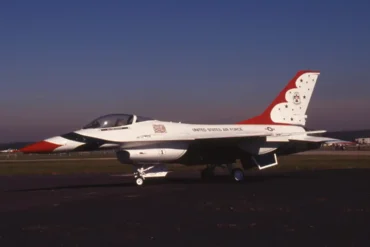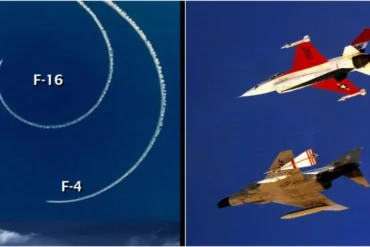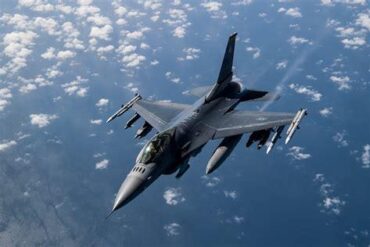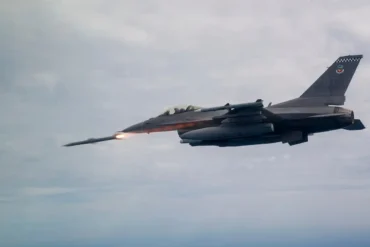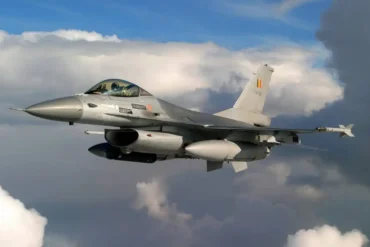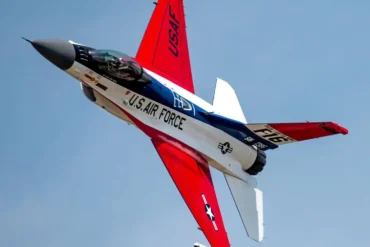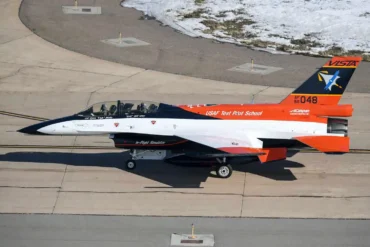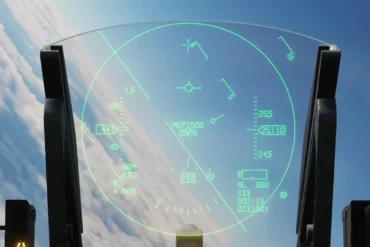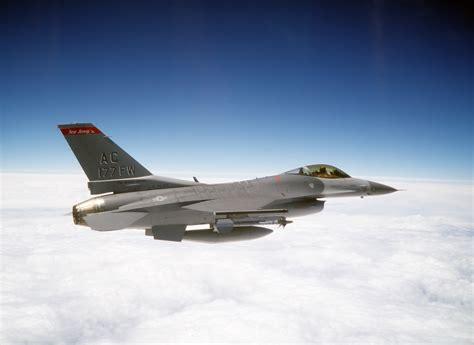
The F-16 Fighting Falcon remains one of the most recognizable and combat-proven fighter jets ever built. Designed during an era when agility had been sacrificed for brute force, the F-16 reversed the trend with a revolutionary approach to aerial warfare. Its lightweight airframe, blended wing-body design, and fly-by-wire control system created a machine capable of extreme maneuverability, redefining modern dogfighting.
What truly cemented the F-16’s dominance, however, was its versatility. It evolved from a pure air superiority fighter into a multi-role powerhouse, capable of precision ground strikes, suppression of enemy air defenses, and close air support. With over 4,500 units produced and widespread adoption across more than two dozen countries, the Viper became not just a fighter jet—but a global standard.
Yet even legends face challengers. Advances in stealth, avionics, radar systems, and missile technology have given rise to a new generation of aircraft capable of meeting—or exceeding—the F-16 in critical areas. These contenders are not merely competitors; they represent the evolving doctrine of aerial warfare in the 21st century.
By examining five standout fighters, it becomes clear that while the F-16 still holds its ground, it is no longer alone at the top.
Eurofighter Typhoon: The Agile Powerhouse Built for Air Superiority
The Eurofighter Typhoon is often described as one of the most capable non-stealth fighters ever produced—and for good reason. Developed by a European consortium, it was engineered from the ground up for high agility, sustained supersonic performance, and multi-role flexibility.
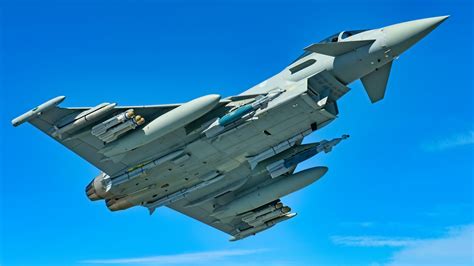
At the heart of its design is a delta wing paired with forward canards, a configuration that enhances lift and allows for aggressive maneuvering. Combined with a thrust-to-weight ratio exceeding 1:1, the Typhoon delivers blistering acceleration and tight turning capability—qualities essential in close-range engagements.
Unlike the single-engine F-16, the Typhoon utilizes twin engines, providing both increased power and redundancy. This allows it to reach speeds of up to Mach 2.35, slightly outperforming the Falcon in raw velocity. Its composite-heavy construction, including carbon fiber materials, also reduces radar visibility while maintaining structural strength.
The aircraft’s advanced avionics suite and extensive weapons compatibility elevate its lethality. With 13 hardpoints, it can carry a diverse arsenal ranging from air-to-air missiles like the Meteor to precision-guided bombs for ground strikes.
However, superiority comes at a cost—literally. The Typhoon is significantly more expensive and logistically demanding than the F-16. While it may outperform the Falcon in certain combat scenarios, the Viper’s simplicity, affordability, and global support network remain decisive advantages.
Sukhoi Su-57 Felon: Russia’s Stealth Challenger with Untapped Potential
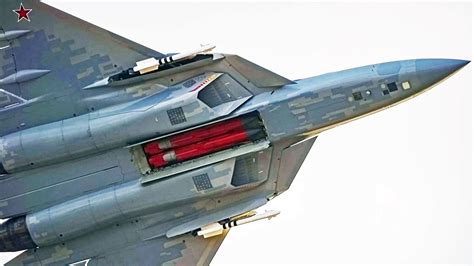
The Sukhoi Su-57 Felon represents Russia’s ambition to compete in the realm of fifth-generation stealth fighters. On paper, it appears formidable: supercruise capability, thrust-vectoring engines, and a design intended to reduce radar visibility.
One of the Su-57’s defining strengths is its extreme maneuverability. Thanks to 3D thrust vectoring, it can execute advanced aerial maneuvers that few aircraft can replicate. This gives it a theoretical advantage in dogfights, where unpredictable movement can be decisive.
Its combat ceiling of 60,000 feet and top speed of Mach 2 place it firmly within the upper tier of fighter performance. Additionally, the Felon is equipped with a wide array of modern weaponry, including long-range air-to-air missiles and precision strike capabilities for ground targets.
Despite these impressive specifications, the Su-57’s real-world effectiveness remains uncertain. Critics argue that its stealth characteristics fall short of Western fifth-generation standards. More importantly, limited production numbers—with only a few dozen units operational—severely restrict its strategic impact.
In contrast, the F-16 benefits from decades of combat experience, proven reliability, and extensive upgrades. While the Su-57 may hold technological promise, it has yet to demonstrate consistent superiority in operational environments.
MiG-35 Fulcrum: Advanced Avionics Meet Heavyweight Performance
The MiG-35 Fulcrum is Russia’s attempt to modernize the legacy of the MiG-29 into a 4.5-generation multi-role fighter capable of rivaling Western aircraft like the F-16.
At first glance, the MiG-35 appears formidable. It is larger and more powerful than the F-16, featuring twin engines that enable speeds of up to Mach 2.25. This added size also allows it to carry a larger radar system, specifically an Active Electronically Scanned Array (AESA) radar, which enhances detection range and target tracking.
The aircraft is designed for high-intensity conflict zones, with improved survivability and the ability to deploy a wide range of weapons. Its avionics suite supports advanced electronic warfare capabilities, making it a well-rounded combat platform.
However, performance on paper does not always translate to battlefield success. The MiG-35 has struggled with limited production and weak export demand, raising concerns about reliability and long-term support. Several potential buyers have opted for alternative aircraft, suggesting lingering doubts about its operational effectiveness.
Compared to the F-16, the MiG-35 may offer superior raw power and radar capability, but it lacks the combat-proven track record and global infrastructure that make the Falcon such a dependable choice.
Chengdu J-10C: China’s Agile Contender with Modern Edge
China’s Chengdu J-10C Vigorous Dragon has rapidly emerged as a serious competitor to the F-16, particularly in export markets. Designed with clear inspiration from Western fighters, it combines agility, modern avionics, and cost-effectiveness into a compelling package.
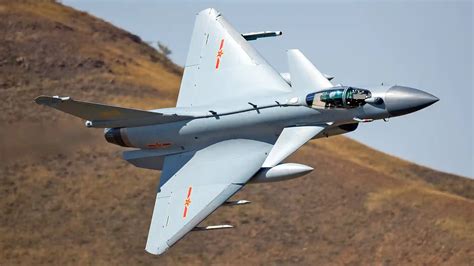
Visually and structurally, the J-10C shares similarities with the F-16 but incorporates forward canards, enhancing maneuverability. Its single-engine design and fly-by-wire system mirror the Falcon’s philosophy, while its engine delivers slightly higher thrust, giving it a performance edge in certain scenarios.
The J-10C is equipped with an AESA radar and advanced electronic warfare systems, enabling it to detect and engage targets at extended ranges. Its integration with the PL-15 long-range air-to-air missile significantly boosts its beyond-visual-range (BVR) combat capability.
Operational reports have suggested that the J-10C has performed effectively in regional conflicts, even challenging more established fighters. While these claims remain subject to debate, they highlight the aircraft’s growing credibility.
Where the F-16 relies on decades of refinement, the J-10C represents a modern, rapidly evolving platform—one that could potentially outpace older designs as technology continues to advance.
Dassault Rafale: The Multi-Role Master with Electronic Warfare Dominance
The Dassault Rafale stands as one of the most versatile and technologically sophisticated fighters in service today. Designed as a true omni-role aircraft, it seamlessly transitions between air superiority, ground attack, reconnaissance, and nuclear deterrence missions.
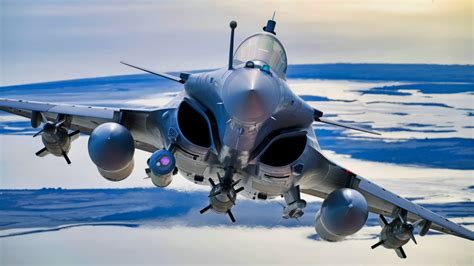
Its delta wing and canard configuration provide exceptional agility, allowing it to compete with the F-16 in close-range engagements. Powered by twin engines, the Rafale offers reliable performance and the ability to sustain high-speed operations.
What truly sets the Rafale apart is its SPECTRA electronic warfare system. This integrated suite combines radar warning, jamming, and decoy capabilities into a single platform, giving the aircraft a significant survivability advantage in contested environments.
Its AESA radar is capable of tracking up to 40 targets simultaneously, enabling superior situational awareness. Combined with a diverse weapons loadout, the Rafale excels in both air-to-air and deep-strike missions.
Although recent combat reports have raised questions about its performance in specific scenarios, confidence in the Rafale remains high. Nations continue to invest in the platform due to its flexibility, advanced systems, and proven operational capability.
When compared to the F-16, the Rafale offers greater technological sophistication and multi-role depth, though at a higher cost and with a smaller global footprint.
Why the F-16 Still Holds Its Ground
Despite facing increasingly capable rivals, the F-16 Fighting Falcon refuses to fade into obsolescence. Its enduring relevance lies not just in performance, but in a combination of adaptability, affordability, and combat history that few aircraft can match.
The Falcon’s continuous upgrades, including modern radar systems, improved avionics, and compatibility with advanced weapons, have kept it competitive against newer designs. Its global support network ensures availability of parts, training, and operational expertise—an often-overlooked advantage in sustained conflicts.
Moreover, the F-16’s cost-efficiency allows nations to field larger fleets, increasing overall combat power. In warfare, numbers still matter—and the Falcon delivers both quantity and quality.
The Evolving Balance of Air Power
The modern battlefield is no longer defined by a single dominant fighter. Instead, it is shaped by a dynamic balance of technology, strategy, and logistics. Aircraft like the Typhoon, Su-57, MiG-35, J-10C, and Rafale each bring unique strengths that can challenge the F-16 under the right conditions.
What emerges is not a clear winner, but a competitive ecosystem where multiple platforms can hold their own. The F-16 may no longer be unrivaled, but it remains a benchmark—a fighter against which all others are measured.
In the end, victory in the skies depends not just on the aircraft, but on how effectively it is deployed. And in that arena, the F-16 continues to prove that even decades after its debut, it is still very much in the fight.