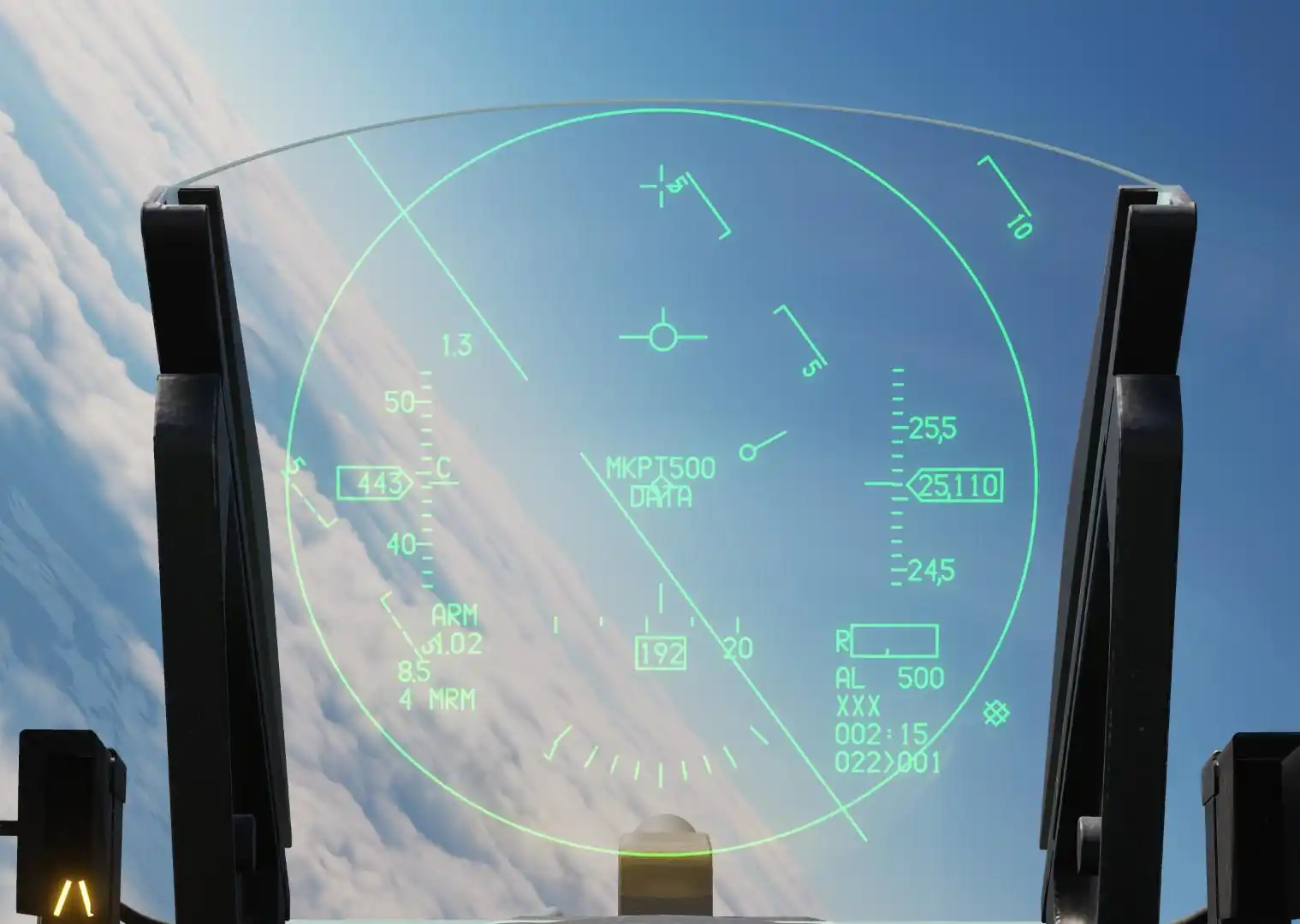
The F-16 Fighting Falcon is one of the most versatile and widely used fighter jets in the world, and its Heads-Up Display (HUD) plays a crucial role in its fire control system. This display provides pilots with real-time flight data, weapon targeting information, and sensor feedback, ensuring superior situational awareness in combat. Over the years, the F-16’s HUD has evolved significantly, integrating new technologies to enhance its functionality.
Core Functions and Display Modes
Target Lock and Shooting Assistance
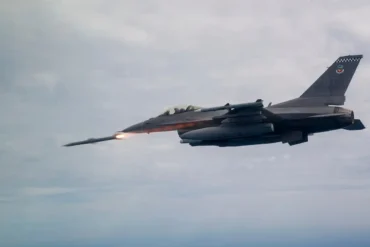
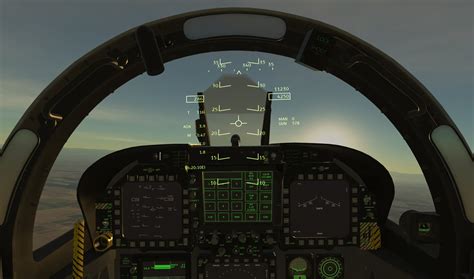
Once the F-16’s radar locks onto a target, the HUD displays critical data such as target heading, velocity, and distance. The system also generates a “Dead Point” symbol, which represents the calculated impact point of fired projectiles. The pilot simply aligns this symbol with the enemy aircraft to execute a precision strike.
Search Mode Display
When the radar is in search mode, the HUD provides basic situational awareness, showing only the general position of radar echoes. While detailed tracking information is absent, the system estimates the target’s movement using Doppler shift calculations, determining whether it is approaching or receding.
Technological Upgrades and Expansion
Wide Field-of-View HUD in Block 70/72
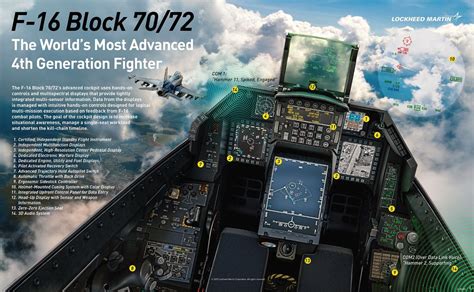
The latest F-16 Block 70/72 variants feature a wide field-of-view HUD developed by Elbit Systems. This upgrade offers higher resolution and advanced raster display capabilities, making it compatible with night operations and infrared sensor inputs (such as FLIR – Forward Looking Infrared). These enhancements significantly improve the aircraft’s combat effectiveness in low-visibility environments.
Digital Integration and Data Fusion
With an improved Integrated Data Modem (IDM), the HUD now receives and displays targeting data from ground observers and UAVs in real time. Projects such as “Sure Strike” have enabled the direct projection of target coordinates, while “Gold Strike” further enhances the system by supporting image transmission and multi-source data fusion.
Integration with Other Systems
Sensor Pod Compatibility
The F-16 HUD can integrate data from external sensor pods, including:
- LANTIRN Infrared Navigation Pod – Enhances night-flying and low-altitude attack capabilities.
- Sniper XR Targeting Pod – Provides high-resolution mid-wave FLIR imaging and laser designation for precision-guided munitions.
- Legion-ES IRST Pod – Facilitates air-to-air target tracking using infrared search and track (IRST) technology.
Joint Helmet-Mounted Cueing System (JHMCS)
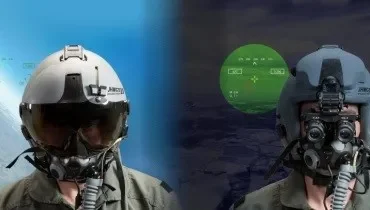
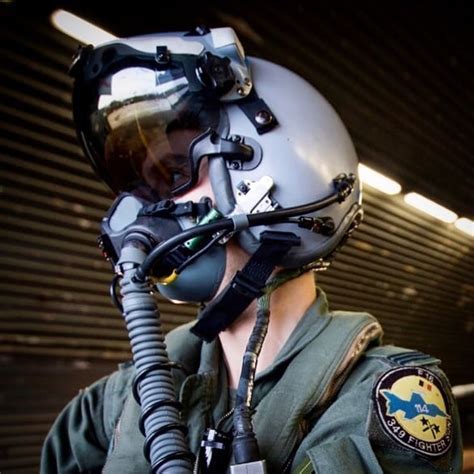
Some F-16 models, such as the Block 70/72, are equipped with the JHMCS II (Joint Helmet-Mounted Cueing System). This system projects targeting information directly onto the pilot’s visor, allowing for off-boresight missile launch capability. By integrating HUD symbology with head-tracking technology, JHMCS enables “look and shoot” targeting, particularly useful for deploying high off-axis missiles like the AIM-9X.
Human-Machine Interface Enhancements
Optimized Display Layout
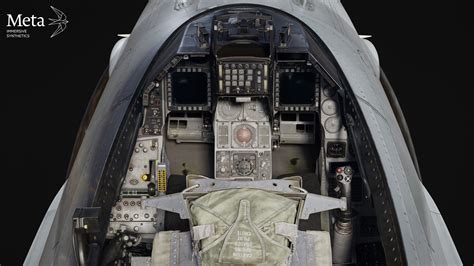
The F-16 HUD features a color multilayer display, combining a central primary HUD screen with two multifunction LCD screens (such as Honeywell’s 10×10 cm LCD panels). This layout strategically segments radar, navigation, and weapon status data, reducing the need for frequent head movements and improving reaction times in combat.
Improved Pilot Ergonomics
To enhance pilot comfort and efficiency, the seat recline angle in the F-16 has been increased from 13° to 30°. Coupled with a bubble canopy design, this adjustment provides broader HUD visibility while minimizing pilot fatigue during high-G maneuvers.
Real-World Combat Applications
Danish F-16 MLU Upgrade
Denmark’s Mid-Life Update (MLU) F-16s incorporate HUD enhancements that support AIM-120B AMRAAM and AIM-9M Sidewinder missile targeting calculations. These aircraft also feature PIDSU (Pylon Integrated Dispenser System Upgrade), which integrates electronic warfare capabilities with weapon deployment, ensuring superior combat effectiveness.
Night Combat Operations
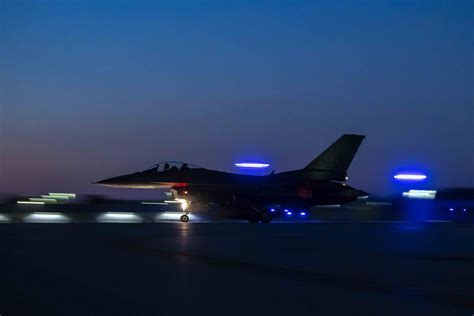
Certain F-16 variants, such as the ADF (Air Defense Fighter) Interceptor, are equipped with high-intensity spotlights mounted on the left side of the nose. These assist in night-time target identification, complementing the HUD’s night vision modes to enhance interception capabilities in low-light conditions.
Conclusion
The F-16 HUD system has undergone multiple generations of upgrades, evolving from a basic flight data display to a highly integrated combat information hub. By enhancing reliability, expandability, and human-machine interaction efficiency, the HUD remains one of the most critical technologies supporting the F-16’s operational longevity for nearly half a century.
FAQ
1. What makes the F-16 HUD different from other fighter jet HUDs?
The F-16 HUD is highly integrated with radar, sensor pods, and digital targeting systems, offering superior real-time data fusion compared to older HUD designs. It also features wider field-of-view technology in later models like the Block 70/72, enhancing situational awareness.
2. Can the F-16 HUD operate in low-visibility conditions?
Yes, modern F-16 HUDs, particularly in Block 70/72, support night operations and infrared sensor displays. The integration of FLIR and night vision-compatible symbology ensures effective targeting even in poor visibility environments.
3. How does the JHMCS helmet system enhance F-16 HUD capabilities?
The Joint Helmet-Mounted Cueing System (JHMCS) allows off-boresight targeting, meaning pilots can lock onto and fire at targets simply by looking at them. This system is particularly effective for deploying high off-axis missiles like AIM-9X, significantly improving dogfight performance.