The April 8, 2026 incident involving Southwest Airlines Flight 568 is a stark reminder that even the most trusted aviation systems can become dangerous under the wrong circumstances. What began as a routine departure from Las Vegas McCarran International Airport rapidly evolved into a high-stakes cockpit emergency when a Heads-Up Display (HUD)—a device designed to enhance safety—unexpectedly detached and struck the captain with significant force. In a domain where precision, redundancy, and predictability are everything, this event exposed a subtle yet critical vulnerability: the failure of a single mechanical latch.
A Routine Takeoff Disrupted by Sudden Mechanical Failure
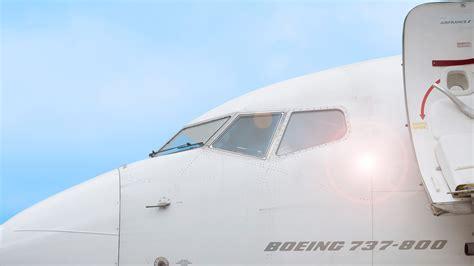
Commercial aviation thrives on routine. Each takeoff follows a tightly choreographed sequence, refined over decades to minimize risk. On that afternoon, Boeing 737-700 N200WN accelerated down the runway under standard conditions, with both pilots immersed in familiar callouts and instrument checks. To passengers, nothing felt unusual—no turbulence, no warning signs, just the steady push of engines delivering thrust.
Then, without warning, the cockpit environment changed violently. The HUD unit detached mid–takeoff roll, dropping downward with force amplified by the aircraft’s acceleration. The first officer later described how it “came down and smacked him pretty hard on the head,” referring to the captain. That moment transformed a precision-guided cockpit into a chaotic environment where immediate survival depended on training and reflex.
The captain’s reaction—disorientation, visual disturbance, and subsequent vomiting—indicated a concussive injury, instantly removing him from effective duty. In aviation, seconds matter, and losing a commanding pilot during takeoff is about as critical as it gets.
The Critical Seconds That Defined the Outcome
The takeoff roll is unforgiving. Pilots must decide within a narrow window whether to continue or abort, balancing aircraft speed, runway length, and system integrity. At that precise moment, the first officer was forced into a rapid cognitive pivot—from supporting role to sole operator of a fully loaded aircraft accelerating toward liftoff speed.
What followed was a textbook demonstration of Crew Resource Management (CRM). Despite the shock of the incident, the first officer maintained control of the aircraft, stabilized its trajectory, and communicated with air traffic control. This wasn’t just technical skill; it was composure under pressure, the kind that only rigorous training can produce.
The decision to return to Las Vegas was swift and logical. Although the crew initially requested medical priority rather than declaring an emergency outright, air traffic control recognized the urgency and escalated the situation, ensuring immediate clearance and emergency readiness on the ground. That intervention shaved critical minutes off response time—minutes that mattered for the injured captain.
Understanding the Heads-Up Display: A Tool Designed for Precision
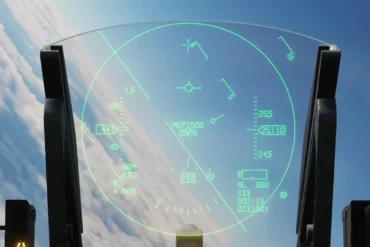
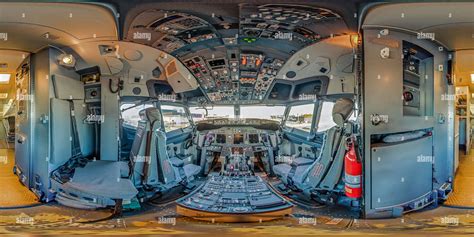
The irony of this incident lies in the purpose of the Heads-Up Display itself. Designed to enhance situational awareness, the HUD projects essential flight data directly into the pilot’s forward field of vision. It allows pilots to monitor speed, altitude, and navigation cues without looking down—a crucial advantage in low-visibility operations and high-workload phases like landing.
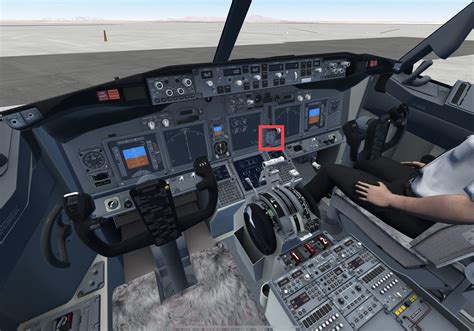
On the Boeing 737-700, the HUD is mounted above the pilot’s seat and can be lowered into position when needed. Its engineering balances optical precision, structural integrity, and ergonomic placement. When secured correctly, it remains stable despite vibration and acceleration forces encountered during flight.
But here’s the uncomfortable truth: the HUD is not a lightweight accessory. It is a dense assembly of projection systems, glass optics, and support hardware. That mass, which contributes to its durability and clarity, also makes it potentially dangerous if not properly secured. When the latch failed, that mass turned into kinetic force—delivered directly into the captain’s head.
The Latch Failure: A Small Component with Massive Consequences
At the center of this event is a deceptively simple culprit: a mechanical latch. This small component is responsible for securing the HUD in place, ensuring it remains stable through all phases of flight. Under normal assumptions, such parts are considered highly reliable—so reliable, in fact, that their failure is often not deeply scrutinized during design.
Preliminary findings from the Federal Aviation Administration (FAA) suggest that this latch failed, releasing the HUD from its fixed position. Once unrestrained, the physics took over. The aircraft’s forward acceleration, combined with gravity and the pivoting mechanism of the HUD mount, caused the unit to swing downward with amplified force.
This wasn’t a gentle fall—it was a high-energy impact event. The confined cockpit space meant the HUD had nowhere to go except directly into the pilot seated beneath it.
From an engineering perspective, this is a classic example of a single-point failure. If one component fails and there is no backup mechanism, the entire system becomes compromised. For a device positioned directly above a pilot’s head, that’s a design assumption worth revisiting.
When Internal Systems Become External Threats
Aviation safety discussions often focus on external risks—weather, mechanical engine failures, or bird strikes. Yet this incident highlights a less obvious category: internal hazards. When equipment inside the aircraft fails in unexpected ways, it can become just as dangerous as external threats.
In this case, the HUD effectively became a localized projectile. The cockpit’s tight dimensions meant that even a short movement translated into a direct hit. The combination of mass, proximity, and acceleration created a perfect storm where injury was almost inevitable once the latch failed.
This raises a deeper design question: should critical cockpit equipment be evaluated not only for performance during normal operation but also for behavior during failure modes? Because when failure occurs, physics doesn’t negotiate—it amplifies.
Human Factors: The Hidden Layer of Risk
Beyond the mechanical failure lies another dimension: human vulnerability. Pilots operate in an environment where cognitive clarity, spatial awareness, and rapid decision-making are essential. A concussion—even a mild one—can compromise all three instantly.
The captain’s inability to continue highlights how physical injury and operational risk are tightly linked. This wasn’t just a maintenance issue; it was a human factors event. The system failed in a way that directly targeted the person responsible for controlling the aircraft.
Yet the outcome also demonstrated resilience. The first officer’s response, combined with air traffic control support, ensured a safe return. It’s a reminder that aviation safety isn’t just about machines—it’s about how humans respond when those machines fail.
Certification Standards Under Scrutiny
Aircraft certification processes are among the most rigorous in the world. Components must meet strict criteria for durability, performance, and reliability. But this incident suggests that certain edge cases—particularly involving component detachment—may not be fully addressed.
Regulators like the FAA are now likely to examine whether existing standards adequately consider:
- The risk of cockpit-mounted equipment becoming dislodged
- The forces generated during failure under acceleration
- The need for secondary retention mechanisms
The idea isn’t that systems must never fail—that’s unrealistic—but that when they do, they should fail safely. In this case, the failure introduced a new hazard rather than containing one.
Maintenance Practices and Inspection Gaps
Mechanical components don’t fail without cause. Over time, latches can experience wear, fatigue, misalignment, or improper installation. High-cycle aircraft like the Boeing 737 undergo frequent use, increasing the likelihood of gradual degradation.
Investigators will focus on whether:
- The latch showed visible signs of wear
- Routine inspections were sufficiently detailed
- Maintenance protocols accounted for long-term fatigue risks
If the failure was detectable but missed, the conversation shifts from design to maintenance discipline. If it wasn’t detectable, then the design itself may require rethinking.
The Future of Cockpit Equipment Safety
Incidents like this rarely exist in isolation. They ripple through the industry, influencing design philosophy, regulatory frameworks, and operational procedures. Already, this event is likely to push manufacturers and airlines toward several changes.
One probable outcome is the adoption of redundant retention systems—secondary latches or tethers that prevent complete detachment even if the primary mechanism fails. Another is the use of lighter materials, reducing the potential impact force if a component does come loose.
Airlines may also implement more rigorous inspection protocols for cockpit-mounted equipment, recognizing that these components sit in close proximity to critical personnel.
There’s also a broader philosophical shift underway: designing not just for performance, but for failure containment. Because in aviation, the difference between an incident and a catastrophe often lies in how systems behave when things go wrong.
A Small Failure with Industry-Wide Implications
What makes this event so compelling is its simplicity. No engine failure, no extreme weather, no complex chain of system breakdowns—just a single latch that didn’t hold. Yet that small failure cascaded into a serious in-flight emergency with direct human consequences.
It’s a reminder that in highly engineered systems, minor components can carry major responsibility. And when those components fail, the results can be immediate and unforgiving.
Flight 568 landed safely. The crew managed the crisis. The system, in a broader sense, worked. But the incident leaves behind an uncomfortable question: how many other assumptions about “small, reliable parts” are waiting to be challenged?
In aviation, progress is often written in the aftermath of events like this. Quiet improvements, unseen reinforcements, and redesigned components ensure that the next flight doesn’t face the same risk. And somewhere in that process, a simple latch will likely receive far more attention than it ever did before—exactly as it should.