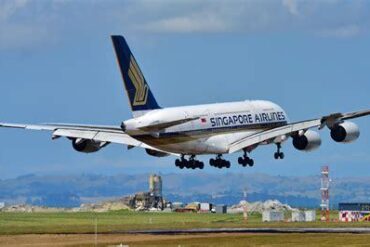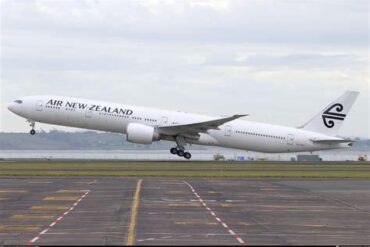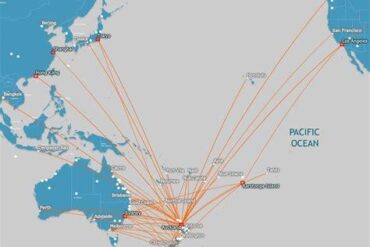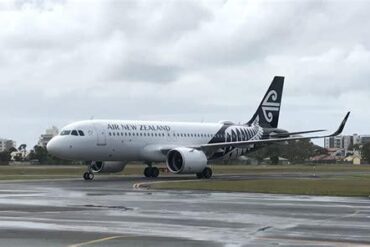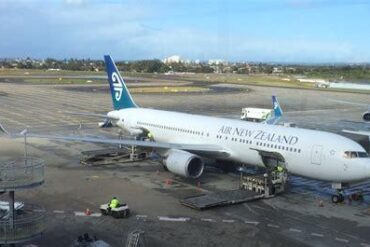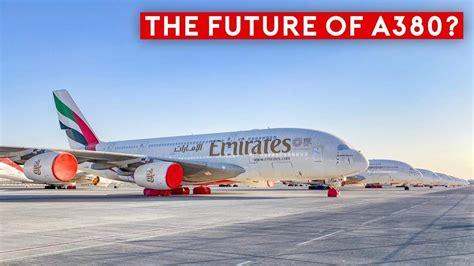
The story of Auckland’s Airbus A380 invasion is one of those rare aviation chapters where ambition, geography, and timing aligned perfectly. For a brief but unforgettable period in the mid-2010s, Auckland Airport transformed into one of the most extraordinary long-haul stages on Earth, hosting four Emirates A380 superjumbos every single day. It was not marketing theater. It was demand, strategy, and confidence expressed in aluminum and composite, scaled to the very limits of commercial aviation.
Emirates had long understood the power of its location. Sitting at the crossroads of Europe, Asia, Africa, and Australasia, Dubai offered a friction-reducing alternative to traditional transit points in Southeast Asia or North America. For travelers bound for New Zealand, that meant one stop, a consistently premium onboard experience, and access to a vast global network stitched together through Dubai International Airport. By the early 2010s, that formula was working spectacularly well.
In 2015, Emirates was already operating three daily flights between Dubai and Auckland, each routed via Australia. Brisbane, Melbourne, and Sydney were not merely stopovers; they were demand generators in their own right. Every one of those services was flown by the Airbus A380, a clear signal that passenger volumes justified the world’s largest passenger aircraft on all three corridors.
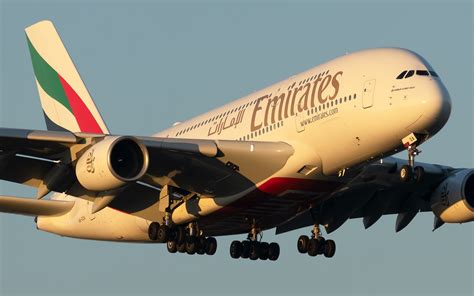
When Four A380s a Day Became Reality
The leap from impressive to unprecedented came in March 2016, when Emirates launched a nonstop Dubai–Auckland service. Initially operated by the Boeing 777-200LR, the route quickly proved that the market could absorb even more capacity. Within six months, the aircraft was upgauged to the Airbus A380. That single fleet decision rewrote Auckland’s daily rhythm.
With the three Australian one-stop services still running on A380s, Auckland suddenly found itself welcoming four Emirates superjumbos every day. At times, scheduling aligned so perfectly that all four aircraft were on the ground simultaneously. For aviation enthusiasts, it was surreal. For airport operations teams, it was a logistical ballet involving gates, ground handling, catering, and passenger flows on a scale rarely seen in the South Pacific.
This was not symbolic deployment. Each A380 arrived heavy with passengers, premium cabins full, cargo holds busy. Emirates was not experimenting; it was exploiting a proven demand curve between Europe, the Middle East, Australia, and New Zealand.
The Nonstop Advantage and Passenger Appeal
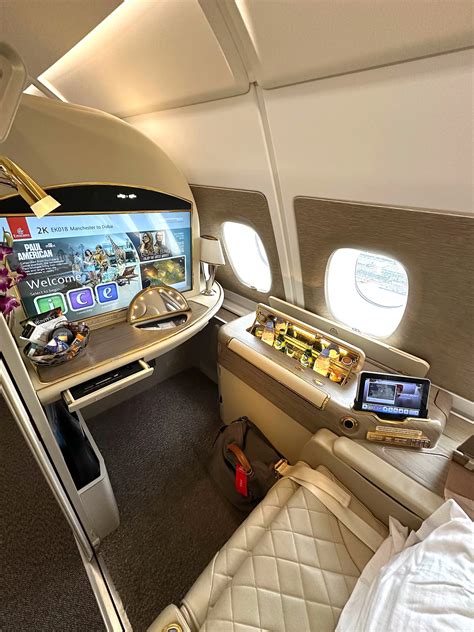
The nonstop service changed the psychological geography of travel. Avoiding an Australian stop shaved hours off the journey and removed the friction of an additional takeoff, landing, and potential delay. For business travelers, the value was obvious. For leisure passengers, the appeal lay in simplicity and comfort, amplified by Emirates’ onboard product across all cabins.
The A380 itself mattered. Its quieter cabin, smoother ride, and signature features elevated ultra-long-haul flying into something closer to endurance luxury. On a route stretching beyond sixteen hours, those differences were not marginal. They were decisive.
A Strategic Network Switch With Bigger Implications
Toward the end of 2016, Emirates made an adjustment that revealed how finely tuned its network planning had become. The Auckland–Sydney leg on one service was reconfigured to continue onward to Bangkok, a change timed precisely with the transition from the IATA summer to winter schedule. The shift occurred almost immediately after the nonstop Dubai–Auckland route was upgraded to the A380.
This was not coincidence. It was capacity optimization. Emirates balanced aircraft utilization, regional demand, and seasonal travel patterns with surgical precision. In raw numbers, the A380 logged dozens of rotations on the nonstop route in its first year, while maintaining near-identical frequencies on the adjusted Bangkok service via Sydney. The result was sustained high capacity without oversaturation.
Peak A380 Operations and the Beginning of Change
Emirates maintained its four-A380-per-day peak into 2017, cementing Auckland’s reputation as one of the most A380-intensive destinations in the world. Yet aviation is never static. By 2018, one of the services, routed via Denpasar, transitioned back to the Boeing 777. The reasons were pragmatic rather than symbolic, reflecting shifting demand patterns rather than retreat.
The era of seeing four Emirates superjumbos lined up in Auckland was fading, but its impact lingered. It demonstrated that New Zealand could sustain massive long-haul capacity when the product, routing, and pricing aligned correctly.
Emirates in Auckland Today
Today’s Emirates presence in Auckland is streamlined and relentlessly efficient. The airline operates a daily nonstop A380 service between Dubai and Auckland, a far simpler schedule than the labyrinthine multi-stop network of the past. What has been lost in spectacle has been gained in convenience.
Flight EK448 departs Dubai mid-morning, perfectly timed for inbound European connections, and arrives in Auckland late the following morning. The return flight, EK449, leaves Auckland at night and lands in Dubai before sunrise, feeding seamlessly into the airline’s global morning departure bank. The timings are not accidental. They are the quiet architecture of a mature long-haul strategy.
The four-A380 days are gone, but their legacy remains embedded in Auckland’s aviation identity. For a few extraordinary years, the city stood at the center of the A380 universe, proving that even at the far edge of the world, demand can be colossal when ambition meets execution.