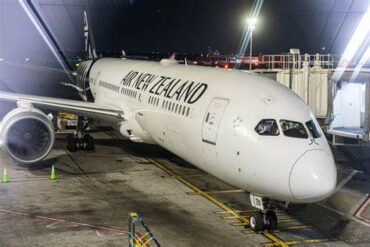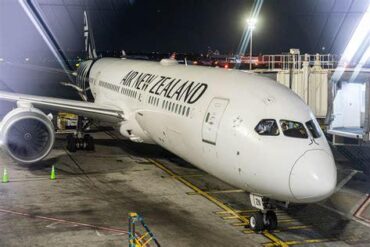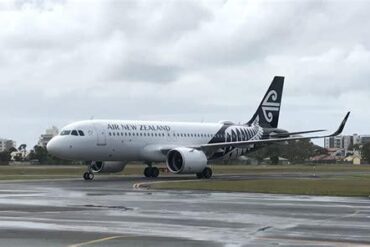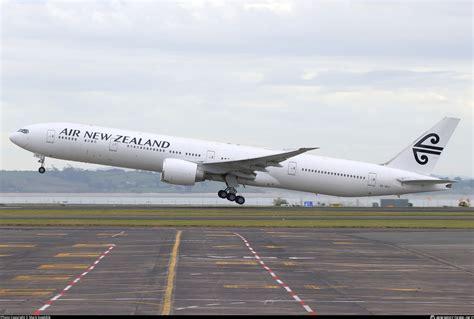
On January 27, 2023, a fully loaded Air New Zealand Boeing 777-300ER veered off the runway during landing at Auckland International Airport (AKL), triggering an investigation by New Zealand’s Transport Accident Investigation Commission (TAIC). The aircraft, arriving from Melbourne (MEL) with 271 passengers and 16 crew members, encountered dynamic and adverse weather conditions during its final approach. The official findings now attribute the incident to pilot error, specifically the late disengagement of the autopilot and failure to retain essential control inputs during a critical phase of flight.
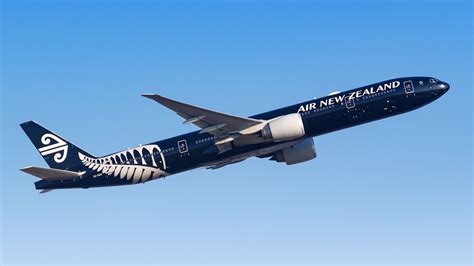
ILS Approach Complicated by Variable Crosswinds
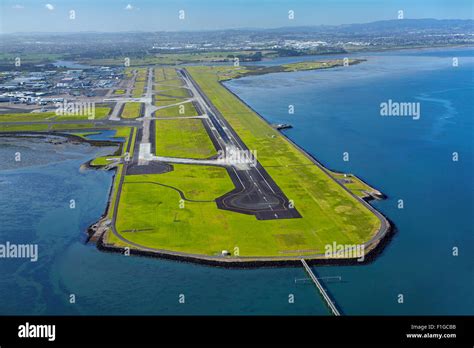
The twin-engine long-haul aircraft was executing an ILS/DME approach to runway 05R when it encountered increasingly difficult crosswind conditions, with both wind direction and strength shifting rapidly. The autopilot’s runway-alignment mode was engaged and functioning correctly, automatically inputting left aileron and right rudder deflections to maintain alignment with the runway centerline.
As the aircraft descended through 500 feet above ground level (AGL), the autopilot was compensating for a persistent left crosswind. It was making continuous adjustments to maintain the stabilized approach path. This system behavior is critical in challenging weather, particularly when wind direction fluctuates across both axes. However, the aircraft’s autopilot remained engaged beyond the recommended disengagement point.
Deviation from Standard Operating Procedures
According to Air New Zealand’s standard operating procedures (SOPs), pilots are instructed to disengage the autopilot between 300 and 600 feet AGL during landing approaches. This window allows pilots sufficient time to transition to manual control, assess aircraft handling, and respond appropriately during the flare and touchdown.
In this case, the captain delayed autopilot disengagement until the aircraft was only 67 feet AGL, which is significantly below the recommended threshold. The disengagement occurred after the aircraft had already crossed the runway threshold, leaving the crew with a critically short timeframe to assume manual control under crosswind influence.
Compressed and Faulty Control Transition
Flight data shows that just one second after autopilot disengagement, the crew initiated thrust lever retardation to idle, immediately followed by the flare maneuver three seconds later. This allowed the captain less than four seconds to grasp the manual feel of the aircraft, adjust to wind inputs, and stabilize it for touchdown.
Critically, investigators noted that the autopilot returns flight controls to neutral upon disengagement. This system behavior demands that pilots manually replicate control forces previously managed by automation. In this case, the captain failed to reapply the left aileron input that the autopilot had used to resist the left crosswind. The oversight caused the aircraft to begin rolling 3.69 degrees to the right, leading to a noticeable drift away from the runway centerline.
Crosswinds and Aircraft Behavior Post-Disengagement
The failure to maintain the proper inputs in rapidly changing wind conditions exacerbated the situation. As the aircraft continued to roll right and drift, the crosswind weakened and shifted direction, introducing further instability. These sudden shifts required active and immediate control corrections — corrections that were not applied in time.
By the time the aircraft touched down, only nine seconds had passed since the autopilot was disengaged. The aircraft was already significantly misaligned, and contact with the ground occurred off the runway centerline, onto the sealed shoulder area.
Striking of Runway Edge Lights and Loss of Gear Integrity
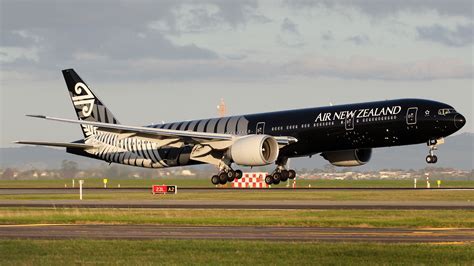
Upon touchdown, the Boeing 777 veered off the runway and struck six runway edge lights. Despite the impact and erratic movement, the flight crew managed to correct the drift and return the aircraft to the centerline within moments. The rapid correction likely prevented further escalation, but the damage was already done.
Investigators emphasized that the runway excursion was “virtually certain” given the tight timeframe between autopilot disengagement and touchdown. While the runway was wet due to heavy rainfall, the investigation confirmed no standing water was present. Therefore, hydroplaning or aquaplaning was ruled out as a contributing factor.
No Injuries, But Substantial Mechanical Damage
All passengers and crew exited the incident without injury. However, the aircraft suffered considerable mechanical damage:
- Five of the six right main landing gear tires sustained damage
- The rear inboard tire deflated entirely
- Additional harm was detected in the right brake assembly
- Several wiring harnesses required complete inspection and replacement
This damage rendered the aircraft unserviceable until thorough maintenance and component replacements could be completed. Air New Zealand confirmed the Boeing 777 was grounded for inspection and recovery operations for several days post-incident.
Safety Recommendations and Procedural Review
Following the incident, the Transport Accident Investigation Commission (TAIC) issued strong guidance concerning autopilot disengagement discipline. Emphasis was placed on:
- Adherence to SOPs that call for early manual engagement before landing flare
- Enhanced pilot training to simulate late-autopilot-disengagement scenarios
- Reinforcement of the importance of manual input continuity immediately after automation transition
The commission’s findings highlighted the crucial window of time required for pilots to adapt from automated stability to manual control in dynamic weather environments. The failure to do so, as seen in this case, can turn an otherwise safe approach into a high-risk situation within seconds.
Operational Trust in Automation — A Double-Edged Sword
This incident reignites discussion about the overreliance on automation in commercial aviation. While systems like the runway-alignment mode of the Boeing 777 significantly increase flight path stability, they also risk encouraging complacency if transition protocols are not followed rigorously.
In this case, the autopilot performed flawlessly, compensating for volatile crosswind conditions with calculated precision. However, the human factor—particularly the timing of re-engagement in manual flight—became the weak link. Pilots must anticipate these transition moments and train for immediate manual control, especially under unpredictable meteorological phenomena.
Conclusion: Automation Cannot Substitute Proactive Airmanship
The runway excursion involving Air New Zealand’s Boeing 777-300ER stands as a clear case study in the critical interplay between automation and human control. The aircraft’s systems performed as designed, but a four-second gap in proactive piloting led to a loss of directional control, resulting in avoidable mechanical damage and heightened risk to passengers.
While the aviation industry continues to refine the symbiosis between pilot and machine, events like these underscore the importance of adherence to standard procedures, anticipatory flight management, and rigorous transition training. With more attention to these factors, similar runway excursions can be avoided — ensuring the safety that modern aviation systems are engineered to deliver remains intact even when technology hands the reins back to human pilots.