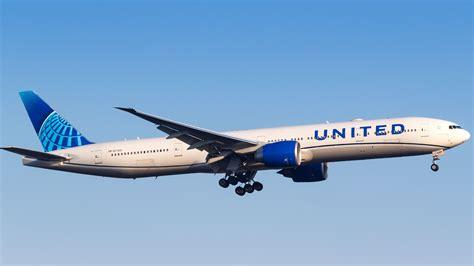
The Super Bowl has always been advertising’s most expensive stage, a place where brands shout loudly and hope something sticks. United Airlines chose a different approach. Instead of spectacle for spectacle’s sake, its latest Super Bowl advertisement is anchored in something far rarer in airline marketing: a tangible, operational leap that passengers can actually feel. Beneath the cinematic space-age metaphor lies a real transformation unfolding across United’s fleet, one that redefines what inflight connectivity means in practical, everyday terms.
For years, inflight WiFi has been the aviation equivalent of Schrödinger’s cat—technically alive, functionally unreliable, and best approached with low expectations. United’s decision to spotlight Starlink-powered WiFi during the Super Bowl is not a promise of a better future; it is a declaration that the future has already begun. More than 300 regional aircraft now carry the system, covering roughly 25% of United’s daily departures, and offering gate-to-gate, high-speed connectivity that finally behaves like the internet passengers use on the ground.
This matters because airline advertising has historically been aspirational rather than experiential. United’s campaign flips that logic. The ad does not ask travelers to imagine a better flight; it tells them that thousands of flights already deliver one. In an industry where credibility is hard-earned and easily lost, that distinction is everything.
From Legacy Limitations to a Single High-Speed Vision
United’s pivot to Starlink in September 2024 was not merely a supplier change; it was a philosophical reset. For decades, airlines stitched together inflight connectivity through a patchwork of legacy providers such as Viasat and Panasonic, each with different performance profiles, coverage gaps, and technological ceilings. The result was inconsistency—acceptable email on one route, unusable streaming on another, and frustration everywhere in between.
By committing its entire fleet to SpaceX’s low-Earth orbit satellite network, United became the first U.S. carrier to bet fully on a single, scalable solution. Starlink’s architecture, built around thousands of fast-moving satellites closer to Earth, enables dramatically lower latency and higher throughput. That translates into something passengers instantly understand: livestreaming that does not buffer, online gaming that does not lag, and video calls that do not collapse mid-sentence.
The rollout strategy has been deliberate. United began with its regional fleet, where installation timelines are shorter and certification hurdles are more manageable. By May 2025, the first Embraer E175 aircraft were flying with Starlink, marking the beginning of a rapid deployment phase. Less than a year later, most of United’s two-cabin regional aircraft are equipped, and more than 7 million passengers have already experienced the service across 129,000 flights.
This scale matters. Connectivity gains are only meaningful when they reach critical mass, and United has crossed that threshold. When one in four daily departures offers a fundamentally different inflight experience, the brand promise stops being theoretical.
Why the Super Bowl Moment Was Strategically Perfect
Super Bowl ads are often criticized for being divorced from reality—big ideas with little operational backing. United’s timing avoids that trap. The airline waited until Starlink was not just installed, but proven, before placing it under the harsh spotlight of America’s most-watched broadcast.
The creative itself leans into aerospace mythology. The voiceover, styled as a conversation between ground control and cockpit crew, echoes the language of spaceflight. The line “one giant leap for inflight WiFi” is an obvious nod to Apollo-era ambition, but it is grounded in a modern truth: inflight connectivity has finally crossed from novelty into utility.
Crucially, the ad runs in local markets where Starlink-equipped aircraft already operate in high numbers, including Denver, Houston, Kansas City, and Indianapolis. In some of these cities, more than half of United flights now feature Starlink WiFi. This geographic alignment turns the advertisement into a verification mechanism. Passengers who see the ad can board a flight days later and confirm that the message was not exaggeration.
That feedback loop is rare in airline marketing, and it strengthens trust at a time when travelers are increasingly skeptical of lofty claims.
Free WiFi as a Loyalty Engine, Not a Giveaway
United’s decision to offer Starlink WiFi for free is not an act of generosity; it is a calculated investment in long-term customer value. Access is typically tied to the airline’s loyalty ecosystem, encouraging passengers to log in, register, and stay engaged. This creates a data-rich environment where United can better understand passenger behavior while opening doors to ancillary revenue streams such as co-branded credit cards and personalized offers.
The payoff is already visible. United reports that customer satisfaction scores nearly doubled on aircraft equipped with Starlink compared to those using previous systems. That kind of uplift is almost unheard of in mature service categories, and it reframes connectivity from a cost center into a competitive weapon.
Other airlines are seeing similar effects. Qatar Airways, now the global leader in long-haul Starlink deployment, recorded a 15% increase in satisfaction scores on connected flights. airBaltic reported a nine-point jump in Net Promoter Score, a metric airlines obsess over because it correlates strongly with repeat business.
These results underscore a broader industry truth: when connectivity works seamlessly, passengers notice—and remember.
United’s Scale Advantage and the Mainline Challenge Ahead
While United’s regional progress is impressive, the true test lies ahead. The airline operates the world’s largest mainline fleet, including hundreds of Boeing 737s, Airbus A321-family aircraft, and widebody jets such as the Boeing 777. Installing Starlink across these platforms requires additional FAA certifications, structural modifications, and careful scheduling to avoid disrupting operations.
United has already begun. The first mainline Boeing 737-800 entered service with Starlink late last year, and the airline expects more than 500 mainline aircraft to be equipped by the end of 2026. This pace is aggressive by aviation standards, where retrofits often stretch across many years.
The strategic implication is significant. Once fully deployed, United will be able to market a fleet-wide, consistent connectivity experience, something few global carriers can credibly claim. In an era where travelers increasingly choose airlines based on onboard experience rather than fare alone, that consistency becomes a powerful differentiator.
How United’s Bet Fits Into the Global Connectivity Race
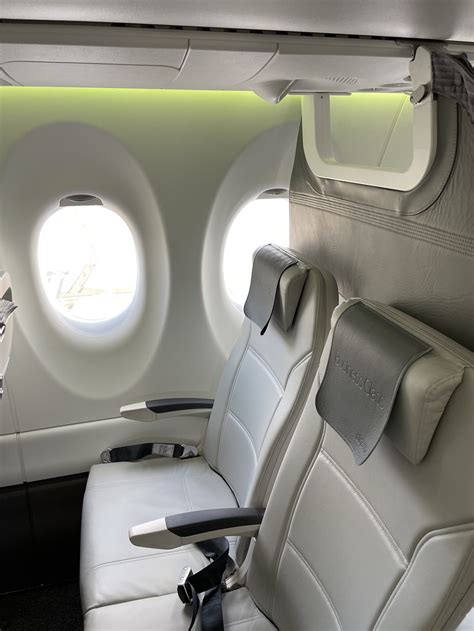
United is not alone in recognizing Starlink’s potential, but its commitment stands out for its scale. Alaska Airlines, building on early success at Hawaiian Airlines, is accelerating installations across its 737 and 787 fleets. WestJet has already surpassed 100 equipped aircraft, while airBaltic is nearing completion across its entire A220 fleet.
There are notable holdouts. Some ultra-low-cost carriers remain skeptical, citing cost structures and operational simplicity. Yet even these airlines face mounting pressure as passenger expectations shift. Once travelers experience fast, free, reliable WiFi at 35,000 feet, reverting to paid, sluggish alternatives feels like technological regression.
United’s Super Bowl ad amplifies that pressure. By broadcasting a working solution to a mass audience, the airline effectively resets the baseline for what inflight connectivity should be.
More Than Marketing: A Signal of Operational Confidence
What ultimately elevates United’s campaign is not its creativity, but its confidence. The airline is willing to invite scrutiny because the product can withstand it. Passengers can stream live sports, monitor home security cameras, or join online meetings without the ritual frustration that once defined inflight internet.
This is why the ad resonates beyond its 30-second runtime. It signals a broader shift in airline strategy, where technology investment is no longer hidden behind corporate jargon but openly celebrated as a core part of the travel experience.
United’s “One Giant Leap” is not about chasing hype. It is about claiming leadership in a space where execution matters more than slogans. In doing so, the airline has turned a Super Bowl commercial into a case study in how operational substance, when aligned with smart storytelling, can genuinely move the industry forward.