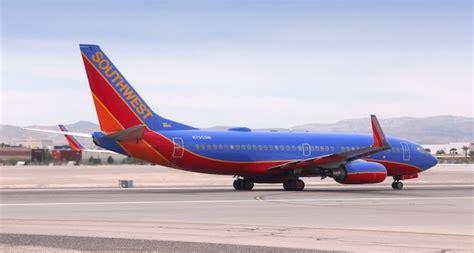
For decades, Southwest Airlines has stood as a pillar of low-cost domestic air travel in the United States. Known for its no-frills service, simplified fare structure, and relentless focus on operational efficiency, the Dallas-based carrier has become a household name from coast to coast. However, in a bold and potentially historic move, Southwest is now preparing to rewrite its playbook, setting the stage for a dramatic leap into the highly competitive and strategically vital transatlantic aviation market.
Whispers of international ambitions have long circled the halls of airline industry chatter, but recent developments indicate Southwest may finally be ready to act. A newfound partnership, ideal European entry points, and a shifting competitive landscape all signal that Europe’s skies could soon welcome this American budget juggernaut.
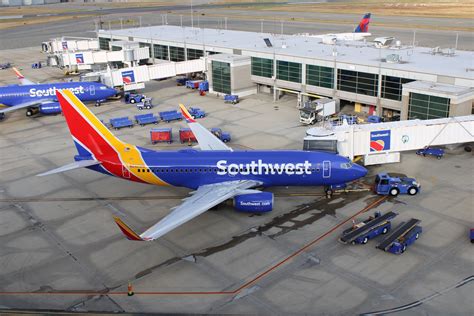
Iceland Beckons: Keflavik as Southwest’s First European Gateway
At the heart of this transatlantic ambition lies a strategic interline agreement with Icelandair, a national carrier deeply entrenched in European travel networks. Through this partnership, Southwest Airlines can offer single-ticket itineraries from key U.S. cities — including Baltimore/Washington, Denver, Nashville, Orlando, Pittsburgh, and Raleigh-Durham — allowing customers to seamlessly connect to over 40 destinations in Europe via Reykjavik’s Keflavik International Airport.
Reykjavik is a natural fit for Southwest’s first foray into Europe. Its geographical position as the nearest European capital to North America provides an ideal staging point for transatlantic operations. Even more critically, Icelandair’s deep network across European cities — including London, Dublin, Paris, Frankfurt, and Oslo — can instantly give Southwest a virtual footprint across the continent without having to launch a fleet of long-haul aircraft overnight.
This model echoes the hub-and-spoke strategy deployed by many major global airlines, but with a low-cost twist. By leveraging Icelandair’s European reach, Southwest could funnel travelers to Europe while maintaining its own aircraft primarily on North American segments.
Baltimore/Washington: The Launchpad for Europe
Among the most likely U.S. launch points for Southwest’s European operations is Baltimore/Washington International Thurgood Marshall Airport (BWI). With a staggering 73% market share at BWI and a growing number of domestic connections, this airport is uniquely positioned to serve as Southwest’s transatlantic launch hub.
Recent expansions at BWI suggest the airport is not only ready but actively positioning itself for international growth. Ample gate availability, runway capacity, and customs infrastructure make it a logical choice. More importantly, the existing Southwest–Icelandair interline agreement already includes BWI, further smoothing the pathway for launching direct or connecting flights to Europe.
Could the UK, Ireland Be Next?
While Reykjavik may serve as the first European beachhead, industry analysts and insiders are betting on the United Kingdom and Ireland as prime candidates for direct Southwest flights in the near future. These countries not only represent high-demand leisure and business markets, but also have regulatory and infrastructure environments conducive to rapid launch and growth of new air services.
London, with its multiple international airports — particularly Gatwick and Stansted — offers a gateway with high volume but comparatively lower landing costs than Heathrow. Meanwhile, Dublin and Shannon in Ireland present viable, cost-effective entry points, especially with the U.S. Customs and Border Protection (CBP) preclearance facilities available on Irish soil. This could simplify the return journey for passengers, a major draw for a value-conscious airline like Southwest.
A Bigger Picture: U.S. Carriers Go Global
The timing of Southwest’s potential leap into Europe coincides with a broader wave of expansion among U.S. airlines. Alaska Airlines, for example, recently announced its first-ever European route — a non-stop flight from Seattle to Rome — beginning in 2026. This milestone, combined with United Airlines’ new Greenland service, highlights how U.S. carriers are eyeing less traditional, high-potential markets abroad.
Furthermore, Breeze Airways, a relatively new but fast-growing airline launched by JetBlue founder David Neeleman, has received approval from the U.S. Department of Transportation for international flights. Though its initial focus leans toward Latin America, the ambition and technological edge — particularly its Airbus A220-300 fleet with 3,000-mile range — suggest that European ventures could be on the horizon, once ETOPS certification is secured.
Infrastructure and Customs Improvements Fuel Transatlantic Potential
Making international operations work goes beyond just having the planes and partnerships. Behind the scenes, government agencies and airport authorities are ramping up efforts to support cross-border travel. The U.S. Customs and Border Protection’s fast-track clearance initiative is expanding, easing re-entry for returning citizens and reducing wait times at major airports.
Additionally, Miami International Airport — one of the largest gateways for Latin American and European traffic — has secured approval for a $600 million expansion. Though not directly tied to Southwest’s European ambitions, this move underscores the national effort to elevate infrastructure capacity, recognizing that modern air travel demands faster, more efficient passenger flow.
Operational Challenges and Strategic Advantages
Launching transatlantic flights presents a unique set of challenges for Southwest Airlines. The carrier’s current fleet — composed mainly of Boeing 737 variants — is limited in range. While the newer 737 MAX 8 could potentially handle East Coast to Iceland or Ireland routes, more distant destinations like London or mainland Europe would require further modifications or fleet diversification.
However, Southwest’s biggest asset remains its brand loyalty and customer trust. Millions of Americans already rely on the airline for domestic travel. Expanding into Europe — especially with affordable pricing and easy connections — would allow Southwest to retain these customers for their international trips, rather than losing them to competitors like JetBlue, United, or Delta.
Moreover, price-sensitive European travelers could be drawn to Southwest’s promise of transparent fares, no change fees, and complimentary checked bags. The carrier’s efficient operations, short turnaround times, and high aircraft utilization could allow it to bring these features to international markets without sacrificing profitability.
Disrupting Transatlantic Legacy Models
Should Southwest launch European flights, it could serve as a disruptive force in a transatlantic market dominated by full-service legacy carriers like British Airways, Lufthansa, and Air France, as well as alliances such as Star Alliance, Oneworld, and SkyTeam.
Southwest’s entry would likely pressure prices downward, particularly on leisure-heavy routes where time and luxury matter less than cost and convenience. This shift could mirror the airline’s original domestic success, where legacy carriers had to revise their pricing models and route networks in response to Southwest’s growing influence.
A New Era for Transatlantic Travelers
For travelers, the implications are vast. Should Southwest Airlines succeed in launching regular services to Europe, the cost of transatlantic air travel could drop significantly, and access to secondary or underserved destinations could rise. Instead of navigating legacy hubs or complex fare structures, Americans could book simple, affordable flights to Europe just as easily as they would to Denver or Orlando.
Families planning vacations, students studying abroad, small business owners expanding into international markets — all would stand to benefit from this expansion. In turn, increased accessibility would boost tourism revenues in key European destinations, deepen cultural ties, and drive a new wave of transatlantic mobility.
Conclusion: Southwest’s European Gamble Could Reshape the Skies
The unfolding strategy by Southwest Airlines to enter the European market is not just a matter of geographic expansion — it’s a paradigm shift in what international air travel could look like. With calculated partnerships, strategic hub choices, and growing momentum across the U.S. airline sector, this move signals a new era in affordable, accessible transatlantic flying.
As the industry awaits official announcements, one thing is clear: should Southwest plant its flag in Europe, the global aviation landscape will never be the same again. The budget king of America could soon become a transatlantic titan — and travelers everywhere stand to win.