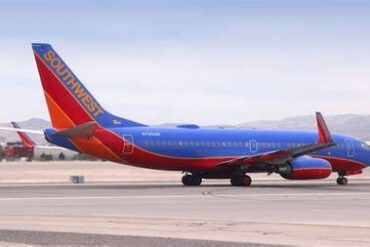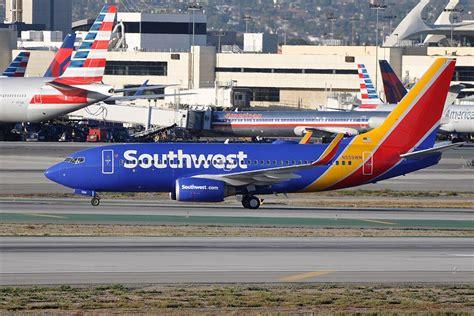
Southwest Airlines, long hailed as a pioneer of affordable domestic air travel, is poised to make a historic leap across the Atlantic. The iconic low-cost carrier is set to launch a Baltimore–Reykjavik route, marking its first significant foray into international long-haul markets and signaling a major shake-up among established US and European aviation giants.
In an unexpected alliance of market forces, Southwest now finds itself alongside Delta Air Lines, United Airlines, American Airlines, JetBlue Airways, and Iceland’s own PLAY Airlines, all vying for the lucrative transatlantic travel segment. But unlike its legacy competitors, Southwest’s move into Iceland is more than just another route—it’s a symbol of strategic evolution and ambition.
Why Reykjavik? Southwest’s Bold Gateway to Europe
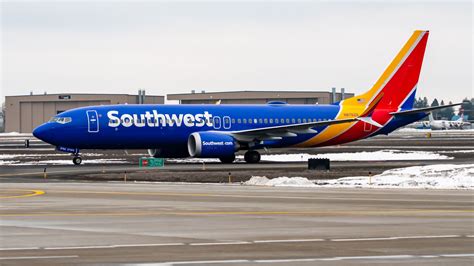
While the idea of Southwest Airlines entering the European market may surprise many, the choice of Reykjavik, Iceland’s capital, is both tactical and calculated. Located significantly closer to the US than continental Europe, Reykjavik offers a transatlantic gateway that falls comfortably within the operational range of Southwest’s Boeing 737 MAX 8 fleet.
The MAX 8, designed for medium-haul operations with extended range capabilities, enables Southwest to circumvent its lack of wide-body aircraft while still reaching key international markets. Reykjavik’s Keflavík International Airport (KEF) already operates as a major connecting hub between North America and Europe, making it an ideal entry point.
Additionally, Baltimore/Washington International Thurgood Marshall Airport (BWI)—a Southwest stronghold on the East Coast—offers established infrastructure, high passenger volumes, and existing Icelandair services. This creates a near-seamless opportunity for Southwest to integrate with Icelandair’s broader European network.
The Icelandair Partnership: Stepping Stone or Strategic Alliance?
Southwest’s relationship with Icelandair, formalized through an interline agreement in early 2024, has laid critical groundwork for this bold transatlantic venture. The partnership enables travelers to book combined itineraries, connecting through Reykjavik onto dozens of European cities, all under a single booking.
This approach minimizes risk for Southwest, allowing the carrier to dip its toes into international markets without fully overhauling its fleet or operational model. Passengers can enjoy streamlined connections from Baltimore to European capitals like London, Paris, Berlin, and beyond, utilizing Icelandair’s established routes.

Open Skies and the New Competitive Landscape
The timing of this transatlantic expansion aligns with Southwest’s application under the Open Skies agreement, which permits US airlines to operate to over 130 international destinations with fewer regulatory hurdles. Though Iceland is not officially confirmed in these filings, aviation insiders suggest it will be Southwest’s first stop in a broader global strategy.
This move places Southwest shoulder to shoulder with industry heavyweights like Delta, United, American, and JetBlue, all of whom maintain substantial transatlantic networks. However, Southwest’s entry is distinct—it comes with significant fleet constraints and a customer base more accustomed to short domestic hops than transoceanic journeys.
The Fleet Dilemma: 737 MAX 8’s Limits on Global Ambitions
While the Boeing 737 MAX 8 provides Southwest with extended operational range, it remains fundamentally a narrow-body aircraft tailored for medium-haul flights. The aircraft lacks key features critical to long-haul passenger satisfaction, such as lie-flat seating, expanded cabin galleys, and premium service offerings.
Moreover, flying to destinations deeper into Europe, such as Paris, Rome, or Madrid, exceeds the practical range of the MAX 8, forcing Southwest to confront the limitations of its single-aircraft strategy. Expanding beyond Reykjavik will either require additional fuel stops, payload reductions, or significant fleet diversification.
Compounding these issues are existing labor agreements that could restrict Southwest from codesharing alone, mandating the operation of its own aircraft on international routes—a challenging prospect with its current fleet.
Customer Loyalty vs. Complexity: Will Southwest’s Base Follow?
Southwest’s brand is deeply entrenched in low-cost, point-to-point domestic travel, known for perks like no baggage fees, open seating, and simplified fare structures. For its core demographic—families, small business travelers, and budget-conscious flyers—the idea of routing through Reykjavik to reach Europe may feel cumbersome.
In markets like Kansas City, Nashville, or St. Louis, where direct flights to Europe are rare, connecting through Baltimore and then Iceland introduces complexity to an airline model long celebrated for its simplicity.
Recent shifts in Southwest’s policies, including controversial adjustments resembling “basic economy” fare structures, have already stirred dissatisfaction among loyalists. A misstep in international service execution could amplify these concerns, undermining brand equity built over decades.
Is This Expansion Driven by Growth or Obligation?
Some analysts posit that Southwest’s Reykjavik route is as much about regulatory compliance as it is about commercial opportunity. Under Open Skies provisions and specific labor contract terms, Southwest may be required to demonstrate active international operations to maintain certain rights.
In this context, the Baltimore–Reykjavik service could function as both a symbolic and strategic placeholder—fulfilling obligations while testing market demand and operational capabilities.
Yet even symbolic ventures can set the stage for broader transformation. A successful trial run may embolden Southwest to reevaluate its fleet, explore partnerships, or consider mergers that position it for more aggressive international growth.
Alternative Expansion Opportunities: South America and the Caribbean
Critics of the Iceland focus argue that Southwest’s resources may be better spent targeting high-demand markets closer to home. Destinations in South America and the Caribbean, such as Panama City, Cartagena, or Lima, offer robust tourism demand, cultural ties, and manageable flight ranges compatible with the 737 MAX 8.
These markets align with Southwest’s operational strengths, requiring minimal changes to service models while tapping into regions underserved by low-cost US carriers. They also avoid the complexities of transatlantic flying, such as time zone differences, onboard service expectations, and competitive pressures from European giants.
Fleet Flexibility: The Key to Global Relevance
For Southwest to sustain long-term international relevance, fleet diversification is inevitable. US competitors like Alaska Airlines have expanded through regional subsidiaries and strategic mergers, gaining access to niche markets without sacrificing core operational efficiency.
Southwest’s continued reliance on a single-aircraft fleet limits adaptability, leaving it vulnerable to competitors with broader equipment capabilities. Introducing longer-range aircraft, even in limited numbers, could unlock new markets and fortify its global proposition.
Until such diversification materializes, the Reykjavik venture remains both ambitious and constrained—a high-profile test that could define Southwest’s next chapter.
The Road Ahead: What Travelers Can Expect
Ticket sales for the Baltimore–Reykjavik route are expected to commence by late 2025, with inaugural flights targeted for spring 2026. If realized, this launch marks a pivotal moment for Southwest, transitioning from a domestic icon to a global contender.
Passengers can anticipate budget-friendly fares, seamless connections through Icelandair, and a novel transatlantic experience aboard familiar 737 MAX 8 aircraft. However, service limitations compared to premium transatlantic carriers should be expected, given Southwest’s streamlined, no-frills model.
The question remains: Can Southwest retain its loyal customer base while venturing into the complex, competitive world of international air travel? Success hinges on execution, customer perception, and the airline’s willingness to evolve.
For now, all eyes turn to Baltimore, Reykjavik, and the Atlantic skies in between—as Southwest prepares to rewrite the rules of budget transatlantic travel.