American Airlines has officially entered the high-stakes race for dominance in luxury trans-Pacific air travel, joining elite carriers like United, Hawaiian, Etihad, and Qatar by deploying its Boeing 787-9 Dreamliner equipped with Flagship Suites. This move is not a simple fleet upgrade—it’s a transformative push into a new era of premium travel, redefining expectations on ultra-long-haul routes across the Pacific.
The move places American Airlines in direct competition with top-tier international rivals, elevating its standing and signaling a deep commitment to premium service, privacy, and innovation in the skies.
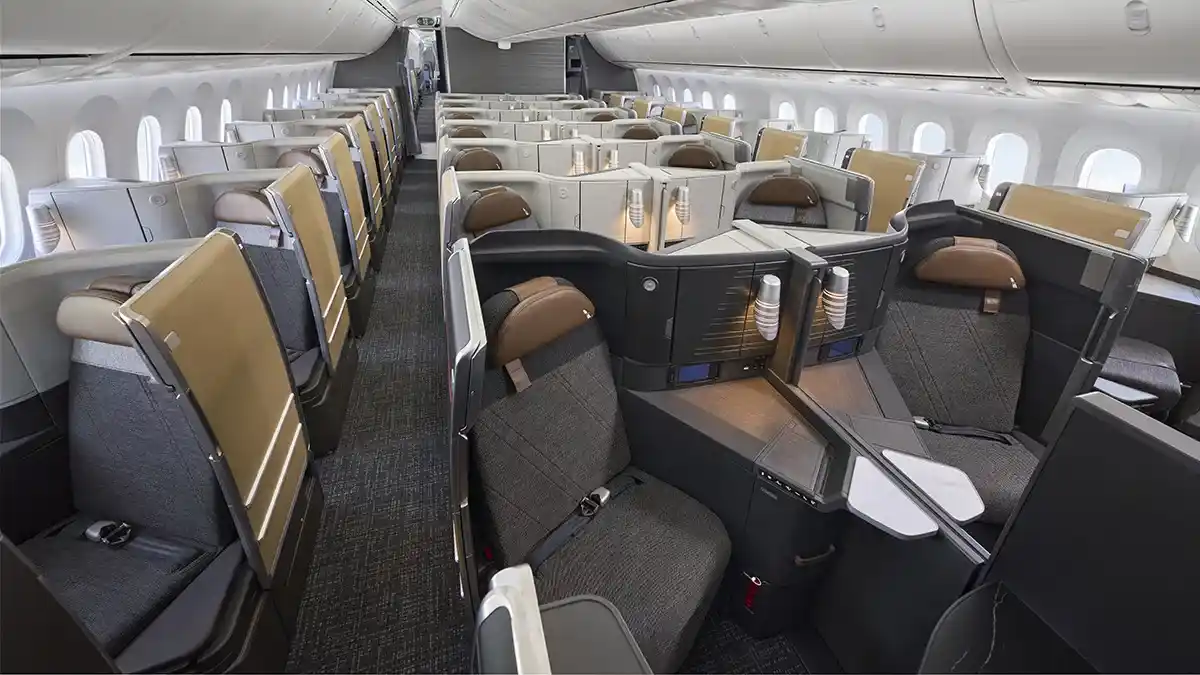
A New Chapter: Dallas–Auckland Route Launches with Flagship Suites
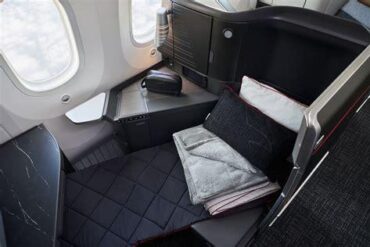
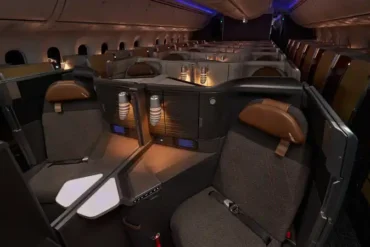
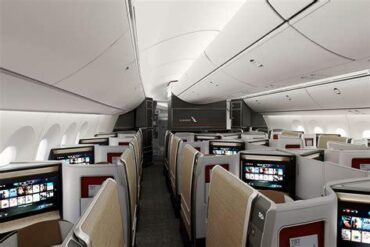
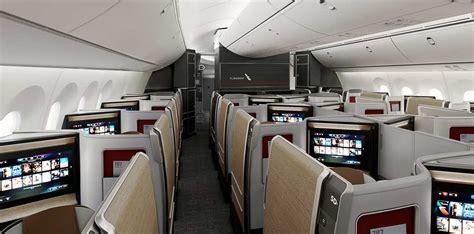
Launching January 5, 2026, American Airlines will begin daily service from Dallas/Fort Worth (DFW) to Auckland (AKL) using its newly reconfigured 787-9 Dreamliner. This aircraft will showcase the carrier’s most ambitious premium product yet—Flagship Suites, featuring fully enclosed spaces, lie-flat seating, expansive entertainment screens, and intuitive design touches tailored to long-haul luxury.
Flight AA035 will depart DFW at 10:30 PM and arrive in Auckland at 9:10 AM two days later, perfectly aligning with travelers’ circadian rhythms and onward connections. Return flight AA034 leaves Auckland at 1:20 PM and lands in Dallas at 8:05 AM the same day, allowing for seamless North American connectivity.
This isn’t merely a route extension—it’s a strategic repositioning in a rapidly growing market. The Dallas–Auckland corridor, already a key trans-Pacific link, will now serve as the launchpad for American’s most elite international experience.
The Rise of Flagship Suites: Commercial Jet Meets Private Jet Comfort
The Flagship Suite is more than just an upgraded seat—it’s American Airlines’ most radical business-class redesign to date. Each suite offers:
- Sliding privacy doors, creating a cocoon-like personal space
- Fully lie-flat seating with ample legroom and premium bedding
- 18-inch entertainment screens with high-speed streaming
- Multiple charging ports, wireless charging pads, and ambient lighting
- Enhanced storage for personal items and carry-ons
The cabin’s interior channels the intimacy and elegance of private aviation, reflecting a broader industry trend where passengers expect not just space, but sanctuary. This mirrors innovations seen in Qatar Airways’ Qsuite, Etihad’s First Suites, and United’s upcoming Polaris Studio Suites.
United, Hawaiian, Etihad, Qatar: The Competitors in the Sky
American Airlines now shares elite airspace with:
- United Airlines’ Polaris Studio Suites: Rolling out across new Dreamliners by late 2025, these suites include privacy doors, ottomans, and elevated amenities.
- Hawaiian Airlines’ Leihōkū Suites: Available on 787-9s since 2023, offering lie-flat seats with aisle access and wireless charging.
- Etihad Airways’ First Suites: Premium enclosed suites with wardrobe space and oversized screens—just eight per aircraft.
- Qatar Airways’ Qsuite: Globally celebrated, offering sliding doors and companion seating, now extending across its 787 fleet.
With Flagship Suites, American not only closes the comfort gap—it stakes a claim as a front-runner in luxury trans-Pacific travel.
South Pacific Strategy: Expanding Beyond Auckland
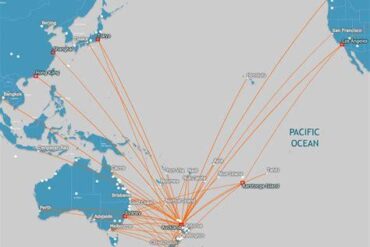
This Dreamliner deployment is part of a larger Oceania expansion. American Airlines is set to extend service to Brisbane (BNE), further embedding itself in a high-demand, premium-travel region. As interest in Australia and New Zealand surges among affluent U.S. travelers, American’s investment signals a firm commitment to owning more of the South Pacific corridor.
Other U.S. gateways, notably Los Angeles and San Francisco, have long connected to Oceania. But American’s Dallas hub offers unmatched domestic connectivity, giving travelers from secondary U.S. cities easier access to the region without backtracking.
CES 2026: Strategic Seasonal Boosts for Las Vegas
January 2026 marks another milestone: American Airlines will add short-term international service to Las Vegas (LAS) from Seoul (ICN), Tokyo Narita (NRT), and London Heathrow (LHR) in time for CES 2026, the world’s largest tech show. This aggressive expansion reflects a clear understanding of event-driven travel demand, particularly for premium passengers seeking direct routes and business-class amenities.
These flights will utilize Boeing 777-200ERs, offering high-capacity cabins, including Flagship Business and Premium Economy. The timing—just over a week—maximizes aircraft efficiency and high-yield traffic without long-term commitment.
European Market Strategy: Starting Summer Early
American Airlines is recalibrating its European summer schedule for earlier launches and larger aircraft. Routes such as Dallas–Barcelona will resume in February 2026 and transition to larger planes by March, positioning the airline to capture early-spring travelers.
Other routes from New York and Philadelphia are also being optimized. A planned JFK–Barcelona winter extension has been dropped in favor of reallocating aircraft to higher-revenue markets—a reflection of a more agile, data-informed network planning strategy.
South America Repositioning: DFW as the New Continental Gateway
In a significant winter schedule update, American Airlines is refocusing its South America strategy via Dallas/Fort Worth:
- Rio de Janeiro: Service begins earlier and scales to daily for the holiday peak.
- Santiago de Chile: Returns to seasonal operation with enhanced aircraft.
- São Paulo: Sees increased frequency, utilizing both 787-8s and 787-9s.
This reshaping maximizes utilization during high-demand periods, while reinforcing Dallas’ role as a transcontinental hub.
Tactical Hub Flexibility: Miami and Philadelphia Adjustments
Seasonal tweaks at Miami and Philadelphia reflect American’s tactical precision. Miami–Buenos Aires jumps to four daily flights, a sharp increase catering to the surge in outbound luxury travel. Meanwhile, Miami–Paris returns for the spring/summer season.
From Lisbon to São Paulo, fleet assignments are being fine-tuned for performance and efficiency, using real-time demand modeling. These small yet strategic swaps demonstrate American’s shift from static seasonal schedules to dynamic, responsive planning.
The Big Picture: A Luxury-First Long-Haul Blueprint
American Airlines’ sweeping updates across the Pacific, Europe, and South America aren’t isolated enhancements—they’re part of a long-haul evolution grounded in luxury, scale, and timing. By concentrating high-end configurations on high-value routes, the airline is creating a differentiated product that appeals to global business travelers, premium leisure customers, and high-net-worth individuals.
This approach also serves partners across the travel ecosystem:
- Hotels and resorts benefit from high-spend, long-stay travelers.
- Tourism boards see increased visibility through new U.S. gateways.
- Travel agencies gain sellable premium inventory across key markets.
With the 787 Dreamliner as the fleet backbone and the Flagship Suite as the crown jewel, American Airlines is betting that premium travel isn’t just back—it’s surging into a new era.
The Future Takes Off from Dallas
In a post-pandemic world where passenger expectations have permanently shifted, American Airlines is making a powerful statement: luxury matters, and timing is everything. With the Dallas–Auckland route as a launchpad and the Dreamliner as its vehicle, the airline is poised to reshape how Americans—and the world—travel across oceans.
This is no longer a race to reach the destination first. It’s a race to make the journey unforgettable.
And with Flagship Suites taking flight, American Airlines may have just pulled ahead.