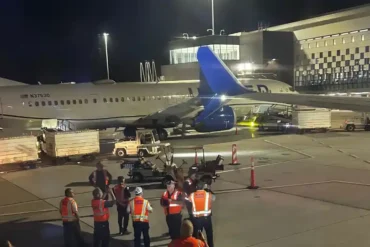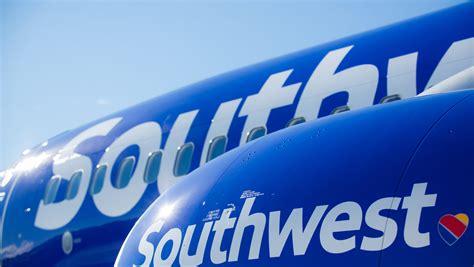
A late-night ground incident involving two Southwest Airlines aircraft at Baltimore/Washington International Thurgood Marshall Airport has once again placed airport ramp safety and congested gate operations under scrutiny. The mishap occurred on the evening of May 4 when two Boeing 737 MAX 8 jets clipped each other while maneuvering away from their gates in an area where pilots reportedly had no direct communication with air traffic control. Although the collision caused only minor physical damage and no injuries, the event triggered substantial delays and renewed concerns about aircraft movement procedures at one of the East Coast’s busiest airline hubs.
According to reports from airport communications, the two aircraft were preparing for separate Southwest departures from Baltimore when their wingtips made contact during pushback operations. One flight was scheduled to travel to Hartford, Connecticut, while the other was bound for Houston Hobby Airport in Texas. Both aircraft were immediately removed from service after the incident, forcing passengers and crews to transfer onto replacement jets later in the night.
The incident unfolded in what aviation personnel describe as a “non-ATC communication area,” a section of the airport ramp where pilots are generally not under direct guidance from ground controllers. In these zones, aircraft movement often depends heavily on coordination between pilots, tug operators, ground crews, and situational awareness from all parties involved. At highly congested airports like BWI, even small positioning miscalculations can quickly create dangerous proximity issues between parked and taxiing aircraft.
By aviation standards, wingtip collisions during pushback are uncommon but far from unheard of. Airports with tightly packed gates and narrow maneuvering corridors require extremely precise movement calculations. Industry insiders have frequently described maneuvering large narrowbody jets around BWI’s terminal areas as a process that “takes geometry,” especially during peak nighttime departure banks when multiple aircraft are pushing back simultaneously.
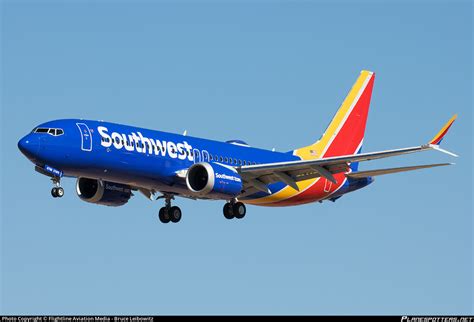
Audio captured through LiveATC recordings revealed the moment one of the pilots informed ground control about the incident. The pilot operating Southwest Flight 1048 calmly radioed: “Hey, ground, Southwest 1048, we had contact between the two aircraft back here. We’re going to need to taxi straight ahead back to Alpha 7.” The transmission immediately confirmed that the collision had occurred outside the active movement area controlled directly by air traffic controllers.
While the damage appeared relatively limited, aviation maintenance experts note that modern winglets and composite structures are intentionally designed to absorb impact energy. On Boeing 737 MAX aircraft, winglets are engineered to break or deform in ways that protect the more structurally sensitive portions of the wing itself. Even seemingly minor wingtip contact, however, requires extensive inspection procedures before an aircraft can safely return to passenger service.
Maintenance crews will likely conduct non-destructive structural testing, internal wing examinations, and composite material assessments before either aircraft is cleared to fly again. Engineers must verify that no hidden stress fractures, skin delamination, or aerodynamic surface damage occurred during the impact. Such inspections can take hours or even days depending on the severity of the contact.
The operational disruption quickly cascaded into major overnight delays for passengers aboard both flights. Southwest Flight WN562, originally scheduled to depart Baltimore for Houston Hobby Airport at 9:50 PM, ultimately did not take off until 1:03 AM the following morning. The flight eventually landed in Houston at approximately 3:00 AM local time, nearly three hours behind schedule after passengers were shifted onto another aircraft.
Southwest Flight WN1048 bound for Bradley International Airport near Hartford experienced similar delays. Scheduled for a 9:50 PM departure, the replacement flight finally became airborne at 1:23 AM before arriving in Connecticut shortly after 2:20 AM. The disruption created a difficult overnight travel situation for hundreds of passengers, many of whom likely faced missed connections, transportation complications, and overnight schedule disruptions.
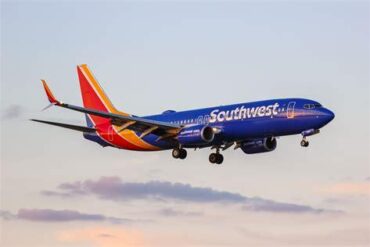
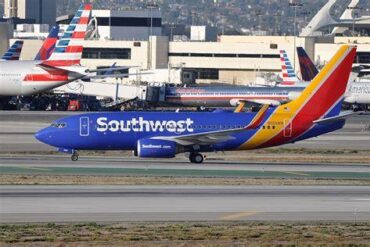
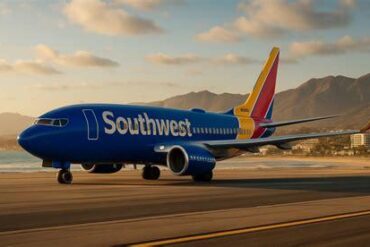
Both affected aircraft were Boeing 737 MAX 8 jets configured in Southwest’s high-density single-class cabin layout accommodating up to 175 passengers. The MAX 8 remains the backbone of Southwest’s fleet modernization strategy and plays a central role in the carrier’s dense domestic network.
The event also highlights the enormous operational footprint Southwest maintains at BWI Airport. The carrier dominates airport traffic at Baltimore, reportedly accounting for roughly 70 percent of all flight operations at the facility. BWI functions as one of Southwest’s most strategically important East Coast bases, connecting passengers throughout the United States and select international destinations.
Located between Baltimore and Washington, D.C., the airport operates within one of America’s busiest aviation corridors. Heavy airline activity combined with compressed gate spacing can create operational pressure during evening departure waves when dozens of aircraft simultaneously push back and taxi for departure.
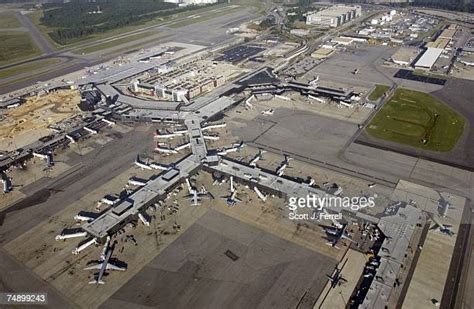
Despite the dramatic nature of the collision, aviation safety professionals emphasize that the system largely functioned as intended once contact occurred. Pilots immediately halted movement, reported the issue, and both aircraft were safely removed from operation without injuries. Still, the Federal Aviation Administration investigation will likely examine whether gate spacing, pushback coordination, or ramp communication procedures contributed to the incident.
For Southwest Airlines, the Baltimore collision serves as another reminder that even routine ground operations demand constant vigilance. Modern aviation safety is not tested only in the skies. Increasingly, some of the industry’s most complex challenges are unfolding on the ground, where crowded airports, tight schedules, and narrow margins leave little room for error.