Avelo Airlines has quietly but decisively exited one of the most controversial chapters in its short corporate history. The U.S. low-cost carrier has ended its role in operating deportation flights for Immigration and Customs Enforcement, a move that coincides with a deeper restructuring of its fleet, network, and financial priorities. While the airline is no longer flying removal missions, the story does not end with a clean break. The aircraft once used for those flights are now being transferred directly into government hands, underscoring how commercial aviation, federal enforcement, and political optics have become tightly intertwined.
The decision lands at a fragile moment for domestic airlines operating outside the protection of massive global networks. Rising costs, softening leisure demand, and limited pricing power have left smaller carriers searching for nontraditional revenue streams. Avelo’s entry into deportation flying in early 2025 was widely viewed as a survival play, but the backlash proved swift and persistent. What has emerged instead is a strategic retreat that shifts responsibility from a private airline to the federal government itself.
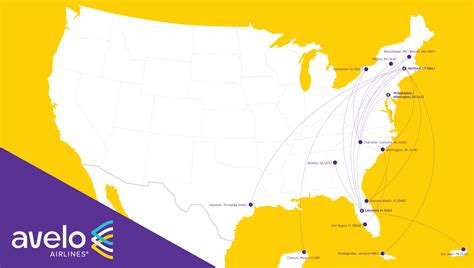
At the center of this change is Avelo’s announcement of a so-called balance sheet transformation, a phrase that masks a sweeping contraction. Several operating bases are being shuttered, the fleet is being simplified, and the airline is narrowing its focus to a handful of markets where its ultra-low-cost model has shown the most resilience. The closure of Mesa, Arizona, is the clearest signal yet that Avelo’s deportation chapter is over.
Avelo’s Deportation Flights and the Mesa Connection
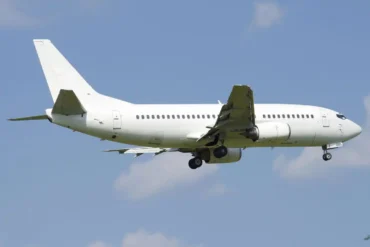
Mesa Gateway Airport was never a typical Avelo base. Unlike New Haven or Wilmington, Mesa did not host scheduled passenger services. Instead, it functioned almost exclusively as a hub for ICE charter operations, with Boeing 737-700 aircraft configured to transport detainees to domestic and international destinations. When the airline announced the closure of Mesa, it effectively confirmed what industry observers had already suspected: the deportation flights were ending.
From a commercial standpoint, the arrangement had offered predictability. Government contracts provide steady utilization and guaranteed payment, a rare luxury in an industry defined by volatility. From a reputational standpoint, however, the cost was high. Advocacy groups, local officials, and passengers openly criticized the airline, arguing that deportation flying conflicted with Avelo’s branding as a friendly, community-oriented low-cost carrier. That tension never eased, and in some markets it actively undermined the airline’s expansion plans.
Six Boeing 737-700s Exit the Fleet
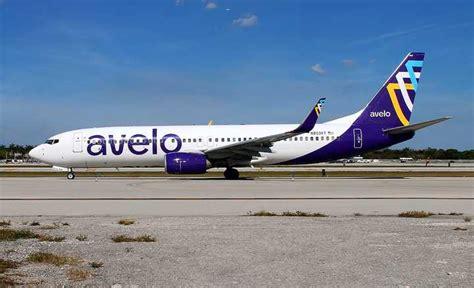
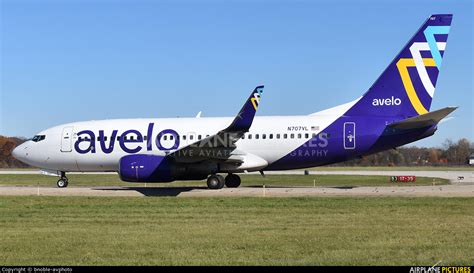
Alongside its base closures, Avelo confirmed it would remove six Boeing 737-700 aircraft from service. This leaves the carrier increasingly reliant on the larger 737-800, a model better aligned with leisure-heavy routes and higher seat density economics. On the surface, this appears to be a straightforward fleet simplification move, reducing maintenance complexity and training costs. The deeper implication lies in where those six aircraft are going.
The number is not coincidental. The U.S. government recently disclosed that it had acquired six Boeing 737s to support a newly expanded in-house deportation operation. Aviation records now show that several former Avelo aircraft are owned by Daedalus Aviation Corp, the same entity supplying aircraft to ICE. The conclusion is unavoidable: the planes once flown by Avelo on deportation missions are being transferred directly to the federal government, eliminating the need for a private airline intermediary.

The Rise of a Government-Run Deportation Airline
This transfer marks a significant structural shift. Rather than outsourcing deportation flying to commercial carriers, ICE is moving toward a more vertically integrated model often referred to informally as ICE Air. By owning or directly controlling the aircraft, the government gains operational flexibility while reducing dependence on airlines vulnerable to public pressure.
For Avelo, this arrangement offers a quiet exit. Selling or transferring leased aircraft avoids the optics of abruptly terminating a federal contract while still allowing the airline to distance itself from deportation operations. For ICE, it represents insulation from reputational fallout, as the flights are no longer tied to a consumer-facing brand that sells tickets to the public.
Financial Pressures Behind the Strategic Shift
Avelo is privately held, which limits visibility into its balance sheet. Still, the broader industry context offers clues. Mid-sized and ultra-low-cost carriers have been squeezed between legacy airlines with vast loyalty ecosystems and aggressive discounters willing to accept razor-thin margins. In that environment, every fleet decision matters.
The Boeing 737-700 is a capable aircraft, but it is also older and less efficient than newer variants. Maintaining a small subfleet of six aircraft adds cost without delivering scale benefits. By exiting deportation flying and standardizing around the 737-800, Avelo improves operational efficiency even as it reduces overall capacity. The move suggests a pivot away from short-term cash stability toward longer-term brand and cost discipline.
Political Optics and Brand Risk
The political environment surrounding immigration enforcement has grown increasingly polarized. Airlines that participate in deportation flights find themselves drawn into that debate whether they intend to or not. For a carrier built on leisure travel and secondary airports, the association proved toxic. Local protests, social media campaigns, and negative press coverage eroded goodwill in precisely the communities Avelo relies on for growth.
Ending deportation flights allows the airline to reset its narrative. The fact that the aircraft themselves are still supporting ICE operations, now under direct government control, highlights how optics can matter as much as operations. The flights continue, but the commercial airline brand is removed from the frame.
What This Means for the U.S. Airline Industry
Avelo’s exit may serve as a cautionary tale for other carriers considering similar contracts. Government flying can stabilize revenue, but it also exposes airlines to political risk that traditional route flying does not. The emergence of a government-operated deportation fleet could reduce future opportunities for private carriers while centralizing responsibility within federal agencies.
At the same time, the move underscores the fragility of smaller airlines in a post-pandemic market that remains unforgiving. Strategic clarity, fleet simplicity, and brand alignment are no longer luxuries. They are survival tools.
A Quiet End to a Loud Controversy
Avelo Airlines is no longer flying deportation missions, but the aircraft that once did so have not disappeared. They have simply changed hands. By closing its Mesa base, removing six Boeing 737-700s, and refocusing on core leisure markets, the airline has chosen operational focus over controversial stability. The federal government, meanwhile, has stepped in to assume direct control of the flying itself.
The result is a reshaped relationship between commercial aviation and immigration enforcement, one that reflects not just economics, but the growing power of public perception in shaping airline strategy.